wifey’s turn

My sweetheart is pretty amazing. Not only is she tall , athletic, and beautiful, but she has one more advanced degree than me, is a “push-hard” doctor (PhD), unlike her “muddle through” (MD) husband. As a senior scientist for NASA, she helped put together the space station and plan missions to Mars. She’s now a beloved teacher of scientific writing who won teacher of the year award from her school last December. She has 30 IQ points on me so I have to watch it all the time. She does not suffer fools gladly, so when one of our church fellowship group suggested we read a little screed out of Apple News on communicating to others whom you think might be misinformed about coronavirus or (gaack) climate change https://apple.news/ArBdW2tW7RkyauRZe12ALmQ, she felt moved to get out of bed early today and write this:

I disagree with the article and here’s my thought process.

Few lay people actually have the knowledge to judge what is “wrong” when it comes to the actual science of COVID-19 or the medical care that is being derived from the science, so any of these discussions are simply speculations by masses of folks who have neither the facts nor the scientific background to understand the nuances that differentiate the “right” from the “wrong”.

Are there issues of a less nuanced scientific nature related to COVID-19?  Sure, and these clearly can be and are understood by intelligent people with less of a science background.

Some examples:

We know that chloroquine works as a drug to combat the virus because it has worked, saving many lives, some of which were on the very precipice of death.  Wow, that President Trump is a genius!

We know that chloroquine doesn’t work as a drug to combat the virus because it hasn’t worked, and many lives have been lost under its treatment, some of which were rather early in the development of the disease.  Wow, that President Trump is an idiot!

The reality?  We don’t know if hydroxychloroquine will work or not when we treat a patient with it.  We have pretty good information on the mechanism by which it works, but even that knowledge isn’t necessarily going to give us certainty about its veracity as a treatment.  Welcome to medicine.  Most of us have been exposed to this tiny flaw in the medical field and Bob has been playing the “let’s try this” side of medicine on his patients for years.  Those crazy drugs have even been known to change their minds and stop working after having been effective for years.

President Trump was correct when he saw evidence of hydroxychloroquine success and made the statement “this has the potential to be a game changer.”  Hydroxychloroquine does have that potential.  So do many other drugs.  Doesn’t make President Trump the reincarnation of Elijah.  Nor does it make him Jezebel.

I am always a fan of discussion and debate, particularly on scientific topics (as opposed to the suggestions we often hear about putting “Climate Deniers” in jail, but more on that later).  There is a great deal of merit in listening to others, in trying to understand other views, scientific or otherwise.  I am always amazed at how heated and emotional these debates between scientists can get, since science is reputed to be so dry.  By the way, I stand guilty as charged in this regard, being arguably the most emotional scientist on the planet.  But, as the late senator Patrick Moynihan once said, “Everyone is welcome to his own opinion, but not his own facts.”  In a world where anybody can put any nugget of information into the social media and, with repetition and a little marketing, this nugget oddly becomes a fact, the difference between fact and opinion gets blurred.  This is made all the more complex when the very people who do understand the science and the medicine disagree about the interpretation of the data (which isn’t quite the same as disagreeing on facts, but from the outside, it sometimes appears that way).

A slightly less scientific right or wrong:

Bob and I were in Busch’s the other day and the woman at the checkout (wearing a cute little mask with red peppers on it) informed us that the governor of Michigan has decreed that everyone must wear a mask of some kind in order to go out in public.  When I replied that this was the dumbest thing I had heard in a long time (clearly not having read the article Rhonda sent out), the woman retorted, “the governor just wants us to be safe.”  This is usually about the time that the head of the “most emotional scientist on the planet” explodes.

There is nothing safe about any of the masks that any of the folks wandering around Busch’s were wearing.  In fact, they may be detrimental.  The virus we are wearing masks to protect ourselves from is so tiny, it is beyond imagination.  Bob’s description that, if a human hair were as wide as a football field is long, the COVID-19 virus would be the size of a soccer ball provides a pretty good mental image.

Wearing a bandana or a painter’s mask is like replacing the screens in your windows with butterfly netting and making the assumption that you are still protecting yourselves from gnats. Even a surgical mask won’t work.  The “N-95” masks are so-named because they are rated to stop 95 % of particles smaller than a tenth of micron.  That means that these, the best masks we’ve got, still allow 5% of particles to get through.  Have any of you ever seen what folks in these virus labs actually wear?  They make space suits look casual.

The governor is doing 2 tried and true political things that are also guaranteed to make my head explode.

1.  She’s doing “something”.  Doing something is not the same as doing something useful.  The governor could line 40 people up outside her mansion and shoot them, thereby guaranteeing that they will not die of COVID-19.  It’s doing something, it’s just a really bad something.

2.  She’s empowering people to help themselves.  Except she’s not, because not only do they not work, but masks constrain your own breathing.  Almost anyone who has ever worn a mask for any reason knows the feeling of sneezing inside the mask.  The less said about that, the better…

Her bottom line is to “keep us safe” and make people feel better.  You know what would make me feel better?  Being able to host a fellowship meeting.

I must confess that the author lost her argument with me as soon as she mentioned the non-sense of the 97% of scientists blah, blah climate change, but that is a topic for another day.

smoke ’em if you got ’em?

Back on March 19, I posted “smokin’ corona” (https://wordpress.com/block-editor/post/theviewfromharbal.com/326).  Inspired by meeting some old girlfriends outside the hospital by the bus stop for a “break”, I had to wonder if their habit of periodically bathing their lungs with toxic tobacco smoke might even be protecting them from Mr. corona.  Ultimately I concluded alas no.  Patients with preexisting lung disease do worse once the virus gets hold of them, which stands to reason.  There is also a little molecular hanky panky going on, with the lungs of chronic smokers showing greater expression of a receptor for the MERS coronavirus (1).  Presumably the same thing goes on with COVID-19.  But the “more smokers are dying” data comes from China where 25% of the population smokes (maybe 50% of the men), so if 9% of those dying smoke compare to 4% of the survivors, does that mean much? (2)  In Europe, it doesn’t appear that smoking associates with worse outcome from coronavirus infection (3). Yet aren’t the smokers the ones with the crapped out lungs just waiting their doom?

The French have dared to say it: “pas si vite (not so fast)”. https://news.yahoo.com/france-testing-whether-nicotine-could-prevent-coronavirus-163120850.html.  They examined outcomes of COVID-19 infection at one of their top hospitals.  Of 343 severely affected patients and 143 patients with milder symptoms, 5% smoked.  The French do love their tabaç, with 35% of them smoking regularly.  Not as big as the Chinese, where over 50% of the men smoke (women not so much).  Data from a March New England Journal study found 12.6% of 1,000 infected were smokers. Do you detect an underrepresented population?

So let the trials begin!  One of the first will involve nicotine patches, which I predict will fail miserably as they totally avoid the pulmonary maelstrom where Mr. corona meets Mr. human.  There’s so much in the plume arising from your lit cancer stick, who knows who the active soldier might be.  Already warnings clang not to let this be an excuse to light up https://news.yahoo.com/coronavirus-people-warned-not-smoke-153142264.html

Nobody’s asked Dr. Fauci about it yet.  Even before this, British docs had been lamenting how the social isolation and boredom would get Brits lighting ‘em up all over, reversing decades of social education convincing them this was a bad thing to do.

Kathy and I probably won’t do anything with this.  I’ve not smoked (tobacco) since college.  Kathy chain smoked her way through college, winning 6 varsity letters and All-American honors in swimming (backstroke).  It took commitment to a dedicated stop smoking program once she hit Ann Arbor, and her breath was sweet by the time I met her.  But to my girlfriends at the bus stop, I take it all back and quote my title: “smoke ‘em if you’ve got ‘em”

references  

  1. Seys LJM, Widagdo W, Verhamme FM, Kleinjan A, Janssens W, Joos GF, Bracke KR, Haagmans BL, Brusselle GG.  DPP4, the Middle East Respiratory Syndrome Coronavirus Receptor, is Upregulated in Lungs of Smokers and Chronic Obstructive Pulmonary Disease Patients.  Clin Infect Dis. 2018 Jan 6;66(1):45-53. doi: 10.1093/cid/cix741.

2.         Vardavas CINikitara K.  COVID-19 and smoking: A systematic review of the evidence.  Tob Induc Dis. 2020 Mar 20;18:20. doi: 10.18332/tid/119324. eCollection 2020.

3.         Lippi GHenry BM.  Active smoking is not associated with severity of coronavirus disease 2019 (COVID-19).  Eur J Intern Med. 2020 Mar 16. pii: S0953-6205(20)30110-2. doi: 10.1016/j.ejim.2020.03.014. [Epub ahead of print]

4.         Patwardhan P.  COVID-19: Risk of increase in smoking rates among England’s 6 million smokers and relapse among England’s 11 million ex-smokers.  BJGP Open. 2020 Apr 7. pii: bjgpopen20X101067. doi: 10.3399/bjgpopen20X101067. [Epub ahead of print]

.

.

how clean?

Distillers from all over the country are converting their operations from making perfectly good and much needed booze into making hand sanitizer.  I’d first heard this as a joke, directed at entrepreneurs converting their operations into COVID-19 activities.

I first became aware of it when my favorite whiskey distiller, Traverse City Bay Whiskey, sent me an email announcing proudly they’d shifted their operations fully to the production of hand sanitizer.  Later that day, I was unable to find their product (not hand sanitizer) on the shelves of my local grocery store.  I’d cut way back on my sippage of their product, but had enjoyed vast quantities back in ’15 as it was the only thing to cut back the pain from my brachial plexus injury.  Maybe that’s how I got on their e-mail list.

But this is really getting out of hand, clean as we want them to be, as it were.

https://www.foxnews.com/media/distiller-donates-6100-gallons-of-hand-sanitizer-to-hospital-that-saved-daughter

https://www.mlive.com/news/muskegon/2020/04/muskegon-distilleries-convert-spirits-to-sanitizer-during-coronavirus-outbreak.html

https://www.catholicmessenger.net/2020/04/distillery-responds-for-demand-for-hand-sanitizer/

https://sf.eater.com/2020/4/6/21210289/seven-stills-distillery-hand-sanitizer-coronavirus

https://www.masslive.com/food/2020/04/beer-nut-element-brewing-distilling-making-hand-sanitizer.html

https://www.ocala.com/news/20200319/marion-county-distillers-to-turn-alcohol-into-hand-sanitizer

https://www.daily-chronicle.com/2020/03/19/whiskey-acres-to-distill-hand-sanitizer-for-local-hospital-workers-first-responders/afol5n8/

https://www.thedenverchannel.com/news/national/coronavirus/distilleries-across-the-nation-pivoting-operations-to-make-hand-sanitizer

https://www.wsj.com/articles/distillers-turn-whiskey-and-gin-into-hand-sanitizer-11585049650

https://www.clickondetroit.com/all-about-ann-arbor/2020/03/20/ann-arbor-distilling-co-turns-spirits-into-hand-sanitizer-for-ann-arbor-community/

https://sf.eater.com/2020/4/6/21210289/seven-stills-distillery-hand-sanitizer-coronavirus

https://www.kristv.com/news/coronavirus/south-texas-distillery-turns-vodka-into-hand-sanitizer

https://www.forbes.com/sites/larryolmsted/2020/03/17/hand-sanitizer-from-craft-distillery-could-be-useful-trend/#27f30d4418d8

And this is not a complete list! Even Anheuser-Busch is doing it!  Will they use it to keep the hairy hooves of the Clydesdales corona free?  Will we be ever more free from Mr. corona if we take home product of these misguided ventures and fill our bathtubs to be ever free of the evil germ?  For me, I feel much better about confronting the pandemic day to day if I can sip the unadulterated product of these ventures that have perfected the reaction by which yeast takes carbohydrates into CH2COOH.  Yes, you can divert that into making pure alcohol into which we might baste our hands (soap and water works better), but how much of this stuff do we really need?  And once this whole thing is over, to which all trends project, what do we do with all this hand sanitizer?  Perhaps nerds are working already on finding ways to make the stuff back into something drinkable.  The Iowa corn farmers would object if we could find a way to put it into our gas tanks.  Me I want my whiskey back.  My hands are plenty clean, thank you.

remdesivir

In my March 22 blog post, describing each of the drugs the Chinese had been using to treat COVID-19, I mentioned the agent remsdesivir, which works by acting as a nucleotide analog of adenosine (remember the 4 letters of the language of God: ATGC https://www.amazon.com/Language-God-Scientist-Presents-Evidence/dp/1416542744/ref=sr_1_1?crid=149QA07AXVVM1&keywords=the+language+of+god&qid=1584884234&sprefix=the+langua%2Caps%2C179&sr=8-1), taken up into the new RNA being made by the virus which can not then be translated and direct the manufacture of new virus proteins, a slick little chemical vascectomy for Mr. Corona.  In the lab, it’s been shown to suppress the replication of a number of RNA viruses, including the coronaviruses responsible for SARS and MERS.  In late January 2020, remdesivir was administered to the first US patient to be confirmed to be infected by SARS-CoV-2, in Snohomish County, Washington, for “compassionate use” after he progressed to pneumonia. He was cured.

Well now in my own old medical school on the south side of Chicago (class of ’79), for which I never tire of showing its awesome crest

they’re deep into a trial comparing a 5-day course with a 10-day course of this drug in COVID-19 infected patients. The U of C is only one of several cooperating centers, but chose to talk about preliminary results Thursday https://www.statnews.com/2020/04/16/early-peek-at-data-on-gilead-coronavirus-drug-suggests-patients-are-responding-to-treatment/. They’ve enrolled 128 patients so far, only two have died, fever goes down rapidly and patients get out of hospital in about 6 days. The drug was developed to treat Ebola. Maybe it’ll save us from the COVID-19 that’s still hanging around

1919

In looking for something else in Journal-Lancet, the long defunct journal of the South Dakota State Medical Society, I came across this article in the 1919 volume, written by Dr. Morton Field of Northfield, Minnesota. The Spanish Flu epidemic was still raging and he decided to treat some of his patients with quinine. Lo and behold, it helped. In the paper, he also observed that those patients being treated with aspirin did poorly, which he blamed on the excessive acid load to his patients’ systems, which is one of the things that happens with high dose aspirin. He aimed to keep the patients’ urine pH neutral, even adding urea to get there. I don’t know if this became standard practice. I don’t recall reading about it in John Barry’s excellent 2005 book The Great Influenza. I don’t think President Harding called quinine a “game changer”. But even in medicine, everything old can be new again. And Dr. Field may be on to something with that pH thing. One thing quinine, hydroxychloroquine, and chloroquine do is accumulate in the endoplasmic reticulum, a transport system within the cell were virus replicate, and raise the pH, making it less comfortable for Mr. flu and Mr. corona. You can read further details on my March 20 post “How Plaquenil might work”. Of course, there are many other things the quinine derivatives do.

The aspirin thing is interesting to me in light of concerns, yet to be fully substantiated, that COVID-19 patients taking non-steroidal anti-inflammatory drugs, like ibuprofen (Motrin), do worse. Again, many chemical and immunologic effects from these drugs, but one thing they all do is suppress fever. Fever is an evolutionarily primitive but important and effective component of the host response to any infection. Cold blooded animals infected in the laboratory will take themselves to the warmest possible part of the cage in an attempt to raise their body temperature. Animals deprived of access to the warm areas die at much higher rates than those allowed to roam. So if, God forbid, you get sick with COVID, let your body burn as it tries to kill off that virus.

I took a screenshot of Dr. Field’s paper. Let’s see how it looks:

Who was that masked man?

The rare times I’m out and about these days, I don’t see too many smiles.  I don’t think that’s because everyone is terribly depressed, but people are anxious and many if not most are covering up their faces for protection from dreaded Mr. Corona.  But does this make any sense, or are people just clinging to a security blanket that happens to hang from their ears?

What are they up against?  The naked coronavirus is about 120 nanometers (0.12 microns) across.  The virus escapes the cells it’s infected and destroyed enveloped in some of that cell’s membrane, making particles that can be twice that size.  A thick beard hair is about 50 microns in diameter.  So if your beard hair is as wide as football field, Mr. Corona checks in as a soccer ball at midfield (a little over 8 1/2 inches).  So this is a tiny sucker you’re trying to stop.

This link provides a good guide as to what’s out there (manufactured)  for masks https://healthcentricadvisors.org/wp-content/uploads/2017/04/3_MaskEnomics_Poster_2012.pdf

Masks are rated for their ability to stop 0.1 micron particles.  The much prized n95 mask is rated to stop 95% of such intruders, and it goes down from there.  Note how some of the more commonly seen masks aren’t even rated.

No one has published the pore size of the common bandana, but you see them everywhere.  The CDC has even issued directions for homemade masks https://www.cdc.gov/coronavirus/2019-ncov/prevent-getting-sick/diy-cloth-face-coverings.html.  The CDCs lack of confidence in bandanas is illustrated by recommendations you include a coffee filter.

From my reading, these things mostly prevent you from spewing your germs to others.

So maybe wearing a mask in public is a sign of good citizenship, like washing your hands frequently.  You’ll be keeping any disease laden droplets you happen to cough up to yourself and not sharing them with others.  Thank you for your consideration.  But don’t expect it to prevent the reverse.  You’ll need an n95 or at least an ASTM Level 1-3 for that.  But unless you’re a doc or nurse in an ER or ICU, you’re not swimming in an environment full of little Mr. Coronas, and really don’t need that kind of protection.

So take off that bandana and fold it up for your back pocket where it belongs.  And give us a smile.  We need more of that.  This thing is coming to an end.  Let’s start to celebrate and get ready for when we really can.

Hail Caesar!

My friend Matthias Schneider from Düsseldorf and I had occasion to exchange e-mails recently, as I’m looking to contact one of his former young charges who once was doing some interesting things with arthroscopy. When Matthias and a colleague visited Ann Arbor in the 90s, Kathy and I fed them dinner which featured the Caesar salad we’d learned to make from Kate, the waitress at the now defunct Lord Fox who used to make it for us at table side whenever we went there, which was often. Thanks to Mattthias’ urging (I’d been promising him the recipe for decades) the recipe is now on a Word file, not just the flimsy piece of pink paper Kate wrote it it on, which is in danger of disintegrating or being rendered unintelligible by one more spill. So now I get to share it with you. You’ll like it. It’s worth the fuss. Careful with the vinegar.

(thanks to Kate at the late lamented Lord Fox)

Caesar Salad

Start with a nice big wooden salad bowl

1 clove garlic

2 filets anchovies

1 tsp. Dijon mustard

dash or 2 Worcestershire sauce

2 drops Tabasco

½ to full way round bowl of wine vinegar (1/2 Tbsp)

twice around bowl olive oil (1/4 C)

coddled egg yolk

squeeze fresh lemon (half) (1 T)

8 leaves Romaine lettuce

¼ C (or more) parmesan cheese

croutons

fresh ground pepper

Procedure

mince garlic and rub into bowl

add anchovies and mash into a paste

add mustard, Worcestershire sauce, Tabasco, vinegar

mix together

add egg yolk and mix again

add lemon juice and olive oil

mix till smooth

tear Romaine into bowl

toss gently

add parmesan and croutons

toss again

grind pepper

dig in!

I’ve since put this on to a nice 3X5

A Proud Line

What started as a meandering around various spots I’ve landed in medicine led to the realization I have a pretty famous (in some circles) Grandfather.

I was actually looking for symbols and crests.  Some places I’ve been, like my medical school, have some pretty awesome crests.  The back of my new business card has crests or seals from high school, U of C and Barnes Hospital.  U of M doesn’t allow private use of its seal.

I had the privilege of studying in London part of my senior year in medical school.  Should be some great seals and crests at those places, right?

My first rotation was in cardiology at St. George’s Hospital at Hyde Park Corner, S.W.1, the most expensive piece of real estate in London.  The great white building dates to the early 1800s and was designed by the same architect that did the National Gallery

The place has a magnificent history https://www.ezitis.myzen.co.uk/stgeorgehydepark.html. Letita Elizabeth Landon, a poet of some repute in her time, penned an homage to St. George’s in 1822 https://en.wikisource.org/wiki/Landon_in_The_Literary_Gazette_1822/St_George

In the late 1800s, patients were rationed 3 pints of beer a day.  The practice had fallen off by the time I got there.  Indeed, I was there for its last days as a hospital.  St.  George’s medical school had been building in Tooting, SW17, a far less fashionable (and expensive) working class neighborhood 2 postal districts over from Wimbledon (SW19).  Old St. George’s became a luxury hotel in 1980.   I stayed in Tooting and took the train into Hyde Park.  The man I came to follow – Dr. Aubrey Leatham – was one of the greats of his generation https://www.thetimes.co.uk/article/dr-aubrey-leatham-lwrqqhs0vt7

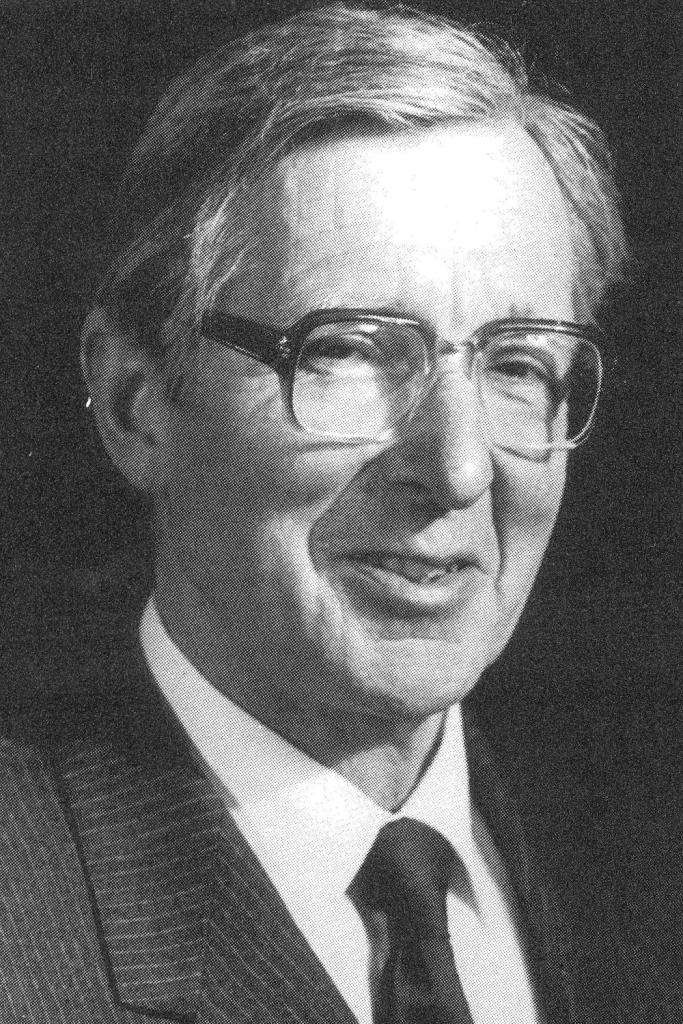
He brought bedside auscultation (listing to the heart) from an art to a science by comparing what the doctor said he heard to what a machine recorded (phonocardiography).  The main attractions to me in cardiology (and they were strong attractions) were the bedside exam and electrocardiography.  I came to London as that is where the bedside exam is still well taught and revered.  Dr. Leatham was gentlemanly, precise, encouraging, and charismatic.  I felt privileged to be included in the small crowd following him around.  He’d invented a somewhat complicated and awkward stethoscope https://www.worthpoint.com/worthopedia/leatham-stethoscope-1813889663 which I did not buy as I liked my simple Littman.  Now WorthPoint states it’s “arguably the finest stethoscope ever made”.  Would have made a great conversation piece.  And Professor Leatham was a distinguished looking fellow

My request for a place on his team was guided by my Professor at U of C, Leon Resnekov, then the star of the Cardiology Division, but very much involved in the teaching of this particular student: attentative, critical, demanding but encouraging.  He even made special arrangements to see my nurse girlfriend after I heard a click-murmur (she indeed did have mitral valve prolapse).  He knew of my independent wanderings with my friend and classmate Marty Sanders chasing down patients rumored to have interesting auscultatory findings.  He died young 14 years after I graduated, at 65. http://chronicle.uchicago.edu/930930/resnekov.shtml

Both Drs. Resenekov and Leatham passed through the National Heart Hospital in their training.  Dr. Resnekov came from Cape Town, one of several talented South Africans on faculty at U of C.  My class even did a bit on them in our Senior Skit.  Dr. Leatham spent his life on the Island.

The man who trained them both had been born of a British father in India, grew up in New Zealand, going to medical school – struggling sometimes – in Melbourne, before going back to Christchurch to start.  He clamored his way into the London hospitals and dazzled all he encountered, except for those who disliked his criticism of the older methods he found lazier and sloppier.  He became the most renowned British cardiologist of the 20th century: Paul Wood.

Dr. Wood died of an MI in 1962 at age 55.  He’d asked not to be resuscitated, which in those days would have involved cutting open his chest to massage his heart.  Defibrillators were a few years off.  Detractors blamed his insistence on being anticoagulated with heparin – controversial them – possibly taking a pericarditis situation into tamponade.  His autopsy showed a solitary obstruction in his left anterior descending artery: a widowmaker.

It was only while putting this information together to tell Mike Shea, Michigan Medicine’s finest cardiologist and a good friend and colleague of many years, that I realized the connections.  Mike spent a couple of years in London early in his career and appreciates the British tradition in Cardiology.

Mike had met Dr. Leatham.  He did not know Dr. Resnekov.  When I realized my cardiology mentors were from the Paul Wood line, I asked Mike if I could claim lineage.  Mike assured me I could.  From a straight shooter like Mike, with his great respect for the British way and Paul Wood (he still has a copy of Paul Wood’s textbook, published in the 50s), I’ll take that as an endorsement.  So, it’s like finding out you have a grandfather you never knew you had.  And a famous one at that.  Thank you, Dr. Wood.  Had cardiology remained just what you taught, with careful bedside assessment and scrutiny of the heart’s electrical signals, I might have joined your many grandsons in the field.   But the catheters you were beginning to employ to fine tune physiologic assessments became brute force tools for assessment and correction of plumbing while high stakes life-and-death scenarios became the norm.  Rheumatology has been a much better fit, but careful listening serves this field well also, and I learned that on cardiology.

Come back West, old man?

On March 30th, in plenty of time to avoid being taken for an April Fool’s joke, California Governor Gavin Newsome issued executive order N-39-20  https://www.gov.ca.gov/wp-content/uploads/2020/03/3.30.20-EO-N-39-20-text.pdf giving the Director of the Department of Consumer Affairs (DCA) the authority to waive professional licensing requirements for the healing arts boards under DCA during the COVID-19 State of Emergency.  Any medical professional (doctors, dentists, nurses, respiratory therapists, physical therapists, behavioral health scientists, pharmacists, EMTs) who have had an active California license within the previous 5 years but have let it lapse can renew their license without charge.  The license will be good for only 6 months (usual term of renewal is 2 years) and is contingent on registration with the new California Health Corps https://covid19.ca.gov/healthcorps/.  Promise to new Corps members is a salary (although the amount is never mentioned) and malpractice insurance.   Applicants can state regional preferences for posting, and will have their skill sets screened so as to match needs as best possible.  The main mission of this new army will be to staff an additional 50,000 hospital beds, now closed, but expected to be needed as the COVID-19 pandemic spreads.  The state has reported over 6,000 cases already, figuring that to be a gross underestimation due to spotty testing.  As of last Monday, 1432 cases were in hospital, over 600 of those in intensive care https://www.nytimes.com/2020/03/31/us/california-health-corps-newsom.html.  Today’s Johns Hopkins map https://coronavirus.jhu.edu/map.html shows 5,304 confirmed cases in Los Angeles alone.

The pool is deep.  Over 37,000 medical professionals had a California license sometime in the past 5 years but let it lapse.  I’m one of them.  I got a California Medical License in late 2016 in anticipation of my sabbatical at University of California at San Diego, which ran from January through the end of March.  When the time to renew came last year, I balked at paying the high fee ($820, more than twice what it costs in Michigan, which is good for twice as long).  When the post at UCSD did not materialize, and my medical career seemed destined to remain firmly planted in Michigan, one license seemed sufficient.  Even if I could secure a Corps posting in La Jolla, I think I’ll hold off on my return to the Golden State till the environment becomes less hazardous.   If I eventually feel moved to stand on the front lines in this battle, there will be opportunities within walking distance

Want a Z-Pac with that Plaquenil?

An article in the New York Times yesterday gave a face to a controversial treatment for COVID-19 that’s been the stuff of rumors for weeks https://www.nytimes.com/2020/04/02/technology/doctor-zelenko-coronavirus-drugs.html.  Dr. Zev Zelenko, primary care doctor to his community of 35,000 Hadassic Jews in Kiryas Joel, about an hour’s drive from Manhattan, has been treating even mild cases with not only Plaquenil, but adding in zinc supplements and azithromycin (the stuff in your Z-Pac).  Now doctors have been giving Z-Pacs to their patients with viral infections for years.  Thought leaders in infectious disease warn against the practice, as the drug has no anti-viral activity and indiscriminate antibiotic use can spread drug resistance.   Zinc is harmless, competes with viruses in some of the host proteins they try to hijack, and zinc lozenges are a staple in my medicine cabinet to pop in at the first sign of a scratchy throat.

Azithromycin is a popular, well known and well-studied antibiotic.  It was derived from erythromycin, another antibiotic in the macrolide class.  It prevents bacteria from growing by interfering with their protein synthesis. It binds to the 50S subunit of the bacterial ribosome and thus does not let bacterial messenger RNA latch on to the ribosmome and tell various amino acids to start hooking together into a new protein.  Macrolides have also been shown to have immune-modulating and anti-inflammatory effects. Morbidity and mortality caused by respiratory viral infections is associated more with an overexuberant host response, with the excessive elaboration of cytokines and immunopathologic host inflammatory responses, than with direct effects of the virus. Pre-clinical and clinical studies have shown that macrolides diminish the inflammatory response, attenuating extreme cytokine production and promote the induction of immune protein antibodies which may reduce the complications of respiratory viral infections. Given these properties, macrolides (e.g., azithromycin, clarithromycin, erythromycin, fidaxomicin, telithromycin) have been studied for their potential use as targeted therapy for a wide spectrum of viral respiratory infections including influenza.  Results from studies in these various diseases have been mixed.  There seems to be a positive influence on the course of kids with flu or respiratory syncytial virus (RSV, a common cause of pneumonia in kids), but not on adults with flu.

In the 2012 MERS epidemic in Saudi Arabia, caused by a coronavirus 87% identical to COVID-19, doctors used a lot of azithromycin, but in no consistent manner.  In a paper published just last year, 26 authors in service to the Saudi Clinical Trials Group looked back on outcomes of 349 critically ill MERS patients, which included 136 who had received macrolides (azithromycin the most common, used in 72%).  The group could find no evidence that antibiotics reduced 90 day mortality or shortened the duration that virus was shed by the patients.

While these results seem to put a damper on any enthusiasm for azithromycin in COVID-19, realize the Saudi patients were critically ill, and that might get a COVID-19 patient high dose steroids or even an interleukin-6 inhibitor, like Actemra.  Dr. Zelenko’s patients weren’t nearly as sick, and no doubt were grateful for any shortening of symptoms they thought his treatment was providing.  Did he keep some out of the ICU?  With the large population of new infected patients, a proper trial comparing Plaquenil alone to Plaquenil plus a Z-Pac, with monitoring of viral shedding as well as symptoms, seems eminently doable, especially with our huge medical research infrastructure.  Let’s get to it, Dr. Fauci!

PS. Why not?  Here’s the list of azithromycin side effects from one of the articles below: anorexia, dyspepsia, flatulence, dizziness, headache, drowsiness, convulsions, arthralgia, and disturbances in taste and smell; rarely constipation, hepatitis, hepatic failure, syncopeinsomnia, agitation, anxiety, astheniaparaesthesiahyperactivitythrombocytopeniahemolytic anemia, interstitial nephritis, acute renal failurephotosensitivity, tooth and tongue discoloration

references

Bakheit AHAl-Hadiya BMAbd-Elgalil AA..  Azithromycin. Profiles Drug Subst Excip Relat Methodol. 2014;39:1-40. doi: 10.1016/B978-0-12-800173-8.00001-5.

Arabi YM, Deeb AM, Al-Hameed F, Mandourah Y, Almekhlafi GA, Sindi AA, Al-Omari A, Shalhoub S, Mady A, Alraddadi B, Almotairi A, Al Khatib K, Abdulmomen A, Qushmaq I, Solaiman O, Al-Aithan AM, Al-Raddadi R, Ragab A, Al Harthy A, Kharaba A, Jose J, Dabbagh T, Fowler RA, Balkhy HH, Merson L, Hayden FG; Saudi Critical Care Trials group.  Macrolides in critically ill patients with Middle East Respiratory Syndrome.  Int J Infect Dis. 2019 Apr;81:184-190. doi: 10.1016/j.ijid.2019.01.041. Epub 2019 Jan 25.