My dear former English teacher is a constant source of inspiration. She sent me an article about new drive up coronavirus testing in the San Mateo valley. I guess you just drive up, roll down your window, and stick your nose out to have it swabbed by the friendly health care worker in the window. Want fries with that? This triggerred some thoughts.
More making $$$ on the panic. Hard to get a handle on how much the nasal swab coronavirus tests costs, tho’ the CDC is footing the bill for any public health lab tests and most insurance companies are waiving co-pays. That doesn’t mean there isn’t a considerable amount of $$ moving between providers and third party payers. I can’t for one understand the appeal of getting “diagnosed”. It’s a virus for Christ’s sakes and there’s no f’n treatment. Stay home, drink liquids, rest, stay away from people. Is that too complicated? Wait for the carts “bring out your dead” https://www.youtube.com/watch?v=GU0d8kpybVg
I may have slammed the door to ever riding a bicycle again. Yesterday, I asked Bill at Campus Bike Shop when I could take in my 6 bikes for him to have a look, with an eye to selling them to cash-strapped students in the Spring. In the meanwhile, I’m covering my bases by contacting my former psychologist and the colleague she thought might help me get over my cyclophobia (yes, that’s the word). I’ll tell you how I got there later. I still love my bikes. They hang from my garage ceiling waiting for Kathy and me to take them down and ride them again. We built up the collection slowly, and it’s well seasoned by now. I bought my big pale blue Miyata 110 back in the summer of 84 to replace the brown 5-speed Schwinn I’d had since high school. I’ve replaced just about every piece of standard equipment myself to make it more to my liking. If a bicycle can fit like a glove, this one sure does. Next to it hangs Kathy’s blue carbon fiber Trek, light and fast, which she bought with her first big NASA paycheck in ’98, after taking crap from the guides on our Hawaii trip earlier in the year for having such a heavy bike. Her sturdy reliable red steel number she’d had since college weighed 51 pounds. Bought a little earlier were our Mongoose mountain bikes when we took the leap into off-roading. Simple by today’s standards with nary a shock absorber they were always good for a run around the many trails in the area. Latest additions were the two Specialized combination bikes, which we bought used from Blazing Saddles bike rental in D.C. the second of Kathy’s 4 years there with NASA. We kept them in the basement of Kathy’s Pennsylvania Avenue apartment and rode them all over whenever I came to visit. They made errands simple, with a straight bicycle shot preempting having to deal with the Metro. Bike paths in the area are abundant, and we took our share of long rides. We brought them home to Ann Arbor, and they became our go to bikes when we didn’t feel like dealing with toe clips or pushing fat tires.
Those bikes have taken us a lot of places. We used to love riding around town and the surrounding area, back when that wasn’t a hazard. We learned how well bicycles burned calories. Whenever I got to feeling a little thick in the middle, I’d get back to my daily 20-25 mile loops and watched it melt away. We’ve gone through 3 different bicycle rack systems carrying our bikes along to any vacation destination that had any outdoor component . We took vacations that were exclusively bicycle focused guided by pros. We’ve circled the Keewenaw, explored the San Juan Islands, ridden around the Big Island of Hawaii, and even pretended to be ace mountain bikers (on bikes we’d bought 2 months previously) on the White Rim Trail in Moab. We made our own way around the Mission Peninsula, to Canada and back crossing by ferry over lake St. Clair at Harson’s Island and back at Marine City, and I made over 50 miles in one day along Hines Drive to visit my Aunt Dorie in Royal Oak. We did a century, finishing a hot Helluva Ride one July. Mercifully, naps along the way were allowed. But my burning desire was to do it all, over days, without help: strap tent, sleeping bag, cooking utensils, food and water, clothes, and other supplies all to the bike and peddle away. Adventure Cycling came each month and became like porn to me, with its description of people who had done just what I desired, exploring the corners of the earth. I finally got Kathy to try something a little like that. We affixed panniers, loaded them with a few changes of clothes and personal care items and set out to conquer the Waterfront Trail in Ontario. We started in Niagara Falls, getting there by Via Rail from Windsor and shipping our bikes ahead. After leaving our B&B there, we made stops at an inn in Niagara-on-the-Lake, a McMaster University dorm in Hamilton, and the Rensselaer Polytechnic Institute student run hotel in Toronto. Our favorite tragically undiscovered Canadian folk singer, Eileen McGann, was giving a house concert in the Oakville neighborhood, where we ventured by bike – of course – to the marvel of all present, who didn’t believe Americans were capable of such things.
As the new century took on more numbers, we put fewer and fewer miles on our odometers. We still took our bikes on outdoor vacations, but stopped making bikes the main focus of any extended free time. Then, in the Fall of ’14, an unsolicited email arrived from Saddle Skedaddle describing a trip in the Lake District of Chile and Argentina https://www.skedaddle.com/us/classicroad/holidays/location/Chile/869#guided
Tho’ it was in and around mountains, it wasn’t really mountain biking. For the price there should be a lot of pampering, and hey we love malbecs. It would take place over Christmas break, and we hadn’t yet made any big plans for Christmas, so we signed on. The weather didn’t permit much training. After our long same time zone flight to Santiago, then bus to Temuco, we looked around and were pleased: not at all exotic, sort of like the U.P. with volcanoes. Not long into our first riding day, however, we began to worry we’d made a big mistake. We rode mountain bikes, not because we were mountain biking but because the local roads were so crappy: big rocks and potholes. We were clearly the old fat Americans, as everyone else was a trim British or otherwise European Gen-Xer, all riding circles around us. But there was room for us in the sag wagon, and the lodge at the destination that night was spectacular and served wonderful food, which we happily consumed with our compatriots, who forgave and encouraged us. The next day was more of the same, and it looked like we’d make lunch without clocking any sag wagon time. There was a little downhill coming up to be negotiated, which to be safe we were going to take one by one, like Andreas Wellinger at the ski jump. When my turn came, I surveyed the obstacle: same crappy, potted rocky road, and we seemed to have drawn an audience. A few locals had come out to watch the foreigners ride down their hill, one woman with 3 little weiner dogs at her side. If they were like NASCAR fans itching for some spectacular crash, they were about to get their wish. I rolled down with brakes half applied, bouncing over the rocks I couldn’t swerve past. Then, as I approached the bottom, one of that woman’s damned little dogs darted into the road, right in front of me. I squeezed hard. The bike stopped before hitting the mutt, but I kept going, flying into a nearby ditch landing first on my outstretched right hand, then smack on my shoulder. The head guide, who boasted some EMT experience, pronounced I had “just a soft tissue injury”, but threw me into the pickup to head to the nearest doctor’s office, just as a precaution. The doctor’s office, quiet for lunch, did not have an x-ray machine, so we went on to the “German Clinic” in Temuco. By then, my hand had swelled up, and I couldn’t move it. Yes, there was pain. Ernesto, the local bike shop operator Skeedaddle had hired to help with the trip, was along to translate. I can’t recall which came first, the x-rays or the pain shot. The x-rays were pretty spectacular and had the techs oohing and aahing. I’d sustained a fracture through my humeral head and dislocated it for good measure. They had to call in the local orthopod. Access to the OR where they’d have to take me to sedate me and pop my shoulder back in was delayed by a young woman going through a difficult delivery with which everyone in entire clinic had to go help. The young but kindly orthopod finally did his thing, of which mercifully I have no memory. As I was about to be discharged with my arm in a sling, I asked him why my hand wouldn’t move. “Brachial plexus injury. Take about 6 weeks to heal”. Ah, that intertwining network of “rancid Tom drinks coke” I‘d struggled to memorize back in medical school had been squished by my displaced humerus, where it had rested for the 11 hours between injury and relocation. Kathy got on the stick and the next day – Christmas – we were flying business class back to Dallas and Detroit. The long flight gave me plenty of time to strategize, and by Boxing day I was ordering clothes I could handle with one hand and made contact with Dr. Miller, the local shoulder guy. Had it not been for the accident, we would have missed the Illinois basketball game where Jim Harbaugh was introduced as the new football coach. I went back to work on the 2nd and never missed a day of work. Trainees, under my supervision, eagerly did the many procedures I used to do. The doses of Neurontin I had to take to dull the nerve pain were so stupendous I developed a movement disorder. I got a medical marihuana card, but found it only distracting rather than useful. My first useful action with my right hand came in mid-April when I shook the hand of a Londoner who had come up to thank us Yanks for all we’d done for his country. By June I started wearing “real” clothes again, much to the satisfaction of my chief who had disdained my “unprofessional” look. By July I was doing meaningful things with my hands again, although the trainees were reluctant to set aside their newly won and much enjoyed activities. My hand never really made it all the way back. It still doesn’t feel exactly normal, my fingers don’t straighten all the way, and I can’t use chopsticks. Although I feel comfortable doing all the hands-on things I used to do, reports have filtered of others seeing “my hands shake” as I aim for a joint with a needle.
So perhaps you can appreciate the memories behind the trepidation I feel when I approach a bicycle. Clearly “I’ve lost that lovin’ feeling” for bicycles. Yet that love was so wonderful, so rewarding, for so long, a big part of me wants to try to get it back, if that’s even possible. Then, each time I knock my head on a hanging bike on the way to the recycle bin, or see the huge expanse of space taken up in my garage by the Yakima bike carrier, I see the practical advantages of just moving on. I don’t know how my counselling sessions are going to go. Maybe we’ll even see the scenario where the bikes and rack are all sold before I finally reach a breakthough. Then I’ll just have to buy me a new one, all modern with all the bells-and-whistles, or maybe even have one custom made to fit my lanky frame. Regardless, it’ll be cheaper than a Ferrari, and even a little less dangerous.
Yesterday, in my post “My Corona”, I suggested this crisis needed a good song and proposed the Knack’s ’79 hit “My Sharona” https://www.youtube.com/watch?v=BR2JtsVumFA. But that tune’s a fire-’em-up number, and I think our times in general need something a bit more calming. I heard one this morning, from ’88, that could do. I’m sure you’ll all remember. Bobby McFerrin sang it for us. Wrote it too. https://www.youtube.com/watch?v=d-diB65scQU
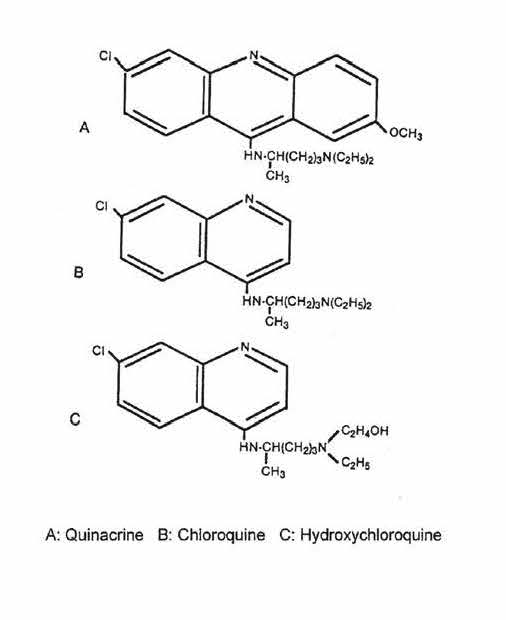
After reading yesterday’s blog on corona, my high school English teacher Mrs. Pharriss was particularly taken by the part on possible treatment of the virus with Plaquenil (hydroxychloroquine), derived from quinine. She asked if tonic water might help. I have the answer. This is what I wrote back to Mrs. Pharriss.
Now you’re giving me math assignments! The dose of quinine to treat malaria is 2-3 200-350 mg tablets 3 times a day. Likely you’d want to achieve similar levels to kill coronavirus. That’s a daily dose range of 1200-3050 mg/d. The FDA limits the concentration of quinine in tonic water to 83 mg/liter. If you assume your quinine water is the strongest allowed by law (Schwepp’s, presumably), you’d have to down 4.4-11 liters, or 1.2-2.9 gallons, per day to achieve therapeutic levels. If you had that nicely balanced with Tanqueray, you wouldn’t be worrying about Mr. coronavirus anymore.
I submit that what’s missing in this crisis is a good song. Oh sure, there’s lots of sturm und drang out there, but nothing you can dance to. And we need a little dancing right now, if only in our socially limited spaces. Maybe we can resurrect my old high school principal, Hose-Nose Allen, who was adept at patrolling the gym and making sure no one was dancing too close. These days he’d be making sure masks and rubber gloves were in place. But I submit there’s already a song out there for all of us, and it only needs a tiny bit of tweaking to bring it 4 decades forward into total relevance to our perilous modern times https://www.youtube.com/watch?v=BR2JtsVumFA. It’s a high-energy tune, and Lord knows we could use more of that, even if we’re incubating COVID-19, for which a major symptom is fatigue (how can you tell?). It’s such a fire-you-up song, George W. Bush had it on his iPod. Probably still does. After writing all that, and I promise I’m not retracting a word, I found some who has constructed a cute parody around the song for our current crisis https://www.youtube.com/watch?v=jOf1FLxpAGM . But I say stick with the original and let your mind fill in the corrections. You may come up with better words than the youtube chika. And Jeffrey Fieger’s brother Doug, who led the one-hit wonder Knack, probably needs the money. Who knows how much he gets from a youtube hit? He’s probably gotten as much from George W. Bush as he’s going to get.
But I wanted to tell you a bit about coronavirus. I decided a few days back I should actually learn something about it rather that just make snide remarks like “when you wring your hands, wash them before and after”. Besides having a medical degree and 40 years of practice experience, I was once a virologist. My masters is in microbiology. From ’75-’84 I attempted to do research in 4 different virology labs. I sucked at bench research, but could usually grasp the basic concepts. So I dove in a few days ago to bone up on the basics of this latest peril to our existence. I am wearing my white coat, with stethoscope in pocket, as I write this. So you can trust me. I’m a doctor. I wear the white coat more often these days, even though I am retired and not seeing patients, as I want to reassure my dear wife she is living under the same roof as a licensed physician. With all the fear and trembling being disseminated on campus by Dr. Schlissel and his band of nervous nellies, I figure she needs all the comfort I can provide when she comes home. A beer, a fire, and a home cooked meal may no longer be enough.
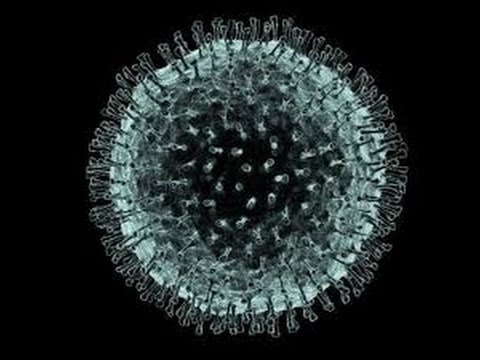
But knowledge is, as they say, good. Do you care that that the family of our current nemesis got its name because the many protein spikes from its membrane made it look like it had a crown?
Like all viruses, it’s a pesky and clever little critter. It’s the largest RNA virus. Influenza, by comparison, is about the same size (50-120 nm vs 100 nm) but has a smaller genome, 14,000 vs 27-32,000 nucleotides. The human genome is 64,946,660,000 nucleotides. Measles, herpes, and chickenpox are DNA viruses. DNA is the stuff of our genes, and needs to be transcribed into RNA to be translated into the proteins that do all the work. DNA viruses have to follow that same path, sidling up to the enzymes in the cells they invade to do the work, but it’s a couple steps. The genome of coronavirus is positive strand RNA, so it just comes in, latches up to a few ribosomes (structures that negotiate the whole protein making process) and starts seeing things to its own ends. Over half the coronavirus genome is devoted to the protein it will use to replicate its own RNA. What plops out is a big protein molecule that contains within it the power to chop up the rest of itself into two pieces that assemble and become the machine to churn out more little coronaviruses. Most viruses bring their own nucleic acid replicating enzyme with them. But corona just asks the host to whip them up a fresh one. Coronas aren’t content to just penetrate a cell, they hone to the Golgi apparatus, a membrane bound transport system deep inside for shuffling proteins about the cell. There are 9 proteins in the coronavirus that do different things. The spike protein that makes up the “crown” has the property of looking to immune proteins like a nice place to settle their “Fc” portions. Immune proteins have an “Fv” portion that recognizes various foreigners and the “Fc” portions where it just settles in. So immune proteins coming to attack Mr. coronavirus just turn tail and settle in instead, and nothing happens. Its main purpose is to latch onto cells to invade, and it is the structure to be mimicked by any vaccine that’s being developed. Other proteins help it get in and out of the cell it’s infected. Transcription of the viral RNA proceeds willy nilly with none of the proof reading that usually accompanies nucleic acid synthesis. As a result, the error rate in reading coronavirus RNA is about 1/10,000 nucleotides. With an average 30K genome, that translates to 3 mutations per replication. So making new Mr. coronaviruses is a pretty shaky proposition, and why they can sometimes turn dangerous, from common colds to SARS.
Coronaviruses account for about a third of all common colds. Testing for coronavirus has been available on “respiratory panels” for years, but few doctors test as there’s nothing to do for these viral diseases. A couple of times this century, coronavirus has mutated to get out of hand and cause trouble. In 2002 Severe Acute Respiratory Syndrome (SARS) emerged from China and quickly spread to the US, South America, Europe and Asia before it was controlled. During the 2002-2003 outbreak, 8,096 people were confirmed as infected and 774 died. In 2012, people began dropping in the Arabian peninsula to Middle East Respiratory Syndrome (MERS). Of 2,494 laboratory confirmed cases, 858 died (34.4% fatality rate). Fortunately, MERS never travelled. When Chinese peasants began dropping in Wuhan province last December, the virologists at the conveniently located Wuhan Virology Institute were all over it. The unfortunate folks with severe respiratory disease not responding to usual measures who had all just been at a local fish market harbored a coronavirus, sharing 79% of its RNA with the nasty agent that had cause SARS. That was enough to make them the same species. The host animal was the local bat, who carried the same thing. They named their find ”2019-nCoVBetaCoV/Wuhan/WIVo4/2019” or 2019-nCoV for short. So those complaining that calling this the “Wuhan virus” is somehow disparaging to our Chinese friends should note that this is what their own scientists designated. Nowhere in this report can I find any red flags saying this virus is some sort of Andromeda strain. Maybe the similarity to the original SARS virus has been enough to trigger the sort of insane response we’ve seen to date. It is easily transmissible by human-to-human contact. Stats to date say the fatality rate (about 1%) is worse than the flu (0.1%) although way more people get the flu every year than are ever going to get this coronavirus. I had hoped that diving into the science would give me a better understanding of the panic. Alas, it has not.
But I have been encouraged by some recent developments. One of my favorite former nurses sent me this video about some new findings regarding possible treatment. It turns out that a drug I once prescribed by the barrel full – Plaquenil (hydroxychloroquine, a quinine extract from cinchona bark) – does a bang up job of inhibiting coronavirus replication in the test tube. The concentrations needed to achieve this effect are similar to those reached by standard dosing of the drug for other conditions (rheumatoid arthritis and lupus) https://www.youtube.com/watch?v=vE4_LsftNKM&feature=share. Other drug combinations are being tried, particularly using some of the anti-HIV drugs. Before AIDS, there wasn’t much attention to anti-viral therapies. So I have supreme confidence a treatment will emerge, and soon.
A dear friend who had just almost lost her ear to skin cancer surgery sent me diving into the Cat Stevens songbook seeking the tune about losing body parts (Moonshadow, it turns out: https://www.youtube.com/watch?v=9c49aDWrzeA) and got me reveling in his first albums that somehow we all adored in the midst of all that heavy rock and psychedelia of the early 70s. It’s still absolutely wonderful music and I got through Mona Bone Jakon and a good part of Tea for the Tillerman till my Airbuds pooped out as the 353 Wolverine rocked and rolled towards Ann Arbor from Chicago. I might have gotten to the Indiana border. Tears came more than once but I think Kathy was shocked when I turned my tear streaked face to her and held my phone up to show her a song I want to be played at my funeral. Now I had been deep into the emotional pit that Cat is so good at making by then, all through Mona Bone Jakon and 5 cuts into Tea for the Tillerman. And he’s pretty good at those universal truths. But these hit home. Let me tell you how. https://www.youtube.com/watch?v=2rEylPTqPxo
Miles from nowhere I guess I’ll take my time Oh yeah, to reach there
The little Village I grew up in, Vicksburg, was miles from nowhere. I’ve always taken my time getting to things. I didn’t declare a major till my junior year at Michigan, and even then it was a thrown together thing, putting medical school – if attained – at least a year past my graduation. I kept on pace for the 4 year grind at U of C, but went back to tapping the brakes at Barnes. My misbehavior put a year pause between finishing residency and starting fellowship at Michigan. I didn’t get married till I was 34. They had to petition to extend my tenure clock at Michigan. Now retired, I fully intend to take my time to get to the next there.
Look up at the mountain I have to climb Oh yeah, to reach there.
I haven’t had an easy climb since I left Vicksburg. Keeping grades up at Michigan was a grind. Trying to scramble up and make something at bench research was a struggle at which I tried and failed for 9 years. God, how U of C was a grind, even knowing it was next to impossible to flunk out. Thrown in with the best and the brightest at Barnes was a constant struggle to keep up. At Michigan, the reach always exceeded the grasp. Tenure, o.k., but that next climb to “fool” professor just wasn’t going to happen. I made Emeritus, which means they no longer pay you. I give them value for their dollar. The mountains there to climb in retirement will be of my own making, so I’m looking forward to scaling those, whatever they happen to be.
Lord my body has been a good friend But I won’t need it when I reach the end
My body and I have had a lot of good times, and I’ve taken care of it, mostly. I think it has a few miles, and good times, left to go. But when I’m done, God and Jesus are taking over.
Miles from nowhere Guess I’ll take my time Oh yeah, to reach there
I creep through the valleys And I grope through the woods ’cause I know when I find it my honey It’s gonna make me feel good
I found my honey 36 years ago, after a lot of groping, and boy does it still feel good.
I love everything So don’t it make you feel sad ’cause I’ll drink to you, my baby I’ll think to that, I’ll think to that.
Sure do. And I’ll drink to most anything.
Miles from nowhere Not a soul in sight Oh yeah, but it’s alright
I’ve spent long stretches of my life alone. I was on only child, so being by myself seemed a natural state. After my mother died, I was the big fat kid nobody wanted to play with. Not till Vicksburg did I feel part of a group. At great big Michigan, I swam alone in a sea of strangers. I fondly recollect a few people from Hyde Park, but mostly I was by myself in that cold gray place. I learned in St. Louis that if you chased women successfully, you’d be pretty much assured of company. But even that system did not always work. My last year there, I lived in a 16th floor penthouse overlooking Forest Park. Sometimes, it was lonely at the top. Back in Ann Arbor, I found my second family in the Division, and of course my future bride. Yet, I was never embraced by the serious types, worse toward the end. Ten years ago, I discovered my biological family and now have more relatives than I can remember. I have friends spanning 55 years, mainly from Vicksburg. I don’t get lonely anymore. When I do find myself alone, I have many years of practice on how to keep myself company. Don’t cry for me.
I have my freedom I can make my own rules Oh yeah, the ones that I choose
Now that I’m retired, yeah. Oh, yeah. Never tasted freedom like this until now. So sweet.
Lord my body has been a good friend But I won’t need it when I reach the end
Miles from nowhere I Guess I’ll take my time Oh yeah, to reach there.
Some years ago, as my Kathy was emerging from her NASA.years, she formed an LLC mainly to collect the proceeds from her speaking gigs. More recently, it is collecting the royalties from the on-line textbook she wrote about her Kinesiology subject of 9 years, Scientific Writing. After my retirement, I asked her to add me. Someone might end up paying me for writing, consulting, or even patient care. Plus it provided an excuse for new business cards and stationery, for which my old forms were now obsolete. As I described our new venture to my dear high school friend Rod Taft, he asked what our main product was. I replied “knowledge”, which, you know, is good. This evening, as partners we sat before the fire, we decided some additional description might be necessary for out post-retirement venture, Kathy’s still to begin. Kathy found the word “Luxuria sed implemini”, in seeking the Latin term for debauchery. We’ll call our lawyer tomorrow. By the way, docere comes from the Latin “to teach”.
Vermiculture, they call it. Basically, you keep some special worms in a box somewhere in your house, feed them your non-meat kitchen scraps, and get rewarded with a nice treat for your garden. Kathy and I tried it years ago, even using few scoops of their product, but then fell out of the habit of feeding them, so the little dears all left us after a final orgy of copulation, cannibalism, starvation, death and decay. We finally got over the guilt and decided to try it again, promising to be more attentive to their needs. We still had the gear. The box was pristine, rather remarkable considering the debacle that preceded.
We had the 1.3 gallon stainless steel bucket to sit, virtue signaling, in our kitchen to collect the scraps until feeding time. You can’t get ‘em that look like this anymore, at least not on Amazon.
More important than hardware, we had the software, the little book by Mary Applehof of Kalamazoo that explains it all.
The next soft piece we needed was the worms themselves. You need a special worm for this task. Walt’s crawlers just won’t do as they’re too big, don’t poop enough, and are sold by the dozens not the hundreds. The best critters are “red wigglers”, or redworms, as more boring people call them. Scientists call them Eisenia fetida and yes, you Latin scholars out there will smell a shared root in the species name. Apparently, sometimes these darlings can get a little stinky in large numbers from the voluminous output that makes them such good composters. We did not sense that problem is our first go around with them, even during their denouement. But where to get them? I figured that in earth-conscious Ann Arbor there would be a redworm farmer, but none I could locate. On the net I easily found Uncle Jim’s Worm Farm in Spring Grove, Pennsylvania.
.
Jim (who doesn’t list his last name) started raising worms for fishermen back in the early 70s, turned to the redworm and composting in the 80s and never looked back. He was happy to sell me 500 wigglers, which arrived 2 days later.
That started the serious clock, and it’s a short one. The little buggers don’t last more than 2 days, after which things are iffy even with heroic measures. We had to embark on the difficult part of the whole venture. You can’t just set the worms on the floor of their new home and feed them their first meal. There lies suffocation, compaction or both. The new worm farmer must provide a soft bed to his clew. Mary Applehof says 5 pounds of shredded newsprint would do the trick for my 1.6 cubic foot Worm-a-way bin. Panic? Close! Who has that much newspaper laying around anymore? I used to faithfully bundle up my old newspapers for collection at the curb, but the modern throw-in-everything compost bin has done away with that practice. And anyway, who gets newspapers anymore? I frantically called around. I had dying worms depending on me. My local grocery store had yesterday’s unsold papers laying around, which they would be happy to sell me at face value. They recommended I wait till Monday, when I would get more newspaper for my dollar as the unsold Sunday papers would be bigger. Most other numbers my net search found just didn’t answer. Fortunately, I found the Washtenaw News Agency, which sold bundles of unsold New York Times for a buck each. That would be my best value on the Times since they stopped running coupons. People liked to buy them for their pets, she said. Me, too, I thought. I told her my worm story and she was amused. When I picked up my 11 pound bundle, she offered her thought on how smart my worms would be. Looking at the papers, from the last 3 days of January and featuring lurid color depictions of the players in the last days of the impeachment thing, I hoped my worms would have a sense of humor.
Unlike real farmers, worm farmers don’t do any actual physical labor. That is, except for preparing the bedding. Turning a 5 pound stack of newspapers into a pile of separate 2 inch strips is equal parts arduous and tedious. An unfolded Times is 12 inches wide and 24 inches long. Taking my box cutter to a folded section, I could free a strip with a couple swipes from each side. Then I had to peel each strip off one by one to make a fluffy pile in the bin. Kathy soon joined me and decided she needed a meaner weapon. She descended to her sewing room and brought up with her a Fiskar Classic Stick Rotary Cutter, or “pizza cutter” as she likes to call it. I believe the paste in function puts wide open areas around it for our protection.
This bad boy made short work of those Times. In sharing this chore for our animals, I began to understand how those farm couples stayed so close. As we prepared their beds, we mused over our hermaphrodite worms that would soon frolic there, proud of the acceptance of their orientation and sexuality we would show them. So Ann Arbor.
The bed was made before the worms’ clock went off. We ladled them on, kept the box top off with a bright light on, which drives them deeper into the bed, then put the top on and carried them to their new perch downstairs. The compost bucket was already bursting, and I lovingly carried it down later that evening, feeding them their first meal in their new home. We have been faithful in refilling the bucket, and have even generated a second feeding since the worms came. I hope Kathy and I can keep up our new good habits. During my first stab at vermiculture, I liked to answer those who asked if I had any pets “well, I have a thousand worms downstairs”. I intend to resurrect that retort, this time adding “and they’re well fed”.
I had 3 or 4 English teachers in high school. I don’t remember who taught freshman English and only remember Mrs. Price, who replaced Mrs. Joyce Ann Pharriss after she moved to California in the middle of my senior year, by consulting my 1970 Barker. Sophomore year brought Mrs. Grace Molineaux, a force of nature with the size to match her personality. She was a grizzled veteran of the grammar wars and didn’t brook sloppiness in her new recruits. Mrs. Pharriss was, I know now, barely 10 years older than us kids, and treated us like a big sister who knew we could always do better because she had. The school board had named the class “Man’s Cultural Heritage”, MCH for short. It aimed to combine History, English and the rest of the social studies into a team taught broad overview of culture from Creation to present, and largely succeeded. I still have the text to that course sitting on my living room bookshelf. It helped they’d found the teachers to pull it off. But this is about Mrs. Pharriss, so we’ll save those fond reminisces of other stalwarts for another day. Make no mistake, English got taught. Mrs. Pharriss saw to it you were on the right track with your grammar, spelling, punctuation, and style. I just came across all my old papers from her class. Even though most of them sport As, there’s still a lot of her red ink on them. Some of my best friends who were with me in that class are some of the biggest grammar nazis I know. But Mrs. Pharriss lovingly introduced us to the beauty that can be found in good literature and art.
So I was very happy when I found those papers in the “Vicksburg” box I had just confronted in my ongoing frenzied crusade at decluttering and organization. I had to tell Mrs. Pharriss about it, then later tell her about my blog? What better audience could a fledgling writer have than his old beloved English teacher. I just had to hope she couldn’t add red ink digitally. There was only one Joyce Pharriss in the whole USA to be found on InstantCheckmate. She lived in Menlo Park outside of Palo Alto – check – was 80 years old – about right – and got her social security card in Missouri – bingo! Mrs. Pharriss was proud of her Missouri roots and had the accent to prove it. I’d found my girl. There was only one e-mail address listed (InstantCheckmate usually lists several, and they’re almost always all wrong). I composed a brief note and fired it off, only to have it bounce back to me in minutes. Drat. But this gave me an excuse to use my new Docere stationery, enter the mailing address Instant Checkmate had for her, paste in my thwarted e-mail message with a few embellishments, stick it in an envelope with enough stamps pasted on from my steamed off collection to total 55 cents, slap on a UofM seal sticker on the back for good measure, and carry it to the post office drop box to send it off. I do love the ritual of sending a personal letter. I should put down the computer more often and send letters instead of e-mails. I have plenty of stamps.
It gave me pause when I saw something from her in my inbox less that a week later. I saw it on my phone during a lull in a basketball game we were losing, so it would be a treat to get home and read it on my computer while sitting in my La-Z-Boy before the fire, sipping a beverage. It was a nice long e-mail. She was amazed to think that one of her students of more than 50 years ago was now a professor emeritus. Not to be satisfied by this news she noted that she did wonder “what happened between high school graduation and your retirement”. She’d retired years ago, was involved in a book club comprised of old English majors (“both meanings of that adjective”) and had a daughter that was conceived about the time she left Vicksburg. The husband whose work took her to California from Vicksburg had died in ’93 and for 22 years she’s been living with her high school sweetheart. She was clearly open to keeping the correspondence going, so I thought I’d take a stab at her first bit of wonderment.
Hi Mrs. Pharriss
Jeez. I should have contacted Mr. Kellar instead. He just would have asked me if my equations still balanced, not handed me another damned essay assignment!
But since my last one to you came back with no red ink, maybe I’ve become a better writer, or you a softer grader.
Between Vicksburg and my retirement La-Z-Boy, there’s been a lot of stumbling upwards and things turning out mostly o.k. Michigan was hard. You were right. They didn’t care about my high school accomplishments. I screwed around my first semester, getting Bs and even a D on mid term reports. Dad was not pleased. I got my grades up but had no idea what to do with them. Law school? But not with how I talk. Junior year I figured I did science pretty well so why not try for Med School? That made everybody in my family happy and they stopped nagging me about what was I going to do with my life. I was so late in my science course work by then, I couldn’t take the MCAT till my senior year putting at least one year between graduation and any med school start. My advisor suggested I get a masters. You could do Microbiology in a year with no thesis, so I did. I applied to 9 good medical schools (I’d graduated “with high distinction” with a BS in Zoology and smoked my MCATs), and only got into one: the University of Chicago. I think I’m still on the wait list at U of M. Chicago was cold and hard, but I learned my trade, and it’s proven to be a good place to come from. I’ve visited Hyde Park a few times with my wife recently, and actually got a warm nostalgic feeling for those old gray gothic buildings. I was just middle of the pack in med school. When they told us first year everything was pass-fail, I relaxed. Little did I know they were keeping two sets of books, and I never made any honors associations. But middle of the pack from UofC is still considered pretty choice product so the Match Computer stuck me in a very good place: Barnes Hospital in St. Louis, a Wash U program, my 4th choice. I was in London as a visiting student on match day, so I received the news by phone from the Dean’s office; “no shit!” was all I could say. I chose Internal Medicine, of course, ’cause that’s what being a doctor is. The training was superb. U of M is minds of mush compared to Barnes. And the St. Louis girls seemed to like very tall skinny wavy haired bespectacled boys in white coats. I was a bit of a troublemaker and my chief chose to discipline me by withholding his approval of me to sit for medicine boards pending proof of a year of responsible employment. So after finishing my 3 year residency, I stuck around St. Louis and expanded some of the moonlighting jobs I’d been doing already, making 3 times as much money as I’d ever seen before, living in a 16th floor penthouse apartment overlooking Forest Park. Don’t cry for me.
Rheumatology is a never ending combination of Clue and Trivial Pursuit. It caught my attention in the middle of medical school and never let me loose. I aimed high again: UCSF, Barnes, Hopkins and U of M. Only U of M asked me to come, and then only because my Chief-to-be, Giles Bole, chose to ignore the one scathingly negative letter in my packet. Bevra Hahn apparently hadn’t liked the fact I that would sometimes leave her rounds early to drive to my moonlighting job. I loved U of M right from the get go, and not just because I’ve always loved Ann Arbor. The Division had a warm family atmosphere then (long since frozen out), the faculty were knowledgeable and friendly, they thought I was just the best, and offered me a job towards the end of my first year. I met my wife to be Kathy 8 months into my first year and bought a house and put her in it towards the end of my second year. We still live there. One stipulation of my new appointment was that I would go to Chicago for a year to study with the guy who was doing the procedure (arthroscopy) they wanted me to learn. I lived cheaply in a nice hospital owned apartment in Lincoln Park. I got home on weekends, only a 4 hour drive, and Kathy and I survived to get married in October after I got home for good.
I think I leave the narrative there and pick it up later if you’d like
I started a blog January 12 and it’s been a blast. One recent post “How we met” will tell you what you’d want to know about that.
My Wolverines played a beautiful game yesterday at Crisler against the hated #9 Spartoons, who came in 1 point favorites and missed the spread by 10. In the first 6 minutes they scored only 3 points, trailed buzzer to buzzer, and went the last 4 ½ minutes without sinking one bucket. In a physical game, our boys were all over the hardwood: draining 3s , diving for loose balls and hustling constantly in general, blocking shots, grabbing rebounds, tipping in missed shots, winning 50:50 balls, stopping State’s transition game, making their star Cassius Winston work for every shot, making free throws and even executing an alley-oop that evoked the Fab Five when Eli Brooks picked up his dribble before the 3 point line and lofted the ball in the general direction of the basket where John Teske, already airborne, picked it out of the air and slammed it through in a thunderous dunk, the sell-out maize clad crowd erupting in raucous appreciation. Coach Howard patrolled the sidelines, resplendent in a two-tone blue and white shirt, maize tie, beautiful deep blue suit, and the brown shoes I was always told don’t pair with blue, but looked great on him. Animated, he looked like he could still step in and spell Teske for some minutes if necessary, but I think he’s out of eligibility. For those who worried and are till worrying whether the quiet steady excellence John Beillein had established could be matched by this rookie coach, most beloved of the Fab Five but with zero head coaching experience, yesterday’s display is a taste of where the program is headed, I think, and it looks like a pretty exciting place. I’m glad Kathy and I got our season tickets when we did – early in the Beillein era – because I predict they’re going to be pretty hard to get.
Kathy and I are Michigan football fans first. Kathy’s family has had season tickets on the 50 yard line since 1964, also the first year my dad took me to a game. Kathy has many alluring qualities, and it was easy to fall quickly and deeply in love with her. But when tallying up practical matters while considering marriage, those tickets sure didn’t hurt. But we both like basketball, too, with Kathy a veteran of the college game herself, playing center at little Wooster. I’ve been hooked since Cazzie, but my own college and med school playing was confined to the intramural court. Kathy and I never had a kid, but an older friend once offered to cover our expenses raising any male offspring in return for a share of his NBA contract. Would’ve had to have been my height and her athletic ability. People sitting behind us at games sometimes complain how hard it is to see over us. Kathy informs them we could be parents of one of the kids out there on the court; not true, of course but I’ll bet most basketball parents are around our size. So, fans, think twice about complaining about those middle aged trees sitting in front of you. So those aren’t our kids out there, but in some ways yes they are. Basketball is a much more personal sport than football. There are only around 12 players and maybe 4 coaches so it’s easy to get to know names and faces. And bodies, at least for the players, who are out there basically playing in their underwear. The big screens in Crisler show bits featuring the players in cute and funny skits, so you even get to know their voices and taste their personalities. Plus you have so many more chances to bond, with 30 plus games in a season to football’s 12. So following a basketball team is much more intimate experience watching football. At Michigan, the numbers bear this out. Michigan stadium holds 110,000 fans watching 22 players on the field, or 5,000 fans per player. The 17,000 in a full Crisler watch 10 on the court, or 1,700 fans per player. Q.E.D. Kathy and I have been watching our kids out there for over 36 years. The Frieder era was fun, watching coach chew his towel while his players played pretty much undirected, but won anyway. From Bo’s firing of Frieder to Rumeal Robinson sinking those free throws to beat Seton Hall in the finals, 1989 was quite a ride. Steve Fisher was a nice guy and coached a lot like his predecessor, but boy could he recruit. Then came 1991. The first jaw-dropping get was an All-American center and an honors student at Chicago Vocational Career Academy, 6’9” Juwan Howard. Quickly following were All-Americans Chris Weber and Jalen Rose of Detroit and two Texans: Plano’s Jimmy King, who had befriended Juwan in camp, and Austin’s Ray Jackson. Thus was assembled the greatest recruiting class in NCAA history and the Fab Five were born
.
Fisher didn’t start them all together till mid season, but they caught fire in the tournament and made it to the final four. They’d get to the finals the next year but then began to break up. Kathy and I had some trouble with the Fab Five. Sure, they were exciting to watch and could do some spectacular things, but their flamboyant, free-wheeling, improvisational style didn’t seem right for conservative Michigan, like Bo Schembechler running a spread offense. Oh, wait, isn’t that what Bo’s protegé Jim Harbaugh does nowadays? But trouble found the Fab Five, or at least some of them, in the form of generous booster Ed Martin, whose investigation and 2002 guilty plea on conspiracy to launder money had devastating antegrade and retrograde effects on Michigan basketball. The University tried to get out ahead of the NCAA and imposed multiple sanctions on itself: All games were vacated from seasons 1992–93 and 1995-9. This included the final fours, a 1997 NIT title and the 1998 Big Ten Tournament title, placing banners for those accomplishments rolled up in storage at the Bentley rather than hung from Crisler’s rafters. It returned almost half a million in NCAA postseason revenue and self-imposed 2 years probation. The NCAA said okay and added two more years probation while docking us 1 scholarship per year from 2004 to 2008. John Beillein came from West Virginia and unlike the football coach we’d hired earlier away from Morgantown proved to be a resounding success. He started to pull us up out of the depressing deep valley we’d been in since Fisher’s firing 10 years ago that Brian Ellerbe and Tommy Amaker tried to negotiate, with little success. His only losing season was his first. His teams played a disciplined but fun game, and Beillein had a knack for finding under the radar players and developing them into stars. Tournament became a given and sometimes our teams went quite a way in, including championship games in 2103 and 2017. Everyone was shocked when he announced less than two months after the tournament that he was leaving to coach the Cleveland Cavaliers, hired away by Detroit billionaire and Michigan State alum Dan Gilbert. He’d interviewed with the Pistons a year before and I think was looking for a new challenge. What might pro-quality talent do in his system? The jury is still out on that, and some of his players are chafing under his professorial guidance. Meanwhile Warde Manuel had to find a new coach. It took him all of 9 days to welcome home one of Michigan Basketball’s favorite sons, veteran of 19 NBA seasons that included 2 championships and an all-star appearance followed by 6 years as a well-regarded assistant pro coach, Juwan Howard. The emotion at his introductory press conference was palpable. Kathy and I and many other people have a real good feeling about this hire. His first season has had its ups and downs, but I’m writing this the day after a big up, and I don’t see why it’s not going to last. And, oh, the future! Juwan has shown by his actions that he’s not going to recruit like Beillein. If diamonds in the rough show up, I’m sure Juwan can polish them. But Juwan’s going after the brightest stars. He’s got one or two such commits already, and has a bead on several others. What kid wouldn’t want to play for this guy? He runs an NBA-style offense – still disciplined – but lets the kids play . He’s young at heart with an impish sense of humor and a very kind way. And he sure looks good in those $5000 suits. But the recruit will have to hack it at a difficult school, following the example of his coach who earned his degree on time with his class, despite leaving school after his junior year for the NBA.
Juwan shares himself, even with me and Kathy. He does a local radio show every Monday night at 7 from the Blue Leprechuan, a bar on South University kitty corner from my wife’s office. We made the lucky choice to go see his first show of the season. Michigan Basketball was on a high, having won the Battle 4 Atlantis tournament in the Bahamas, beating two highly ranked teams in the process and emerging ranked #4 in the country. Their coach was too. We’d never seen Juwan live closer than across Crisler’s court, and there he was in a warm-up suit two tables away. He was magnanimous, funny and oh so genuine. After he relinquished his seat on the dais to women’s coach Kim Barnes Arrico, he made himself available to the assembled, mostly boomers rather than the throng of students I’d expected. I went up to him and offered my 6’8” services to the team, saying I thought I had some eligibility left. He hasn’t gotten back to me on that yet, but he did pose for a picture,
Kathy says he was bending his knees. I don’t think so as real tall men don’t do that sort of thing standing next to each other.
We’ve been regulars at the Blue Lep Mondays since. Still the same crowd. Kathy had questions for Juwan about a student of hers with whom she still keeps contact: Austin Davis, a 6’11” 260# senior backup center from little Onstead 21 miles away who wants to become a physical therapist. Austin wasn’t a highly regarded recruit but Beillein thought he could polish him a bit and you can’t teach 6’11”. Till this year, he’s been sort of a bust. People would cringe in those rare times he saw the court, as he always looked lost and made mistakes. Not so this year. He looks like he belongs and makes plays. Kathy wondered what it was about Juwan’s coaching: big man to big man? That was his job on the bench with the Heat.
Juwan didn’t elaborate on specifics, but was pleased at Kathy’s comment that Juwan’s coaching likely had a major role in the vast improvement she’s seen in Austin’s play this year. Austin has continued to improve, scoring 11 in 15 minutes against Ohio State last week. He doesn’t start yet, but has taken the floor to join starter 7’1” Jon Teske, in Juwan’s scary monster tall trees twin towers line up. That’s over 14 feet and 500 pounds of mean basketball meat out there!
So Kathy and I just love Juwan, and I think a lot of other people do too. He’s the coolest coach in college basketball. The future looks bright and I think he’ll be here a long time. Kathy and I will be there to support him every step of the way, ready to help out in any way we can.