I’ve found the link goes to an article in which half of a key paragraph is blocked out by an advertising bar I sure couldn’t purge. So here’s the unadulterated text:
Anytime things go from widely disputed to sudden, virtually-overnight national “scientific consensus,” it’s probably a good idea to be a wee bit skeptical. So it goes with the forced universal masking issue. We’ve obviously run quite the gamut on this, from being told not to wear them at all while the pandemic was at its peak — and everyone and their neighbor was crowding and swapping moisture particles in Lowe’s and Walmart aisles across America — to the now almost cultlike, lockstep message from politicians, the media and every leftist still too frightened to come out of their basement that not wearing masks in every possible setting is pretty much the equivalent to stabbing grandma in the heart.
It’s all a farce, of course — absurd theater forced upon us by people who would have probably believed in witches a few centuries ago. Now that the Karen-caucus has managed to browbeat most Republican lawmakers and even President Trump into some degree of at least verbal submission, they apparently expect the rest of us rubes to take their word for it and follow along. They think if they condescendingly say the words “I wear the mask to protect you and you wear the mask to protect me” enough, everyone will mindlessly obey. And if you don’t, they want to use the force of law to punish you severely.CARTOONS | HENRY PAYNEVIEW CARTOON
No, the ongoing, relentless, unceasing crusade to force every American to wear masks to “stop the spread” of coronavirus isn’t about to end anytime soon, if ever. Even with deaths declining, they keep the pot stirred up with panic porn about spikes in new cases and hospitalizations in southern and western states. Nevermind the fact that the so-called “surge” in hospitalizations in Texas turned out to be, as Fox News medical correspondent Dr. Marc Siegel noted, mostly people getting “elective” surgeries that had long been delayed due to coronavirus. So yeah, if you’re a dishonest media hack I guess you could call those “coronavirus-related.” However, the reality isn’t what the media panic-inducers want to convey, which is probably why you thought the hospitals were getting filled with actual, life-threatening COVID-19 cases until you read this.
As far as whether or not masking actually works to “stop the spread” of coronavirus, I can point to studies (assuming – and this is a big assumption – that Big Tech allows them to remain online), and the masking proponents can as well. We can go back and forth on the potential long-term dangers posed by non-medically trained people wearing, breathing through, touching and constantly fiddling with veritable Petri dishes for several hours a day (I’m right, they’re wrong, but whatever …). We can even debate whether forced-masking is truly an infringement on personal freedoms (it is) or discuss the validity of the view, popular among many go-along-to-get-along Christians these days, that masking is somehow the key to “loving your neighbor” (it’s not).
Does masking work? (Maybe.) How well? (Hard to say.) Is it 100 percent safe? (Doubt it. Even assuming you’re getting enough oxygen, how can breathing in your own germs all the time be ‘safe’?) Does God say one must put on a face diaper to properly “love your neighbor”? (LOL Uh, no.) Should freedom-centric societies force it on their citizens who aren’t obviously sick? (Hell no!) Certainly, we can argue over any of those issues and maybe never come to an agreement. I’ll admit it has become a politicized issue. Either position can sound convincing when considered without looking at the other side, and people generally have by-and-large made up their minds before even weighing the other side of their own view.
However, what most advocates ignore is one key observation that makes forced universal masking an insane and unnecessary policy choice in most situations, and that is this: even if masking worked, wasn’t dangerous at all and was not seen by millions as a pernicious tool of social control, I see no valid reason why we would want to stop the spread of the virus at this point.
There, I said it. The most powerful argument against universal masking is that it could in fact work to slow the spread of coronavirus. Please stay with me. I’m not saying we shouldn’t protect those who are vulnerable to the virus. Had we properly protected those in nursing homes, for example, we could have saved half the people who actually have died from this thing. Nevertheless, the facts are these: the virus is spreading at a rapid rate, but deaths have not spiked and have even decreased. The average age of those who are getting it is significantly younger than it was two months ago. And we’re not sure about this yet, but it also seems to have mutated into a weaker version that is more transmissible but less lethal than the version we saw in April.
The fact is, for all the suffering COVID-19 has caused among the elderly and immunocompromised, the actual death rate currently stands at less than half a percent and is declining rapidly as antibody studies come to light. The CDC recently estimated that 10 times the known cases have likely had the disease already and recovered. That’s probably a lowball estimate, but it equates to upwards of 10 percent of the U.S. population. As young people spread this seemingly milder version around while older folks take precautions, we’re ever closer to reaching herd immunity, which one recent study said can be attained with as little as 43 percent contracting the disease. That may still be a few months away, but in all honesty, it could be our only way out of this. They keep talking about vaccines, but no successful coronavirus vaccine has ever been produced and there’s little reason to think it will be now, nor that anything they roll out this quickly will be truly safe anyway.
So, if we aren’t overwhelming hospitals and people aren’t dying in droves, community spread is actually a good thing, especially when most cases are either mild or asymptomatic. Yes, it would take several months to get any degree of herd immunity, but that would surely be better than living forever like we’ve been living the past three months, no? What’s the alternative, living with this virus on the prowl for years, even decades? Masks forever? Endless, rotating shutdowns? The end of mass gatherings and sports? And if Democrats win, God forbid, an ever-encroaching police state hellbent on using this virus to torment us and our liberties until their Bolshevik dreams become a reality?
Dr. Scott Atlas, a senior fellow at Stanford’s Hoover Institution and the former chief of neuroradiology at Stanford University Medical Center, also made the case during a recent Fox News appearance: “We like the fact that there’s a lot of cases in low-risk populations because that’s exactly how we are going to get herd immunity, population immunity. When low-risk people with no significant problem handling this virus, which is basically 99% of people, get this and they become immune … they block the pathways of connectivity to more contagious, older, sicker people.”
Truly, is there any logical reason why those who are elderly, immunocompromised or even frightened about the virus couldn’t wear a mask that really protects them, like an n95, and let everyone else live their lives? Like it or not, herd immunity could be our only way out of this mess, our only way back to any sense of normalcy. The quicker that arrives, the safer those truly vulnerable to this epidemic will be.
As our neighbors the Oldanis and us stood six feet apart from each other in their front yard several sunny afternoons ago, we couldn’t help but gripe a little bit. None of us is really like that, and we’re all managing to have a pretty good time these days despite COVID. Beer helps, as it always does, and the Oldanis enjoy their brew almost as much as Kathy and I do. But such behavior has consequences, not just the calories that would accumulate if we didn’t walk everywhere. No, it’s a space problem: the ever enlarging corner of the garage where the empties go. By Governor Whitmer’s Executive Order 2020-21 (COVID-19) https://www.mlive.com/public-interest/2020/03/read-michigan-gov-whitmers-entire-coronavirus-stay-at-home-order.html
can and bottle returns were among those commercial activities suspended as she determined that they are not necessary to sustain or protect life. You can still buy booze in our state, thereby sustaining and protecting our lives, to be sure. But our empties have sure piled up. As of May 28, Michiganders are sitting on about 500 million returnable cans and bottles worth $50 million https://www.mlive.com/news/2020/05/michiganders-pile-up-50m-in-unredeemed-can-bottle-deposits.html.
Tom had a solution. I’ll tell you about it in a little bit. But first more about the empties.
Of the 10 states with bottle return programs, only Michigan shut down its program completely.
Come June 15, Michiganders will be able to start taking their bottles and cans back https://www.msn.com/en-us/sports/more-sports/michigan-reopening-bottle-returns-starting-june-15/ar-BB14Tsrd. Of course, there will be restrictions: only 250 containers ($25) per day per person, and returns can only be to bottle return facilities housed at the front of the store or in separated areas and serviced by reverse vending machines, meaning they require little person-to-person contact. The stores selling you the beer and pop have of course been keeping all those dimes. What happens to that? It turns out that stores always collect more deposits than they redeem. The Department of the Treasury requires them to keep track. There’s even a term for that difference, the “escheat”. And guess who gets most of that? The state snags 75% to spend on “environmental programs” while they let the poor store owner keep the rest, a token of appreciation for handling all those empties. That $50 mill may seem like a big number. But there was nearly $394 million in deposits charged and $350 million collected in 2018, the latest publicly available numbers.
Here are the numbers for the Ike/Clark household. As of this morning, we’ve accumulated 704 cans and 39 bottles. 236 are 16 ouncers, and the total capacity of all the containers is 9,860 ounces. Figuring the IPAs we favor have about 200 calories per 12 ounce serving, or 164,333 1/3d since the can ban. That’s 1264 beer calories a day for each of us. Being that my jeans still fit like it was March 23, and my sweetheart looks the same, that’s a lot of walking. Putting numbers to the garage space problem, my neatly arranged stack occupies 24 square feet of floor space. But space is not flat. Reaching a height of 3 ½ feet, that’s 84 cubic feet. To compare, a conventional full size kitchen refrigerator, which is almost twice as tall as my stack, runs about 53 cubic feet.
The Oldanis have a different pastime: horses. Not riding, but caring for them. Their son, Keegan, now a Nebraska sophomore, began to volunteer at the local horse rescue shelter at the advice of his sister Kaelan, a recent UofM aerospace engineering grad. He and his parents now go at least weekly to Starry Skies equine rescue and sanctuary www.starryskiesequinerescueandsanctuary.com, one of the largest equine rescues in Southern Michigan where they divert equines from the slaughter pipeline, from abuse cases, or from police seizures. Sometime during the shutdown, someone at Starry Skies got the idea of converting those piled up empties into cash for the horses. So they accept donations of empties, planning to sit on them until the Governor rescinds order 2020-21. Payday is a little over a week away . Early afternoon today, Tom and Kara loaded up their truck and off it went.
Now I and especially Kathy, who has always been fond of space, which after all is the final frontier. Kathy and I saw it as way to free up 84 cubic feet are reveling in our reclamation.
I know we could have been $75 richer had we just waited 9 more days. But now we have a little more space right now and the horsies are going to get a little more help. I think we made out o.k. We’re having a beer to celebrate.
Sue Moore of Vicksburg died suddenly and unexpectedly May 27 at the 82. She was editor and publisher of the South County News.
Her newspaper asked for reflections on her life. Here was mine:
Dear Ms Lane
I’m a VHS ’70 grad who left for bigger things but never got Vicksburg out of my heart. I didn’t get to know Sue Moore till this February, directed her way by my friend Eric Durham when I was looking for old Vicksburg Commercials. Sue would know, Eric said, being the daughter of Commercial publisher Meredith Clark. Sue delivered quickly: they were right on the shelves of the Vicksburg District Library, despite what their on-line catalogue said. Sue was interested in the source of my curiosity. I told her of my interest in an October 1968 accident that had killed 2 of my classmates and 3 other Vicksburg boys. Sue helped me in my researches, directing me to persons I should consult. The effort piqued her interest to the point she asked to interview me and my wife about it, and other things, culminating in a Sue Moore written and photographed article for the April South County News. https://southcountynews.org/2020/04/18/dr-ike-plans-to-write-about-1968-vicksburg-car-accident/ The SCN reminded me of the small town charm of the Commercial which had me getting it sent to my dorm at Michigan, much to the amusement of my more sophisticated classmates. I get the SCN delivered now, something for which Sue asked only a donation. I’ve distributed pictures and stories to colleagues and friends. When I found the on-line May SCN did not include the cover photo of Tom Hardy and his boxer Freddie intently reading the SCN, I emailed Sue and she had the file to me in a day.
Sue and my dear high school English teacher Joyce Pharriss, now of Menlo Park California, were in the same “social circuit” in the 60s. Knowing what a spitfire Mrs. Pharriss was (and is), I’ve got to believe those were sure some parties. When I heard from Eric’s sister, Becky, on May 28th that Sue had died suddenly and unexpectedly the day before, I felt as if I’d lost a dear and close friend, someone I hadn’t even known three months ago. I quickly got the news to Mrs. Pharriss, who was equally devastated, despite having not had contact with her for over 50 years.
As I read the musings of others who have known her, I realize my appreciation of the chance to know her as someone truly special is hardly unique. Our little burg and its environs were blessed to have had her all these years. Now we grieve for and miss her, but we have the memories, themselves truly blessed.
My life as a rheumatologist changed significantly just before the turn of the century. The FDA announced on November 2, 1998 that it had approved Enbrel (etanercept) for treatment of rheumatoid arthritis. Because it and similar compounds that followed were made in a living system rather than a test tube, they were dubbed “biologics”. This particular stuff was engineered to block the interaction of tumor necrosis factor (TNF) with its receptor. TNF has little to do with killing cancer, something it seemed to do in the test tube when first isolated in the 60s. But it has a major role in signalling it’s time to kick up the inflammatory response. So my poor rheumatoids finally had something that actually worked. Visits turned away from which joints to inject this time and how’s your Vicodin holding up towards more pleasant conversations about what are you doing with your newly won mobility, urging more, even exercise! Granted, it was hugely effective in only about 20% who got it, they did better if they kept on methotrexate, too and it was hard to get the steroids totally out of the mix. It did dampen response to infections, particularly weird old ones, so we had to stay vigilant for TB and histoplasmosis (mostly from pigeons). Enbrel was joined by other compounds with a similar mechanism of action: Humira (adalimumab) and Remicade (infliximab). Remicade is an i.v. infusion and the others you inject yourself every one or two weeks. The guys and gals in the lab kept at the exercise of blocking molecules that drove rheumatoid inflammation and today’s rheumatologist has a host of arrows in his quiver, with several different types of poison on their tip. Of those 1.3 million RA patients and the 1 million with psoriatic arthritis, most who take a biologic are on Enbrel, Humira or Remicade. TNF blockade helps in some other autoimmune diseases, like Crohn’s, ulcerative colitis, and plain old psoriasis, and a smattering of other oddball skin and eye conditions. But most of it goes to arthritis patients. U.S. sales for the trio in 2019 were $5.05 billion, $19.9 billion, and $3.2 billion, respectively. These numbers are expected to decline steadily now that it’s been over 20 years since their release. The FDA figured out several years ago how to certify that some other company’s off-patent version is just as good, calling such winners “biosimilars”. And they’re appearing.
So treating immune mediated arthritis is much more satisfying than it was in the bad old 20th century. Just keep that eye out for infection, dontcha know. Then, whether it was the Wuhan Lab or some bat at the wet market, a Mr. Corona emerged just slightly different from his ancestors, and here we are nearly 6 months later stuck at home, wearing masks and keeping 6 feet from each other, still piling up bodies, blessedly less all the time. As the thing started to rev up in February, my colleagues who are still practicing got spooked. Some of our patients were landing on the COVID ward. We were being asked how to use one of our potent biologics, the interleukin 6 inhibitor Actemra (tocilizumab), in COVID patients with the most horrible lung disease, as the Chinese had reported it to be helpful. Those who could recollect the 1918 flu pandemic, or had read about it, knew that what killed the lungs in these viral infections was the exuberant immune response of the patient, not the virus itself.
So that eye out for infection was getting nearly blinded by Mr. Corona’s light. Many of my colleagues worked to taper patients off their biologics. Realizing this was entirely new and very scary ground, rheumatologists around the world began carefully cataloguing the particulars of each of “our” patients who contracted COVID-19. The COVID-19 Global Rheumatology Alliance https://rheum-covid.org/ has collected over 1800 cases as of last week and at last week’s “State of the Art”(SOTA) meeting, they reported some of their findings. I’ve pasted in the Rheumatology News synopsis below.
The biggest shock was that patients on anti-TNF agents were 60% less likely to be hospitalized after contracting COVID, compared to others not receiving such agents. The drug that used to be the biggest gun against RA, prednisone, cut the other way. Patients on the equivalent of 10 mg/day of prednisone or more were at a 105% increased risk for hospitalization, compared with those not on corticosteroids after adjustment for age, comorbid conditions, and rheumatic disease severity.
I expect that there will be more than a few rheumatologists quickly contacting their patients currently kept away from biologics. It’ll be interesting to see what else emerges as this registry grows and continues to be mined for associations and correlations.
Oh, and all those patients of ours on Plaquenil? No difference one way or the other. But there’s no way with the data as collected to tell whether Plaquenil is effective as prophylaxis, as our President is taking it (https://wordpress.com/block-editor/post/theviewfromharbal.com/509). If you’re a patient who happens to be on Plaquenil, you get exposed to Mr. Corona and he doesn’t set up shop, you don’t even show up in the registry, as that’s only for infected patients. That’ll take a different sort of study. I’m still taking it, with a zinc chaser, if I’m ever thrown into the COVID wars,
On the other hand, those registry patients who were on 10 mg of prednisone or more daily when they got infected were more than twice as likely to be hospitalized than were those who were not on corticosteroids, even after controlling for the severity of their rheumatic disease and other potential confounders, Jinoos Yazdany, MD <https://profiles.ucsf.edu/jinoos.yazdany> , reported at the virtual edition of the American College of Rheumatology’s 2020 State-of-the-Art Clinical Symposium.
“We saw a signal with moderate to high-dose steroids. I think it’s something we’re going to have to keep an eye out on as more data come in,” said Dr. Yazdany, professor of medicine at the University of California, San Francisco, and chief of rheumatology at San Francisco General Hospital.
The global registry launched on March 24, 2020, and was quickly embraced by rheumatologists from around the world. By May 12, the registry included more than 1,300 patients with a range of rheumatic diseases, all with confirmed COVID-19 infection as a requisite for enrollment; the cases were submitted by more than 300 rheumatologists in 40 countries. The registry is supported by the ACR and European League Against Rheumatism.
Dr. Yazdany, a member of the registry steering committee, described the project’s two main goals: To learn the outcomes of COVID-19–infected patients with various rheumatic diseases and to make inferences regarding the impact of the immunosuppressive and antimalarial medications widely prescribed by rheumatologists.
She presented soon-to-be-published data on the characteristics and disposition of the first 600 patients, 46% of whom were hospitalized and 9% died. A caveat regarding the registry, she noted, is that these are observational data and thus potentially subject to unrecognized confounders. Also, the registry population is skewed toward the sicker end of the COVID-19 disease spectrum because while all participants have confirmed infection, testing for the infection has been notoriously uneven. Many people are infected asymptomatically and thus may not undergo testing even where readily available.
Early key findings from registry
The risk factors for more severe infection resulting in hospitalization in patients with rheumatic diseases are by and large the same drivers described in the general population: older age and comorbid conditions including diabetes, hypertension, cardiovascular disease, obesity, chronic kidney disease, and lung disease. Notably, however, patients on the equivalent of 10 mg/day of prednisone or more were at a 105% increased risk for hospitalization, compared with those not on corticosteroids after adjustment for age, comorbid conditions, and rheumatic disease severity.
Patients on a background tumor necrosis factor (TNF) inhibitor had an adjusted 60% reduction in risk of hospitalization. This apparent protective effect against more severe COVID-19 disease is mechanistically plausible: In animal studies, being on a TNF inhibitor has been associated with less severe infection following exposure to influenza virus, Dr. Yazdany observed.
COVID-infected patients on any biologic disease-modifying antirheumatic drug had a 54% decreased risk of hospitalization. However, in this early analysis, the study was sufficiently powered only to specifically assess the impact of TNF inhibitors, since those agents were by far the most commonly used biologics. As the registry grows, it will be possible to analyze the impact of other antirheumatic medications.
Being on hydroxychloroquine or other antimalarials at the time of COVID-19 infection had no impact on hospitalization.
The only rheumatic disease diagnosis with an odds of hospitalization significantly different from that of RA patients was systemic lupus erythematosus (SLE). Lupus patients were at 80% increased risk of hospitalization. Although this was a statistically significant difference, Dr. Yazdany cautioned against making too much of it because of the strong potential for unmeasured confounding. In particular, lupus patients as a group are known to rate on the lower end of measures of social determinants of health, a status that is an established major risk factor for COVID-19 disease.
“A strength of the global registry has been that it provides timely data that’s been very helpful for rheumatologists to rapidly dispel misinformation that has been spread about hydroxychloroquine, especially statements about lupus patients not getting COVID-19. We know from these data that’s not true,” she said.
Being on background NSAIDs at the time of SARS-CoV-2 infection was not associated with increased risk of hospitalization; in fact, NSAID users were 36% less likely to be hospitalized for their COVID-19 disease, although this difference didn’t reach statistical significance.
Carol Clausing of Albuquerque is the oldest of my 4 living cousins on my father’s side. Kathy and I yesterday went to visit a lot of the people we both know. I sent her this account.
Hello cousin,
Kathy and I visited some Ikes yesterday, and a few other family. We make this trip every year around Memorial Day to decorate my mom and dad’s graves and linger by several others. Yesterday morning was beautiful with bright sunshine that made chosing the top down Jeep for the trip west a no-brainer. We kept to the back roads till we ended up at Grandville cemetery. We helped along Dad’s and Mom’s, already sporting a crisp flag from the VFW, by placing our potted red chrysanthemum, Dad’s usual, into the green pail Diane had put between the stones. She’d put her artificial flowers next to her mom’s, which will still be colorful in November when we have to pull things in. I related to Kathy that Aunt Florence was resting in the plot dad had meant for me when he bought in ’62 and she was happy I hadn’t had call to use it.
We ventured west a few rows then toward Prairie where we found the four red stones of the Slaters: Uncle Jim (Stewart, her husband), Aunt Dorie, and Grandma and Grandpa Slater.
We mused how long Aunt Dorie and Grandma had lived as widows and recalled the quick deaths of the Slaters compared with the grisly prolonged exits of their spouses.
Then it was on to Rosedale in Standale, a place I had not visited for decades. We had to route through downtown GR, stopping at Avron’s brewery on Division near Hall to pick up a case of their excellent beer I had ordered on line Friday. The path to Standale does not go through the most attractive areas of GR, but things were nice once we hit Walker and we finally got there. A couple nights before the trip I panicked as I had no idea where Grandpa’s grave was. The “find a grave” program on Rosedale’s web site wasn’t finding him anywhere, Dirk or Dick. Fortunately, there was an email address and on Friday night I got a message that an envelope with a map would be taped to the office door. When we got there, sure enough. We found the plots easily. Grandpa must have bought these 6 all at once when your dad passed in ’62. I don’t think they filled as he expected. Aunt Ann was still alive when our Uncle passed. Uncle Bob was already gone, so she probably decided she rather rest somewhere other than Standale when her time came. She’s gone now, too, but I honestly don’t know where she was laid to rest. Likely Dickie had a hand. Two with whom I lost touch long ago (tho’ Diane still talks to Dickie). Standale’s graves are more subdued than Grandville’s. I saw few flowers and no flags, although there was a box that looked like a coffin full of them by the office. Terry and Uncle Bob both merited a flag but I could see no place to put them.
Kathy got to know Grandpa a little, and was charmed and delighted by him. Wasn’t everybody? I know all the women at the Holland Home loved him. She never met Uncle Bob, but went to his funeral. She still remembers being shook by seeing the big sign at the door announcing this was the funeral of “Robert Ike”. I told her a little of what I remembered about Terry. I hadn’t remembered he’d been in the service. My dad was keeping contact with him when he was living in Detroit. We kept talking how we were going to both visit Terry and get a guided tour of his world. It always sounded fun and interesting to me and I’m sorry we never made the connection. It sounded like he was living an interesting, if troubled, life. Gone too soon. Speaking of gone too soon, there’s your dad, the first of a string of premature deaths to rip through my family. Your mom lived a long time without him, and she was a great one to get to know. The last of the Ike women of that generation, I still miss her.
So that was our tour. 13 graves. I’m lucky I’m still above ground. I know they’re not there, their bodies are dust and their souls are in Heaven, but standing by their graves puts a focus on the person you don’t get from idle thoughts, no matter how much you might try. Where they really live on is in our memories, but that closet full of memories gets awfully crowded at our age, so having to go in, find them, and dust them off for a while is a rewarding exercise. I’m very happy we did it, even if it made for a very long day.
What made it even longer was our trip up to Stanwood, where we dropped in on my living, breathing 87 year old birth mother, whom it’s been my pleasure and privilege to know for the past 11 years. I want to make sure she’s got a few memories packed in there before her time comes, which may be sooner than I was anticipating. See us 11 years ago when Kathy rented a plane and flew me to our first meeting, from Ann Arbor to Canadian Lakes Airport. She drove up in her convertible. So we both made an entrance.
Here’s to all who have touched our lives. May we treasure their memories!
So our much beloved and most able leader, President Donald J. Trump, has been taking Plaquenil (hydroxychloroquine) for prophylaxis against COVID-19 for the past week and a half, and even some on his own side of the fence have gone apoplectic (see Judy McLeod’s article from today’s Canadian Free Press, below). I applaud him. He’s a healthy obese 73 year old, but that’s two marks against him right there should he contract COVID-19. He runs into a lot of people and doesn’t practice social distancing. Mike Pence is a great guy and will make a fine president, but I’d rather he wait till 2024. The last thing we need is a sick PDJT.
Most antimalarial drugs, the class in which you find Plaquenil (although no one’s taken Plaquenil for malaria for decades), are given for prophylaxis, not treatment. You start taking the drug before you travel to the malaria infested region, not wait till you’re there and bitten by a falciparum carrying mosquito). And Plaquenil is incredibly safe long term, speaking as a retired rheumatologist who practiced medicine for 40 years and prescribed buckets and buckets of the stuff to hundreds of patients for decades. Their eyes have to be watched yearly, and once in a great while muscles of heart or skeleton might be compromised. And that’s it. The deaths that befell the patients “Doctor” Cavuto rails about were already sick with COVID-19 and likely were going to die anyway.
The little tidbit towards the end of the article I like is mention of the random survey of doctors that found by the first week of April, 22% were taking Plaquenil themselves for prophylaxis. https://www.foxnews.com/science/controversial-coronavirus-treatment-hydroxychloroquine-used-25-percent-doctors-say. Physician heal thyself, eh? If I were back facing patients who had a chance of carrying COVID-19, I’d sure be taking it, with a zinc chaser, just like PJDT.
Here’s the Canada Free Press column:
‘Physician-in-chief at Fox News’ Neil Cavuto has gone apoplectic‘
‘Dr. Neil Cavuto’: ‘Taking Hydroxychloroquine Can Kill You’
How dare the President of the U.S. take physician-prescribed Hydroxychloroquine as a potential preventative measure against the coronavirus without first runnining it by Fox News!
At least three Fox News talking heads have gone off the rails after finding out the president’s been taking Hydroxychloroquine supplemented by Zinc pills for the last week and a half: Juan Williams says Trump taking Hydroxychloroquine shows ‘he’s worried about getting sick’ in the White House. Never mind that the president’s been in the White House most every day since the pandemic struck, obviously not too worried about coming down with it.
Fox News medical contributor Dr. Manny Alvarez criticized President Trump’s announcement, describing it as “highly irresponsible”.
Are all three trying to add weight to House Speaker Nancy Pelosi’s argument that, Donald Trump should not be taking Hydroxychloroquine—because he is “morbidly obese”?
“Fox News’ Neil Cavuto was so shocked by President Donald Trump announcing he’s taking Hydroxychloroquine that he took a few minutes to explicitly warn viewers about the risks of taking it. (Mediaite) Dr. Cavuto insists that you know that taking. “At one point the president asked “what have you got to lose,” but as Cavuto said, “Hydroxychloroquine could take your life. A number of studies, those certainly vulnerable in the population have one thing to lose, their lives. A VA study showed that among a population of veterans in a hospital receiving this treatment, those with vulnerable conditions, respiratory conditions, heart elements, they died.” (Mediaite)
“Cavuto read from a number of other studies about the effects of Hydroxychloroquine and said, “Those who took it, in a vulnerable population, including those with respiratory or other conditions, they died. I want to stress again — they died. If you are in a risky population here and you are taking this as a preventative treatment to ward off the virus or, in a worst-case scenario, you are dealing with the virus, and you are in this vulnerable population, it will kill you. I cannot stress that enough. This will kill you.” “So again, whatever benefit the president says this has — and certainly has had for those suffering from malaria, dealing with lupus — this is a leap that should not be taken casually by those watching at home or assuming, ‘well, the President of the United States says it’s okay,’” Cavuto continued, bringing up the FDA’s own warning. “Cavuto emphasized he’s making a “life and death point,” not a political one.”
Hydroxychloroquine can kill is Bill Gates’ and Big Pharma’s highly coveted, one-size-fits-all coronavirus vaccine
“A study published in March by French researchers suggested that COVID-19 patients could be treated with antimalarial medication and antibiotics in the battle against the novel coronavirus.
“New York state recently started coronavirus drug trials in an attempt to control the pandemic’s impact on the state, according to Gov. Andrew Cuomo, who announced the state had acquired 70,000 doses of Hydroxychloroquine, 10,000 doses of zithromax and 750,000 doses of chloroquine.
“As of Tuesday morning, more than 2.49 million coronavirus cases have been diagnosed worldwide, more than 787,000 of which are in the U.S., the most impacted country on the planet.”
It’s not likely that President Trump would be taking Hydroxychloroquine if it was likely that it was going to kill him.
Media activists, perhaps some secretly hoping that the president they live to hate will soon be kicking the bucket, should remember the text of a long ago cable sent from London to the press in the United States by Mark Twain after his premature obituary had been published: “The reports of my death are greatly exaggerated.”
Meanwhile, time may prove that the only thing Hydroxychloroquine can kill is Bill Gates’ and Big Pharma’s highly coveted, one-size-fits-all coronavirus vaccine.
If so, we’ll never hear the end of it because if that happens, it will all be President Donald Trump’s fault.
Judi McLeod is an award-winning journalist with 30 years’ experience in the print media. A former Toronto Sun columnist, she also worked for the Kingston Whig Standard. Her work has appeared on Rush Limbaugh, Newsmax.com, Drudge Report, Foxnews.com.
It’s been 49 days since California’s Governor Newsome announced details of his bold executive order N-39-20 giving the Director of the Department of Consumer Affairs (DCA) the authority to waive professional licensing requirements for the healing arts boards under DCA during the COVID-19 State of Emergency, hoping to produce a flow of recruits to the newly created California Health Corps, a new army charged to staff an additional 66,000 hospital beds, now closed, but expected to be needed as the COVID-19 pandemic spreads. I wrote about this on my blog April 5 https://theviewfromharbal.com/2020/04/05/come-back-west-old-man/. With 37,000 medical professionals in the state who had let their license lapse within the previous 5 years, the pool seemed deep. Already licensed professionals could also apply to the Corps. The whole thing was to be funded, with no budget stated, out of the state’s Disaster Relief fund, which has provision for substantial reimbursement from the feds. The response was phenomenal, with 25,000 applying in the first 24 hours, to 34,000 in first 48 hours, up to 82,000 a week later, and totaling 93,000 after a month. But problems ensued. 2/3ds – 60,000 – didn’t have a valid license. 20,000 haven’t filled out a license renewal application despite being sent a reminder. Part of this might have arisen from some confusion in the application process. There are two websites at which one can apply to the Corps. The one accessed from the California government’s Coronavirus (COVID-19) Response https://covid19.ca.gov/healthcorps/ has only the Corps application with no mention of the license renewal program. For that, you need to go to the California Medical Board https://www.mbc.ca.gov/Licensees/License_Renewal/Physicians_and_Surgeons.aspx#COVID19_Temporary_CME_Waiver, where the license renewal program is explained as something to be done first before applying to the Corps, the button to the application placed just after.
As of April 30, 10,500 applicants were in final review and 4,900, about 5% of the volunteers have been cleared to participate, 2/3ds of which are nurses with 417 doctors. Pay is not bad, but pretty lowball by California standards.
Section V applies to employees appointed by EMSA. Employees entitled to the HAM authorizations identified below include all new hires as of 04/17/20 in the following classifications listed.
Class Code
Class
CBID
Department Location(s)
Range
Hiring-Above- Minimum Total Salary Rate
7551
Physician and Surgeon
R16
EMSA
Rg A Rg B Rg C Rg D
$10,161 $12,310 $12,904 $13,278
8165
Registered Nurse
R17
EMSA
Rg A
$6,572
8212
Nurse Practitioner
R17
EMSA
Rg A
$8,394
No beach house will be bought with these state checks, which don’t start till you’re deployed. 233 soldiers in this army – doctors, nurses, respiratory specialists and support personnel – landed in Sacramento April 20 where they staff the 363 bed emergency hospital set up at Sleep Train Arena, let by the state for $500K a month expecting to get 75% of that back from the feds. So far there are no patients. 600 more nurses will soon be deployed, formed into regional “strike teams” to help control the infectious disease in skilled nursing facilities. So that still leaves over 4,000 soldiers sitting on the bench. But at least they have an inspiring flag:
Does that doc have a beard? Doesn’t that render your N-95 mask essentially worthless? And masks they’ll need. When you figure this army is composed of quite a few retirees, you’ve got the elderly facing up to patients with active COVID infections: a recipe for disaster if there ever was one. The youngsters will be sitting on the sidelines making book on which side will have more fatalities.
But the war smoulders on. When I first wrote about this on 4/5, there had been 5,304 confirmed cases in LA county. As of this morning, according to the Johns Hopkins site, there had been 37,360 confirmed cases in LA county, a little over 745/day since my last post. There’ve been 1,793 deaths at a rate 369.7 per 100K population. 1,044 new cases since previous day, all in an area with a total population of 10,098,052 (1,299,277 age 65 or over). Some of the increase could stem from improved testing.
Down south in San Diego county, where Kathy and I want to go, there have been 5,662 confirmed cases, 209 deaths at a rate of 169.35/100K and 27 new cases since the previous day. Total population 3,302,833 (439,595 age 65 or over). But on May 13 County Supervisor Jim Desmond, a conservative, pointed out that only 6 deaths of the 194 ascribed to COVID-19 to date in the county could be considered “pure” COVID deaths, in that the victims had no other underlying medical condition. https://www.sandiegouniontribune.com/news/politics/story/2020-05-13/supervisor-jim-desmond-says-san-diego-has-only-had-six-pure-coronavirus-deaths
The entire Golden State holds 39,510,000 and has had 78,725 confirmed cases (0.2% of the population), 3,208 deaths (about 1/3d are nursing home patients), with 1,179,126 tested so far.
Back home, my Michigan has had it worse. Of 9,987,000 Michiganders, 50,538 had confirmed COVID-19 (0.5% of the population) with 4,881 deaths (1.5 times as many as California, which is nearly 4 times as populous as Michigan) with 357,921 tested so far. Wayne County, population 1,761,382 (258,954 age 65 and over), home of Detroit, has seen the worst of it, with 19,016 confirmed cases (0.43% of the population) with 2,212 deaths and 134 new cases since previous day.
But the docs and nurses of this state have handled it with aplomb. At U Hospital, the number of new cases and deaths have been going steadily down and occupancy is creeping up. We never had to use the 500 bed field hospital they set up in the Track and Tennis building. And the only “army” I’ve seen are the rednecks with their AR-15s marching on Lansing with a message for Governor Whittmer.
When I first wrote about this, I said I’d pass on taking Governor Newsome’s offer of a freebie renewal of my lapsed California license. There would be opportunities to serve in the war on COVID just a short walk away. Fortunately, I never had to put the white coat back on. And it looks like I won’t be needed in California, either. I still filled out the renewal form this morning, just to see what will happen. It’s a two part process to get in the Corps, so I think I’m safe, which is how everyone these days wishes me to stay.
Nathan Wei, late of Frederick, Maryland, died of gastric cancer two years ago March at age 68. His wife held his memorial service at his packed house in Laytonsville just about two years ago. She asked the men to wear bowties, which Nathan so liked to sport when he had to wear a tie (he preferred scrubs), so I bought a nice maize-and-blue one at van Boven’s out of double respect for the guy, who’d did a year in Radiology and two in Internal Medicine training at U-Hospital.
Nathan and I had become scopy buddies in the very early days, maybe ’86. He saw what Bill Arnold was doing and was determined to do it himself, and did, and then some.
He got some help from the legendary late Bob Jackson of Toronto who took advantage of being Canadian team physician for the ‘64 Tokyo Olympics to spend time with modern arthroscopy’s father Makei Watanabe then come home to Toronto and figure out how to do surgery with the scope of his he just bought. Jackson had no worries about rheumatologists picking up the procedure and welcomed Nathan’s interest. Later on, Nathan collaborated with another American arthroscopy legend – Lanny Johnson of East Lansing – so he’s been touched by the two biggest names in North American arthroscopy. Pretty good bloodlines. Whereas I got Bill’s attention to teach me and Bill Kelley’s department of medicine to pave the way, that same institution would throw up a lot of road blocks that Nathan didn’t have to see. Granted, he had his share of challenges. He took on most anything that looked good to him. Arthroscopic surgery for arthritis of all types, even use of a laser, epidurals, nerve blocks, DEXA, bone biopsy, muscle biopsy, salivary gland biopsy (I taught him that one), skin biopsy, fat pad biopsy, stem cell treatments and platelet-rich plasma (PRP) injections, in-office MRI, ultrasound, even US-directed wire transection of the volar carpal ligament for carpal tunnel syndrome. Now and then he took on an associate, but mostly it was just him and his many nurses, who always got authorship credit on his publications. Pharma sought him out and vice versa, not just for the mundane crank-em-through phase III studies, but interesting early studies of novel agents, especially if they wanted tissue. They knew Nathan could get the patients, handle them and the paperwork efficiently, and get ‘em tissue. He did over 200 studies before he wrapped it up December ’17. Over the past several years, he’d gotten into social media to promote his practice, featuring regular web broadcasts on various medical topics. When I visited him last, he interviewed me for one of them. Whenever I visited, which was much less than I wish I’d done, I’d be in awe of his operation.
In the 90s, he decided to convene a small course to teach others what he did. These were initially held at his office then later at the Anatomy labs of the University of Maryland in Baltimore. He procured several fresh cadavers from the city morgue and had the 6 or so in attendance (plus 3 instructors, of which I was one) go through multiple joint injections, other injections, and various biopsies. Tuition was not cheap, but students liked what they got. Besides the procedural training, they got a little taste of the Nathan philosophy. Brought up to disdain mammon in medicine, I was sometimes taken aback when he talked about things like the precarious position of rheumatology practice and the need for “marketing”. Probably too late I realized that what that really involved was being able to explain what you were doing, including why it was special and important, in a clear terse understandable manner. For rhematologists who seldom deal with anything that’s clear cut, bringing clarity to a pronouncement can be a big challenge.
I sort of lost track of Nathan until the Spring of ’16, when I saw on one of those academic tracking sites that someone out of Frederick Maryland had accessed one of my old arthroscopy papers from the early 90s. I called Nathan to ask why he needed to look at such ancient stuff. He denied doing such a thing, but we got to talking about what he was doing and of course it was interesting. A company called MyEye had made a 1.4 mm arthroscope you could just poke in under local anesthesia in the office, plus they’d used state of the art image enhancement to make what you see look like something from the standard 4.0 mm glass lens scope you’d use in the OR. The “needle scopes” of the 90s that got a lot of rheumatologists hyped up suffered from poor image quality. Not the MyEye. I went to visit in August and was impressed. I could see this bringing arthroscopy back to rheumatology. Nathan arranged a dinner with Mark Foster, president of MyEye, and we made all sorts of plans. My upcoming sabbatical at UCSD with scopy buddy Ken Kalunian would be a chance to do this in earnest. Nathan was pleased he’d have some company and we were off to the races. Too bad we crashed and burned. Too bad I never made it back to Frederick till it was too late.
I don’t do arthrocopy anymore, haven’t since May ’01 (unless you count that cadaver knee at the Marriott in La Jolla January ’17), but I can still write about it; I’ve done 2 slightly different versions of “Arthroscopy in rheumatology”, one already into the The Journal of Surgery and Surgical Technology, and one about to be submitted to Rheumatology (Oxford). My coauthors on each are my mentor Bill Arnold and my best scopy buddy Ken Kalunian. Each manuscript is dedicated to Nathan, as follows:
“We dedicate this to our dear departed friend and ever inspiring colleague, Nathan Wei, for whom the light was always burning bright.”
Now let me take words from others to tell you about Nathan. The first is from The Rheumatologist, a monthly tabloid put out by the American College of Rheumatology. Danny Malone from Wisconsin shared Nathan’s cowboy ways, perfecting with him a technique using a wire under ultrasound guidance to treat carpal tunnel syndrome. And you know Bill Arnold by now.
The second item is by Nathan himself, written for Medcape in October ’17, not long after he received his cancer diagnosis.
The last item is his obituary from the Frederick News-Post, followed by comments.
From The Rheumatologist
In Memoriam: Nathan Wei
May 18, 2018 • By Daniel G. Malone, MD, RMSK, FACR, & William J. Arnold, MD, FACP, MACR
We are sad to report that Nathan Wei, MD, FACR, passed away March 27 from aggressive cancer.
Dr. Wei was a passionate, compassionate, fiercely independent innovator, student and teacher, who carved out his own way of doing things, always in the pursuit of excellent patient care. He was unafraid to embrace cutting-edge medical services for his patients, and to seek training from the best and most authoritative people in the world to provide those services.
Dr. Wei was one of a kind that we may not see again in this era of guidelines, rigid training requirements and limitations because of medical malpractice concerns. These days, there are few who match his innovation, ingenuity and passion, all of which we should strive to teach our trainees.
Nathan preferred the road less traveled, and what he valued above all else were the benefits to his patients and the professional rewards of providing them with the best care available. He would let nothing stand in the way of accomplishing those goals.
Dr. Wei did his rheumatology fellowship in the Arthritis and Rheumatism Branch at the National Institute of Arthritis and Musculoskeletal Diseases under John Decker, MD, and Paul Plotz, MD, MACR, 1978–1981. He then established a solo rheumatology practice, which—even in those days—was difficult. Difficult was Nathan’s cue to get something done. He read countless books on business. He studied arthroscopy under the orthopedic surgeons who helped bring it to the U.S., and he became an adept arthroscopist. He was the only rheumatologist member of the North American Arthroscopy Association. He was one of the two rheumatologists in the world who perform the thread carpal tunnel release procedure, a new, innovative, minimally invasive, ultrasound-guided method for complete carpal tunnel release with no incision, sutures or post-op rehab necessary.1,2 His practice became extremely successful in general rheumatology, and it also offered patients a variety of skillfully done procedures.
His passion for learning was matched by his passion for teaching. He created and directed a variety of procedure courses for physicians in his office and in the cadaver lab at the Maryland Anatomy Board. He also organized a semiannual patient education day, to which he brought nationally known speakers to provide education completely for the enlightenment of his patients. These were always well attended and highly lauded by the patients.
Dr. Wei is survived by his wife and four children, who will greatly miss him, as will we, his colleagues, who admire his abilities and his dedication to education, teaching and excellence in patient care.
Daniel G. Malone, MD, RMSK, FACR, is president of the Wisconsin Rheumatology Association, a clinical associate professor of medicine-rheumatology at the Medical College of Wisconsin in Milwaukee and a rheumatologist in the Prairie Ridge Clinic of the Columbus Community Hospital.
William J. Arnold, MD, FACP, FACR, is a co-founder of Orthopaedics & Rheumatology of the North Shore in Skokie, Ill. He is the recipient of the Arthritis Foundation’s (Illinois Chapter) Freedom of Movement Award and was named a Master of the ACR in 2011. He has served on the Board of Directors of the ACR Research and Education Foundation and was a member of the task force on ultrasound, as well as a board member of the International Society for Musculoskeletal Imaging in Rheumatology.
Five months before he died, Nathan published in Medscape how he was doing with his new diagnosis. I hope he put a lot of miles on that Porsche
Perspective > Wei on Arthritis
from Medscape
When a Physician Finds Himself the Patient
How One Doctor Is Dealing With His Diagnosis
Nathan Wei, MD
October 05, 2017
A Doctor’s Diagnosis, His Daughter’s Prescription
It began with 3 days of right upper quadrant pain. I called a surgeon friend of mine, who examined me in his office and ordered a gallbladder sonogram. It showed acute cholecystitis as well as a possible hemangioma in the liver.
Nathan Wei, MD
A laparoscopic cholecystectomy ensued, but afterwards the surgeon said that he saw something peculiar on my liver. He contacted a hepatic surgeon colleague at Johns Hopkins, who recommended an MRI scan (the second of innumerable imaging procedures to come.) A recommendation for other tests, including a liver biopsy, came next.
And so my odyssey began.
The liver biopsy at Johns Hopkins was uncomplicated, and I thought, “It’ll be a hemangioma.
I still remember the call from the Hopkins surgeon. It was noon on the following Thursday, and I was ready to eat lunch. I picked up the phone, and the surgeon told me, “They found poorly differentiated squamous cell carcinoma,” adding, “I need to schedule you for more tests.” The only word I could murmur at the end of the conversation was a weak, “Okay.”
After I hung up, I asked my staff to cancel my afternoon schedule. I was in no shape to see patients. The next thing I did was to call my wife with the news. When you receive the diagnosis of cancer, it hits you like a tsunami. All the neurons in your body shut down. You become a zombie.
Somehow, I drove home. My wife was at the back door to greet me. She was on the phone with our oldest child, and said, “Becky has a great idea and would like to talk with you.”
I put the phone to my ear: “Dad, you should go out and get that Porsche you’ve always wanted.” I thanked Becky for her suggestion and handed the phone back to my wife.
My legs felt really heavy all of a sudden, and I went in and sat on the couch. My wife said, “You should do what Becky said,” adding, “Don’t be cheap about it.”
While still in my zombie-like state, I stood up and said, “Okay, I’ll do it.”
The two of us drove to the Porsche dealer. My wife stayed with me a bit but had some other errands and left me with the parting words, “Do it!”
Usually, my wife and I purchase preowned vehicles after doing a lot of research and entering into brutal negotiations. So it was completely out of character for me to walk in to this dealer with no negotiating weapons in my quiver. After minimal haggling and signing a bunch of papers, I got the keys to a Porsche 911 Carrera 4, my ultimate dream car.
I drove away in this cushy cocoon, this Teutonic work of art. Extravagant? Outrageous? Yes. Affordable? Probably not. But emotionally, I felt on top of the world.
Treatment Begins
The subsequent days were a combination of more imaging studies, lab tests, and two hospital admissions. The first was for a bleed into the liver. My hemoglobin dropped to 6 g/dL, and I spent the day in the ICU getting transfusions. After discharge, I was readmitted with fever and dyspnea. This hospitalization was longer because, frankly, the doctors were stumped. Finally, empiric antibiotics designed to hit intestinal pathogens seemed to do the trick. I was able to go home.
(Oh yeah, my diagnosis is carcinoma of the stomach with metastases to adjacent lymph nodes and liver.)
I stayed healthy enough to get a port placed the next day and started chemotherapy the day after that. One of the drugs, 5-fluorouracil, requires a 24-hour infusion through a portable pump you have to carry around. The next day, a home care nurse came out to show me how to remove the needle from the port.
Having some of our children travel home to be with us was a great help.
For the first 2 days after chemo, I felt fine. Then, the bottom dropped out. Ten to 15 bouts of watery diarrhea a day for the next 5 days, and oral hydration wasn’t cutting it.
When my systolic blood pressure hit 78 and I could barely walk, I bit the bullet and went to the local emergency department to get my tank refilled. Talk about night and day! I felt terrific after the fluids were in.
Going back to work after missing almost 4 weeks was tough. Even a half-day schedule was fatiguing. It still is. I can barely go a half-day still.
Reflections
It’s funny how some things become important. I never used to be bothered by being referred to as “Mr.” in the hospital when I’ve been a patient in the past. However, I requested that I be referred to as “Dr.” It was one of the few pieces of dignity I felt I had left.
Being poked a lot was not pleasant, and my ordinarily big-veined pipes turned into little pipes, along with ugly ecchymoses around them. My arms would be an entree into the Blue Man Group, for sure.
I’ve let my hair and beard grow because I’m expecting they will fall out soon, so what’s the point of getting them cut?
While I’m not particularly religious, I’ve always believed in a force, a Supreme Being that is larger than us. So I have always prayed on a daily basis, every time beginning with a thank you for what I have: my health (I’m still on the green side of the grass!), my family, friends, work, and the many blessings I have had in my life. I am also grateful for the gift of another day. As my wife says, “One step at a time, one foot in front of the other.”
As you can see, I don’t pray for a cure.
The mantra of the Stoic philosophers is this: “Control what you can; cope with what you can’t; concentrate on what counts.” I have no control over what the cancer will do. What I do have control over is to meet the enemy with courage, a strong will, and conditioning; to give it my best shot.
I listen to my kind of motivational music to pump me up: “Gonna Fly Now” (Bill Conti from Rocky), “Hit Me with Your Best Shot” (Pat Benatar), “We Will Rock You” (Queen), “Eye of the Tiger” (Survivor), etc—things to keep my spirits up.
Prior to all of this, I was a fitness fanatic and earned my certification as a personal trainer through the American College of Sports Medicine. So it’s been killing me not being able to work out like I did. I’ve started riding a recumbent bike slowly, and even that’s an arduous undertaking.
Being on the other side is not where you want to be, but we’ll all be there someday. Fortunately, my patients have been very understanding, and it’s been gratifying to know I’ve made such a positive difference in their lives.
You would think that as a rheumatologist, I would be studying all of the effects of the chemotherapy drugs on my T cells, cytokines, and so forth. I couldn’t care less. All I’m interested in is learning about side effects and how I can minimize them.
When it comes down to it, it’s a primal struggle.
Some other things occur to me. I started unsubscribing to many of the emails I get. Many are no longer relevant. Reading the book The Daily Stoic: 366 Meditations on Wisdom, Perseverance, and the Art of Living has helped me gain more insight into myself. Finally, I have Nietzsche’s quote hanging up in front of me at home: “What doesn’t kill us makes us stronger.”
I hope I get stronger.
Nathan Wei
finally, from the Frederick News-Post
1949 – 2018
Nathan Wei, MD, 68, of Laytonsville, Maryland, passed away on March 27, 2018, at Georgetown University Hospital after a brave battle with gastric cancer. He was born on August 10, 1949 in New York City to Peter and Pearl Wei, recent immigrants from China.
Dr. Wei was a 1971 graduate of Swarthmore College and a 1975 graduate of Jefferson Medical College. After an internship in Medicine at Blodgett Memorial Hospital in Grand Rapids, Michigan, he pursued a residency in Diagnostic Radiology at the University of Michigan Medical Center in Ann Arbor, where he also completed his Internal Medicine residency. He then took up a fellowship as a clinical associate at the National Institute of Arthritis, Metabolism, and Digestive Diseases at the National Institutes of Health in Bethesda. After completing his Rheumatology training in 1981, he opened a private practice in Frederick, Maryland, where he worked for 37 years until his retirement in December 2017.
Dr. Wei served as a clinical assistant professor at the University of Maryland School of Medicine. He participated in more than 200 clinical trials for arthritis treatments and medications. Dr. Wei is known for his many contributions to the development of interventional rheumatology, including arthroscopy, stem cells, and platelet-rich plasma (PRP) for the treatment of osteoarthritis. He published extensively in medical and arthritis publications and lectured internationally. Dr. Wei was a teacher and a mentor, opening his practice to a countless number of medical students and colleagues. A strong believer in the importance of patient education, he self-produced innumerable online videos, cultivating a sizable following. When he received his diagnosis and found himself in the role of patient, he took it as a learning opportunity.
Dr. Wei shared 34 years of marriage with his wife, Judy Hearst. Together they raised four children, Becky Piper (Jack), Jeffrey, Benji (Megan) and Emily . He is also survived by siblings Wesley, Esther, and Deborah; a labradoodle named Mei Mei and numerous additional family members.
Some of his happiest times were spent on family vacations, in particular a recent trip to the Turks and Caicos Islands in January 2018, just two months prior to his death. He loved to share his favorite activities, including fishing, sailing, snorkeling, and snowboarding, as well as fine food and wine. His cooking skills were beyond compare, especially his exceptional barbecue chicken. An avid fitness enthusiast, he recently completed his personal training certification with the American College of Sports Medicine.
In lieu of flowers, donations in Nathan Wei’s memory may be made to the Pearl Wei Memorial Scholarship Fund at Jefferson. Mail to: Office of Institutional Advancement, Attn: Colleen Gross,125 South 9th Street, Suite 600, Philadelphia, PA 19107, or donate online by visiting giving.Jefferson.edu. Donations may also be made to the Ruesch Center for the Cure of Gastrointestinal Cancers at Georgetown University:
To Plant Memorial Trees in memory, please visit our Sympathy Store.
Published in The Frederick News-Post from Mar. 30 to Apr. 1, 2018.
Wei Pages
ME MO R IE S & C O ND O L E NC E S
31 entries
December 4, 2018
I was a patient of Dr. Wei’s since 2013. He was a most kind and thoughtful person. I enjoyed our conversations during my appointments and had full confidence in his treatment and care of me. I am so sorry to read of his passing.
Sally Rivenburgh
July 17, 2018
I am so sorry to hear of Dr. Wei’s passing. I worked for him from 2002- 2003 as a marketing recruiter and I really admired him as a physician, as my employer, and most of all I admired the family man that he was. His work ethic and strive for excellence still influences me today. My prayers are with Judy and his wonderful children.
Julie Tharpe
June 21, 2018
Dear family of Dr. Wei,
I found out this afternoon that he had passed back in March. This truly saddens my heart. He was an exceptional man and doctor and I will be forever grateful for not only my treatments but especially Niki’s, my wife. Dr. Wei diagnosed her at age 29 with RA and treated her for over 30 years. Thanks to him she is in remission.
May God comfort you and yours and God bless Nathan Wei.
David Corkran
June 21, 2018
My heartfelt condolences to all who are grieving the loss of Dr. Wei. He was my physician since 1985 when he diagnosed my RA. It was so sad to see him so ill….. Rest In Peace dear Dr. Wei…..
Niki Corkran
June 14, 2018
Even though he was unwell, he helped my wife have a better life. We honor his memory.
Andy Sullivan
June 7, 2018
Dear family of Dr. Wei, I was so, so saddened to learn of Dr. Wei’s passing just a few minutes ago. It breaks my heart. He was beyond extraordinary as a physician. None will ever compare. He had lost his hair, was wearing a mask, and didn’t feel very well during my last doctor’s visit with him and STILL, he was as in tune as ever with how I was getting along and what was needed for my medical situation. It pretty much sums up his dedication. I’m glad to read that he was able to enjoy a wonderful vacation with the family one last time. I know his family and friends are struggling with this loss. I pray for peace for each of you, and mourning to change to memories and smiles. Sincerely,
Renee Lease
May 4, 2018
I want to send my heartfelt condolences for your loss. Nate and I were great friends at Swarthmore College and we stayed in touch through our Medical school and NIH years.
Nate always had a great spirit and a great heart and he will be sorely missed by all of us who knew him.
Sincerely,
Bob Clark
University of Connecticut Medical School
Farmington, CT
April 29, 2018
Dr. Wei was my husband’s doctor a few years ago. I am so saddened by this news. He was always so full of life and laughter. Our deepest condolences to his family and friends. Godspeed, Dr. Wei.
Antonia Litsinger
April 25, 2018
Very sorry to hear of Dr. Wei’s passing.He was intelligent, thoughtful and caring physician and one of my most respected colleagues. I send condolences and prayers to his family.
Anish Patel
April 19, 2018
Sending prayers to the Wei family. I worked for Dr. Wei from 1986-1988 and babysat his two oldest kids occasionally. He was incredibly intelligent and a perfectionist in his work. I have fond memories of those years. Judy, my heart goes out to you and your family and I will continue to keep you in my prayers. With love – Megan
Hassett Krucenski
April 10, 2018
Frank add I are so sorry to learn of Nathan’s passing. We send our heartfelt sympathy to all the family.
Sue and Frank NIsenfeld
April 6, 2018
Dr. Wei was one of the most extraordinary people & Physicians this world will ever know. He made this world a better place in every way. We will never forget him. His intelligence, humor, & generosity can only be described in terms of superlatives. We will cherish our memories of him. Our deepest sympathy goes out to his family & friends.
Allen & GLoria Barwick
April 5, 2018
Dr. Wei was an amazing physician. I was impressed with him from the very first appointment. He talked with me, questioned and really listened. Then diagnosed. Tested to prove he was right. Then treated. He helped me understand my issues and how to live with the diagnosis. My condolences to his family, which we got to know through his newsletters. He was a very special man. He will be missed by the medical community for his innovative outlook, by his staff that became like a family, and his patients that needed his talents.
Carolyn Derr
April 5, 2018
I was saddened to learn of Nathan’s passing. He was among the most health conscious of my neighborhood circle of friends so it was logical to believe we had many more years of adventures. Yoga or biking were two activities we shared. There could have been more. For example, we talked about healthy nutrition on a countryside bike ride, and to illustrate he got excited about buying fresh vegetables at a roadside stand. He practiced what he preached and he loved sharing!
Nathan talked about his wife, children, and Mei Mei in a way that made it obvious he loved them.
Though shocked at this news, I will always remember and appreciate Nathan for his friendship.
Francis Priznar
Neighbor
April 4, 2018
Condolences to Dr. Wei family, friends, patients and staff. My wife was a patient for many, many years and myself the past few years. He will be greatly missed in the medical practice profession. May God grant him peace and be with his family at this most difficult time.
Martin Munday Family
April 4, 2018
Learning of Dr Wei’s death this morning hurt my heart. This morning, my second visit with my new doctor, Dr Epstein, I simply ask if he new Nathan Wei. A strange expression crossed his face and he told me Dr Wei’s dire condition. He took the time and found Dr Wei’s obituary. I know so much about him and you, his lovely family, through his monthly, Wei’s World. He diagnosed my condition in 2002 and I moved to the Philadelphia area 2005. A hard move, leaving my doctor. I’m so sorry for your great loss. I will always remember him as an exceptional doctor and a wonderful person.
Hazel Monk-Montgomery
Philadelphia, Pa
April 4, 2018
I am very sorry to hear of the passing of Dr. Wei. He was truly a wonderful person and he was super to work for. He will be missed. My thoughts and prayers for the family.
Diane Shew
Diane Shew
April 3, 2018
MY HEART GOES OUT TO DR. WEI’S FAMILY AND CO-WORKERS.YOU WILL BE SORELY MISSED BY ALL WHO KNEW YOU OVER THE YEARS.HE WAS SUCH A WONDERFUL DOCTOR TO ME, HE REALLY TOOK THE TIME WITH HIS PATIENTS ESPECIALLY ME AND WANTED TO KNOW HOW I WAS DOING HE WOULD ALWAYS ASKED HOW MY FAMILY WAS. THANK YOU FOR ALL YOU DID AND DONE FOR ME. R.I.P. DR.WEI
LORI PAYNE
April 3, 2018
So very sorry to hear about the death of Doctor Wei. He was a remarkable physician and human being. He never settled for average and was always looking for ways through publishing and clinical trials in an effort to help the patients who depended on him. He just never gave up trying to ease people’s pain.
No one will be able to fill his shoes. He was one of a kind. He was respected and loved by both patients and colleagues. I could always count on discussing a clinical paper that I may have read between my appointments and hear his perspective. Dr. Wei you will truly be missed
Debra Woodard
April 3, 2018
Our family will always remember Dr. Wei for the Good Deeds contest he sponsored around 2003. We will always be grateful and inspired by this act of generosity. We send our sympathy and prayers to his family.
Pridemore Family
April 2, 2018
I AM SORRY FOR Your LOSS My prayers go out to his and his family. Dr Wei
HAS BEEN MY DR FOR 25 YEARS AND a good one.HE WILL BE MISS.God
Bless
Thanks Ms Baugher
Elizabeth Baugher
April 2, 2018
Condolences to Dr. Wei’s family, friends, patients, and colleagues. I I worked at his Frederick Practice mid 1999 into early 2000 – his patients loved him and he did a lot for them and he will be missed. Michelle L. Currey
Michelle Currey
April 1, 2018
Sincere sympathy to Dr. Wei’s family. He was a true pioneer in the practice of Rheumatology for the Frederick community. A gentle and caring human being.
Truby LaGarde OT
Truby LaGarde
April 1, 2018
Not only a great physician , but a great friend for 28 years, Will be missed by my Husband and
Raymond & Vivian Poole
March 31, 2018
A great friend and a great physician, he will mbe missed by all of his colleagues. Leland
Leland Loose
March 31, 2018
A great friend of more than forty years. An inspiration to us all with his efforts at theaching, research, and patient care.
He will be missed.
Thomas J. A. Lehman MD
March 31, 2018
My sincere sympathy to all his family. He was such a great man, gentle, caring. I missed him when he retired but will always remember how good he was to me.
Shirley Luersen (patient)
March 30, 2018
So sorry to see Nathan’s life cut short like this. Fun person to talk with. Could have great conversation about many topics. Was fortunate to spend a great fishing trip in northern Ontario with Nathan. It was a fantastic trip and one full of great memories for me. I’m sorry we won’t be able to do it again. Rest In Peace my friend.
Scott Mitchell
March 30, 2018
Nathan was one of those doctors who was never satisfied with the “standard of care.” He was continually exploring and pushing the bounds to discover what the standards really should be. His inquisitive nature was a great model for all of us in the personal service industries. He will be missed. Our prayers for comforting
Howie Carr of the Boston herald sorta agrees with me and takes it a little further.
Coronavirus face masks in Massachusetts: Howie Carr says ‘We don’t need no stinkin’ masks’
Better put on your mask, or Gov. Charlie Baker and Lt. Gov. Karyn Polito will be on your case, Howie warns. (Staff photo by Nicolaus Czarnecki/MediaNews Group/Boston Herald)
As for the masks, I did, in fact, once test positive for “incipient” emphysema, when I had a full-body scan. But it doesn’t really matter, because the cops can’t ask you for “your papers” — yet.
Here’s the wording of Herr Baker’s diktat, and it should be read in a German accent, like Gen. Burkhalter’s in Hogan’s Heroes:
Achtung! Achtung! You are verboten to leave der house mit-out der Mask. Zu vill be required to wearen sie Mask “except when a person is unable to wear a mask or face covering due to a medical condition or the person is otherwise exempted.”
Obvious exemption: illegal immigrants. They’re exempted from every other law in Massachusetts, why not this one too? Masks? We don’t need no stinkin’ masks, gringo.
“A person who declines to wear a mask or face covering due to a medical condition shall not be required to produce documentation verifying the condition.”
Not yet.
Gov. Charlie Baker, aka Charlie Parker, aka Tall Deval, is absolutely reveling in this lachrymose daily soap opera, although I suppose it could be worse. I mean, what happens when he hears about the arrival of these “murder hornets”?
Our panic-prone governor will be on TV, his voice cracking, declaring a 10-year shutdown of the state. After all, “If it saves just one life … .”
And then he’ll order every person in the state to immediately begin wearing beekeeper headgear – bee veils, they call them. And this time, he’ll be ordering you to wear the headgear indoors – ja wohl!
But getting back to his latest absurd overreach with the masks, let me ask you this: if this were such a damn emergency, why did he issue his decree Friday, but it didn’t take effect until today?
And if masks are so important, why does the state order us to not use the high-quality N95 masks — “those should be reserved for health care workers.”
So … some people are more equal than others? Shouldn’t everybody be wearing the best mask possible? If it saves just one life … .
And as one of my listeners asked: “If masks are so effective, why can’t we go back to work? If they’re not effective enough to allow us to go back to work, why do we have to wear them?”
He added: “These are rhetorical questions.”
There’s a reason why Charlie Baker is stomping on both civil liberties and the Massachusetts economy. He’s got blood on his hands, from his shocking mismanagement of the Holyoke Soldiers’ Home (70 dead and counting).
Three investigations are underway (four, if you include his own in-house brooming). At least one of the probes, the feds’, is on the level and the findings are going to be beyond damning.
As the Disabled American Veterans Department of Massachusetts wrote Tall Deval directly as the Holyoke death toll spiraled: “This incident represents a catastrophic failure of leadership.”
Which is why you have to wear a mask until further notice. This is Operation: Change the Subject.
Charlie Parker is already on the record as saying his administration knew nothing (kinda like Sgt. Schultz — another Hogan’s Heroes reference). But his hack boss at the Holyoke Soldiers’ Home, who gave $1,950 to him and the lieutenant governor, Pay to Play Polito, contends he alerted Baker’s coat holders days earlier than the governor claims.
Who’s telling the truth here? My money’s on the hack from western Mass.
This is a recurring pattern of deadly incompetence with Tall Deval. In return for cash and political support, he hires old-line Democrat payroll patriots to run obscure parts of the hackerama, and innocent people end up dead.
Happened last year in Quincy with the Registry — seven bikers dead.
Pending Friday’s latest unemployment numbers, 893,000 Massachusetts residents have lost their jobs. Do you seriously believe Charlie Parker knows a single one of them?
I mean, if you asked him, he’d make something up, like he did with the fisherman during the 2014 campaign. But nobody in his cloistered, trust-funded old money Yankee world is feeling the pinch in any way whatsoever.
You can always tell a Harvard man, but you can’t tell him much.
A century ago, H.L. Mencken had Tall Deval’s number:
“Whenever A annoys or injures B on the pretense of saving or improving X, A is a scoundrel.”
Sara McCoy was a rheumatology fellow at UofM, coming from Mayo Clinic and finishing in ’15. She took a job at the University of Wisconsin in Madison as she said her labor-lawyer husband was shut out of the Michigan market by the influence of Jimmy Hoffa, Jr. So sad she had to go. Everyone, including the powers that be, wanted her to stay. Cute as a button, smart as a whip, and a hurricane of energy and enthusiasm, she was someone everyone wanted to be around. When I trashed my shoulder and brachial plexus in a bike accident in December ’14, leaving me with a temporarily useless right arm, she stepped up and did all my procedures for me, under my supervision, learning them very well in the process. One of the procedures, labial salivary gland biopsy, also know as “lip biopsy”, is done mainly to provide tissue confirmation of Sjögren’s syndrome, a not uncommon autoimmune condition that can dry eyes and mouth while also causing mischief in a number of other organ systems. Sara took the lab chops she acquired under Michelle Kahlenberg, young research superstar in our Division, and trained them on Sjögren’s. Doing lip biopsies helped develop her Sjögren’s clinic. Two years ago she floated an idea to the American College of Rheumatology that she and I conduct a workshop on the procedure at the ’19 annual meeting. She acquired and flew in sheep lips on which the participants could practice and it was a huge hit, slated to be repeated this November. I had a manuscript lying round on lip biopsy that needed to be updated and submitted, and we together decided all things relevant to lip biopsy should be on an accessible web site. We’ve been dabbling at both, at a distance, but I was the recipient of the last call to action, and hadn’t followed through. I had an excuse, and wanted to share some details of what COVID-19 was putting our old medical center through. So I sent her this e-mail:
Hello sweetheart!
Hope you’re still hunkering down o.k. on what I hope is the tail end. You know, I used to be a virologist, so I know that all these things eventually come to a close.
I apologize for dropping the ball on the LSGBx review. I got distracted by the prospect of writing some arthroscopy papers and am still wrapped up in that. But I still remain fully committed to SS-LSGBx, paper and website, so don’t lose faith.
I don’t know how it’s been at Wisky, but the MECCA has endured. Now that it looks like we’re not all going to die, or exhaust ourselves caring for those who are, we are facing the consequences. The hospital never did fill with COVID-19 patients and the planned 500 bed field hospital at the Track and Tennis building for overflow patients was never used. The hospital never got much beyond 65% occupancy, which is coming up now as the number of new infections wanes. But Mr. Corona blew a $400M hole in the medical center budget, despite a $3B (yes, B) infusion of government relief funds. So Herr Runge has rolled out the “Economic Recovery Plan”, which mainly seeks to stanch the flow of cash. Those cranes at the site of the new hospital tower will remain idle. 1400 FTEs, mostly staff not faculty, are getting cut. 300 are gone already. Higher ups are expected to take a 15-20% salary cut. Herr Runge is taking 20% off his top. Forget those raises. That nice bennie of having your 401(k) contribution matched? Forget it, at least till June ’21. Main campus is not doing this, but the medical center made for a much bigger suck on the university budget than any other school. No use of discretionary funds for travel, CME or tuition, so pay your own way to the ACR (there goes our audience). And if you’ve got some extry lying around, how about helping out? Endowed professors are being encouraged to tap their endowment to support fellowships.
All this came from a Division meeting that just finished. No remarks on the supply side, but Herr Runge has commented we need a 24/7 hospital and 12/7 clinics. Now that we’ve established you can generate RVUs doing televisits on your laptop in your living room – and Runge sees virtual visits continuing, as they “contribute to access” – sky’s the limit.
You may be facing similar things, but I thought you’d like to know what it’s like in your old home, to which I fervently hope you return some day.

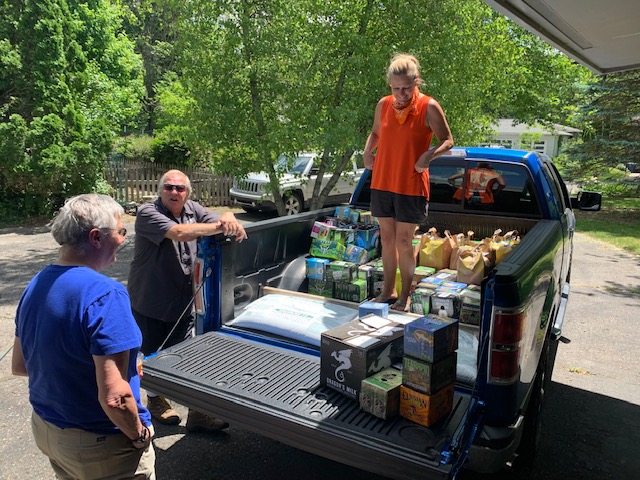
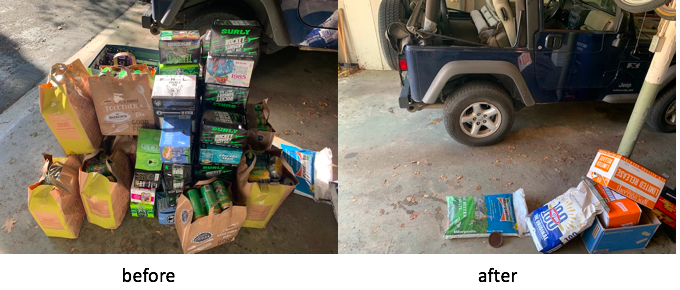
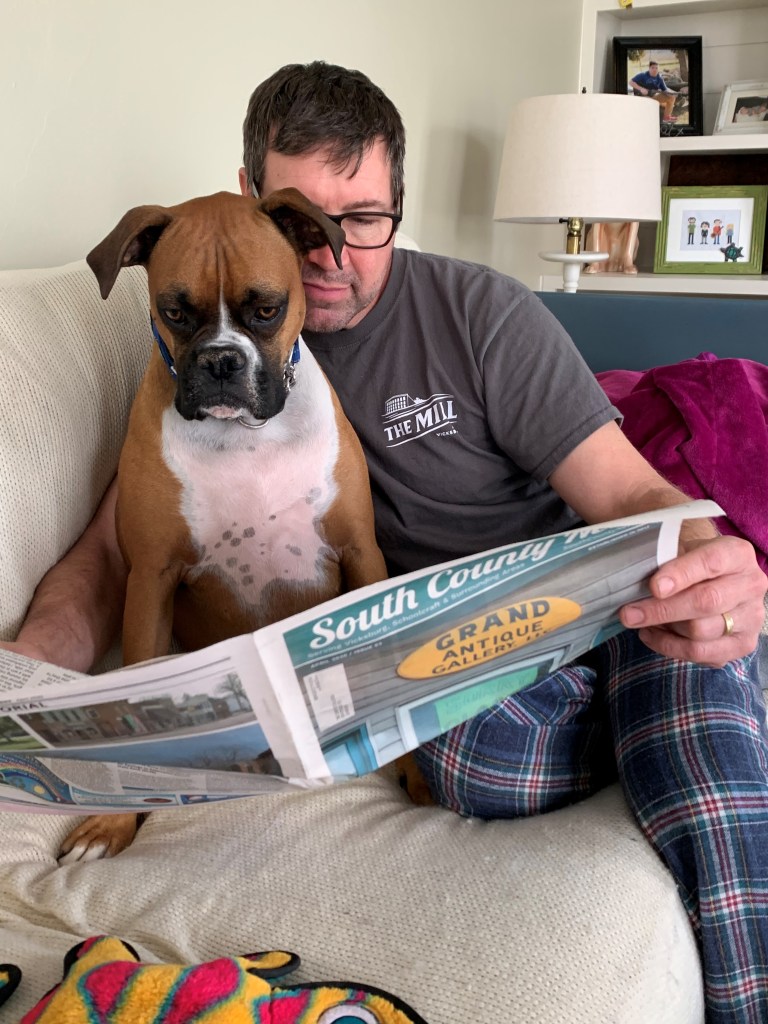


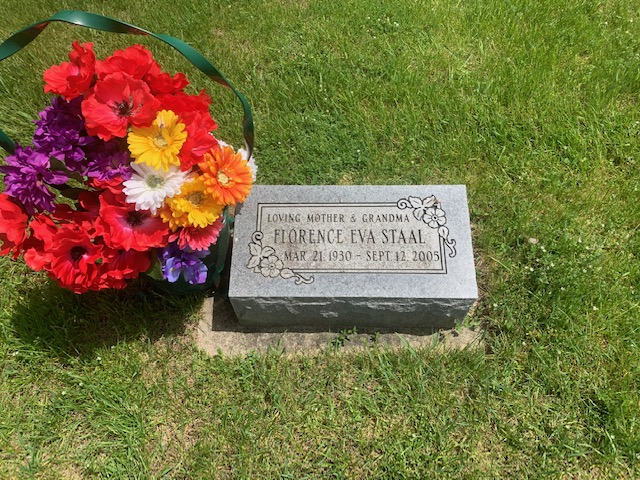
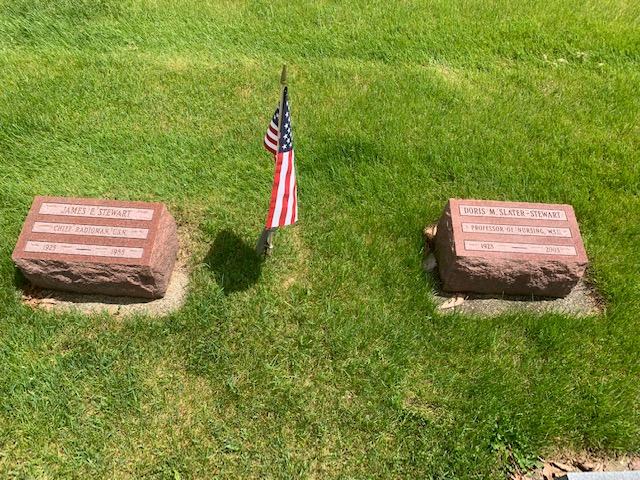

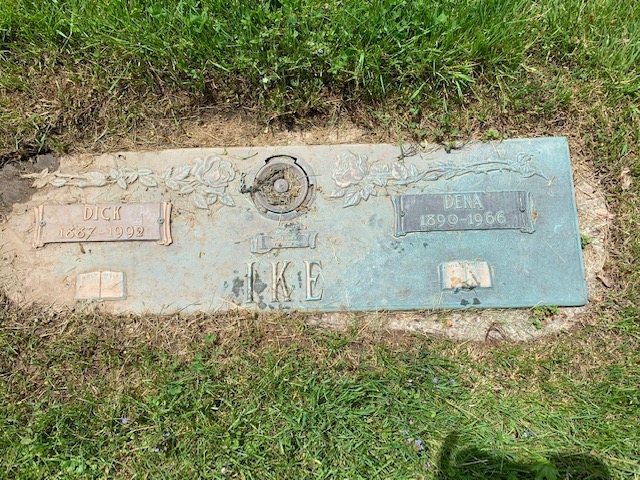
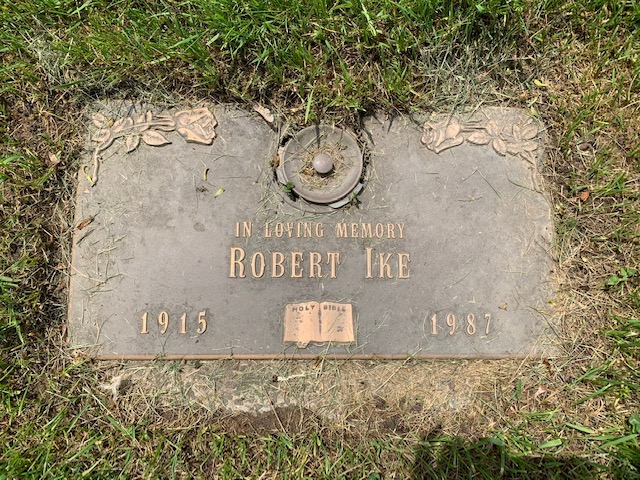
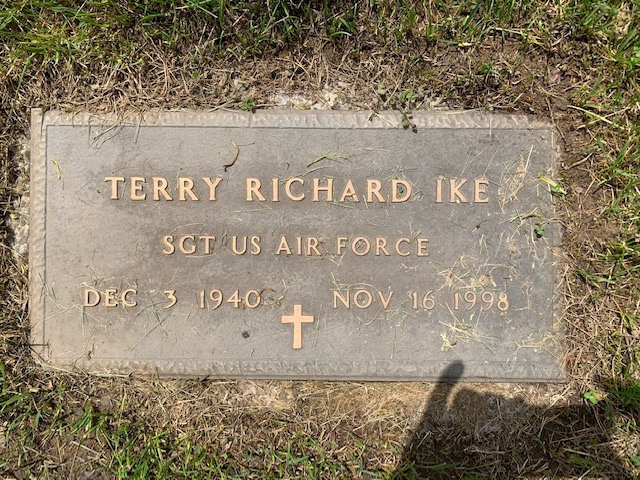
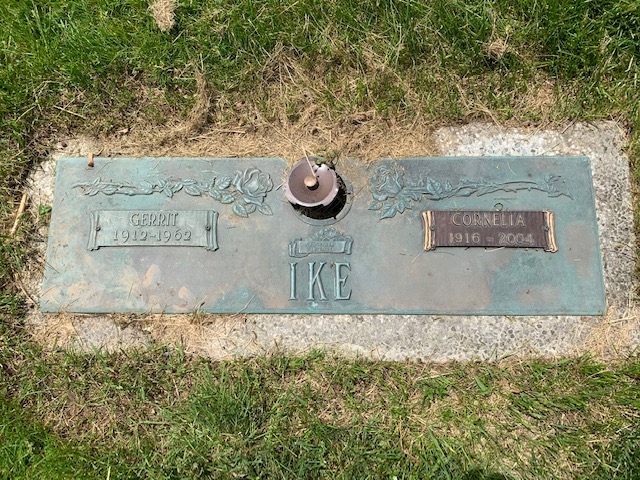
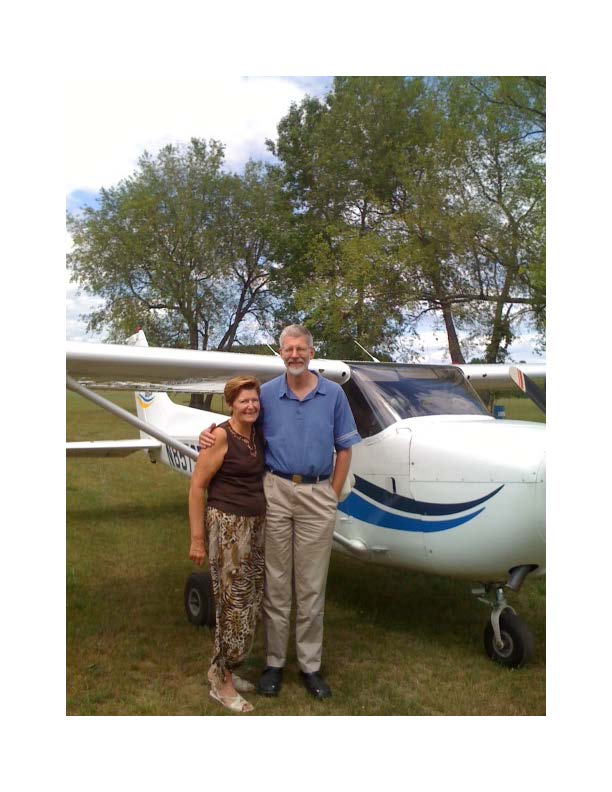


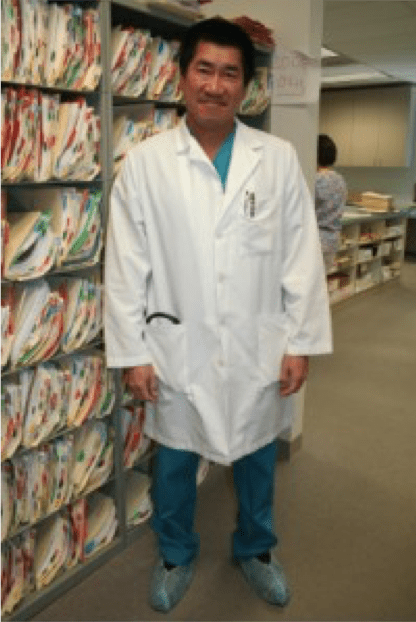
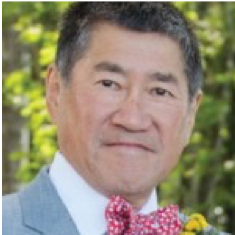
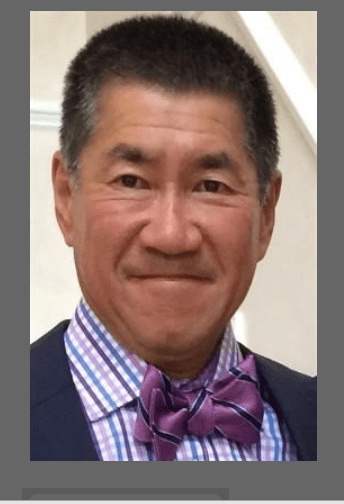

 Bob Ike's blog