Still shameless. I’ve just sent Jeff Bezos Musing through a Pandemic. On the Sidelines. Volume IV. Then play on. This grew out of a discovery that all the posts on sports I’d intended to include in Volume III. Indulgences didn’t make it in. I added the few more I’d written since June and presto, a 139 page book with 23 essays/stories touching on sports, which may be our greatest distraction from Mr. Corona. The cover will look familiar to those who have seen any of the previous 3 books
That’s the Kindle cover. And the Kindle version is till being processed, having trouble uploading my files.
So it’ll be about 3 days till it’s up on Amazon. Just search for “Robert Ike”, and use the quotes unless you want a lot of stuff on Eisenhower.
Available now! (12/9/21, 5 PM EST). Maybe not on Amazon just yet, but Jeff let me buy some paperbacks!
“Not the Bee” circulated a government document containing excellent advice about what to do in a viral pandemic. The document is from the Division of Sanitation of the Department of the Navy. It concerns what to do in the face of the Spanish Flu, which in 1918 infected 500 million people or one-third of the world’s population, killing at least 50 million worldwide with about 675,000 occurring in the United States. Now that’s a pandemic.
Kathy and I have had a recent taste of influenza A. It’s taken a real toll on our students at U of M, with so many cases even the CDC poked its nose in (1). Our students are all masked and vaxxed, but clearly out and about. Remember, flu numbers were way down last year, probably because of the isolation. So if flu is coming your way, this 103 year old document isn’t bad advice. For coronavirus too.
Reference
Delahoy MJ, Mortenson L, Bauman L, Marquez J, Bagdasarian N, Coyle J; Sumner K, Lewis NM, Lauring AS, Flannery B, Patel MM, Martin ET. Influenza A(H3N2) Outbreak on a University Campus — Michigan, October–November 2021. Morb Mort Weekly Rep (MMWR) December 3, 2021. https://www.cdc.gov/mmwr/volumes/70/wr/mm7049e1.htm?s_cid=mm7049e1_w
I’m usually not one to post extensive work from someone else. But this piece addresses concerns about the new variant (1). Bottom line, it isn’t even going to be very infectious. Prior vaccines aren’t going to help much. Boosters are nonsense and probably dangerous by instigation of antibody dependent enhancement (ADE) (2)
Here’s the post:
French Research and Real-World Data Counter Omicron Hysteria
So much talk about Omicron; so much fear-mongering; so much talk about science. Most is nonsense. The best research has received little attention. It comes from esteemed, senior French scientist: Dr. Jacques Fantini, Professor of Biochemistry and Molecular Biology at the University of Aix-Marseille.
You are about to learn what senior people in the public health establishment need to use, especially Fauci who claims he speaks for and represents “science.” If he knows the French research, he is not sharing it with the public, nor is the mainstream media.
The key scientific achievement by Fantini is the calculation of one key parameter he calls the index of transmissibility (T) of a COVID variant. The key work was published in June 2021 with the title “Structural dynamics of SARS-CoV-2 variants: A health monitoring strategy for anticipating Covid-19 outbreaks.” This research is very sophisticated, detailed and challenging. Genomic sequence data are used in the analyses of variants.
The molecular details of variants are analyzed to calculate T values for COVID variants. Originally, T values for known variants or strains of the COVID virus were determined. The T value for the Delta variant done in early 2021 accurately predicted the surge of Delta throughout the world, making it the dominant variant in many countries, including the US.
The T value accurately describes to what extent a variant is or is not very transmissible. The higher the value of T, the greater is the ease at which a variant is spread from one person to another. The higher the value, the more contagious is the variant. Fantini said how T values could serve a critical need: “T-index can be used as a health monitoring strategy to anticipate future Covid-19 outbreaks.” At this moment, the question is “Is the T value for Omicron of concern?”
So, now look at the following table that gives T values for the original five variants published by Fantini, plus what he has just released for the new Omicron variant.
Variant
T-index
Initial Wuhan
2.16
UK – Alpha
3.59
Brazil – Gamma
3.65
South Africa – Beta
3.82
Delta
10.67
Omicron
3.90
Delta stands out for having an extremely high T value compared to previous variants.
No surprise that it quickly became the dominant variant globally.
And equally impressive is the relatively low T value for Omicron, just 37% of the Delta value. Omicron should not be of high concern by people and nations. It is in line with most pre-Delta variants. It is not exceptional. There is no scientific basis for all the hysteria about Omicron. As shown below, most people assessed with Omicron were vaccinated and got breakthrough infections showing vaccines offer little protection.
Additional observations
Note that the higher the T value it is also likely the less effective are current vaccines for defending against the variant and protecting people from it (as real-world data given below show). However, the higher T value does not imply greater lethality. As is known by virologists, variants are smart enough to not kill their victims, which would also kill them and prevent them from spreading. Thus, high T value variants spread easily, can cause health impacts but do not necessarily kill people at a high rate.
Fantini said this: “For Omicron, the mutations go in all directions, without any particular logic, some annihilating each other. The mutational profiles …suggest that neutralizing antibodies [from vaccine immunity] will have very low activity on this variant. …This analysis of the Omicron variant suggests that this variant will not supplant Delta.” In other words, with far less spreading potential, Omicron is not likely to replace the much higher transmissible Delta prevalent globally. Even though reports keep coming in from different nations that Omicron has been found.
More positive insights had to do with the more than 30 mutations and exactly where they were located in the molecule. “The affinity of the Omicron … for ACE-2 [cellular material that causes infection] is decreased compared to all other variants analyzed to date, probably as a consequence of this accumulation of mutations.” Fantini is saying that Omicron is not only not as highly transmissible as Delta, it is also not as infectious.
Worth remembering is that all the current COVID vaccines were designed to address the earliest COVID virus molecule. Thus, they do not protect very well against later variants that have considerable mutations. Is protection zero? No. Current vaccines offer limited defense against variants because they only aim at a small fraction of the virus molecule components.
Vaccine problems
In a more recent article, Fantini and an associate said: there is a “progressive loss of immunity induced by the two doses of vaccines directed against the spike protein” because current vaccines are not designed to defend against recent variants, including Delta and Omicron. Moreover, “the third vaccine [booster] dose can have serious long-term side effects due to the “ADE” phenomenon (Antibody-dependent enhancement: facilitation of infection by antibodies). The benefit/risk ratio would be unfavorable.” In other words, like other researchers, they see the negative impact of current COVID vaccines that reduce protection offered by a person’s immune system. What is being said is that antibodies not only offer little protection but, instead, facilitate viral infection and promote release of new mutations or variants.
This is consistent with considerable data showing correlations between higher vaccination rates and higher death rates at the nation level.
This too was noted: “The immune response to SARS-CoV-2, whether natural or vaccine-induced, produces antibodies directed against the spike protein. In the case of mRNA vaccines, the only molecular target is the spike protein. In the case of natural infection with the virus, the immune response [natural immunity] is directed against several viral proteins, including the spike protein. In all cases, the spike protein is therefore crucial. However, SARS-CoV-2 is an RNA virus that mutates a lot, and many mutations affect the spike protein, which disturbs its recognition by antibodies.” The bottom line is that vaccine immunity is inferior to natural immunity, because the former was designed for the earliest strain and only targets a small fraction of the complex COVID molecule.
Real world data show no severe illness and no protection from vaccines
The forecast by Fantini about Omicron is consistent with information flowing in. Specifically, vaccines will have little impact on Omicron transmission or infectivity.
For example, Reuters reported: “Four people in southern Germany have tested positive for the Omicron COVID-19 variant even though they were fully vaccinated against the coronavirus said officials.” Moreover, “All four showed moderate symptoms.”
Previously it was highlighted, according to the Botswana government, the Omicron variant was first detected in four people who were fully vaccinated. And information from South Africa is that Omicron caused mild symptoms and no patients needed hospitalization, and that the European Union’s public health body said that they’ve found 44 cases containing the omicron variant in 10 of their member countries, all of which had mild or asymptomatic illness.”
Also reported was that “Two quarantined travelers in Hong Kong who have tested positive for the variant were vaccinated with the Pfizer jab. All three initial confirmed and suspected cases reported from Israel occurred among fully vaccinated individuals. And an Israeli doctor revealed that he had been infected with Omicron despite being triple vaccinated also wearing a mask.
In Australia, “New South Wales state authorities reported that two travelers from South Africa to Sydney had become Australia’s first omicron cases. Both were fully vaccinated, showed no symptoms.” A person in San Francisco was reported to have traveled from South Africa, had mild symptoms and had been vaccinated.
Interestingly, officials said they had contacted everyone who had close contact with the person and they had all tested negative.
Meanwhile, everything that Fauci has said is completely inconsistent with actual data as well as what Fantini has forecast. Everything he has said seems clearly aimed at instilling fear about Omicron so that invasive, authoritarian government actions and continued push for vaccines could be justified.
Conclusions
A review of studies found unequivocally that COVID vaccines do not stop viral transmission, with no difference between vaccinated and unvaccinated people. So, all real-world evidence is that Omicron cannot be effectively addressed by COVID vaccines. Together with Fantini’s work the proper conclusion is that Omicron will not be very transmissible nor be more infective than Delta.
Because mutations will continue to produce variants, it is critically important to use the work of Fantini. To accurately assess whether or not a new variant should evoke the fears and government responses that have sprung up so quickly for Omicron.
By Dr. Joel S. Hischhorn
And of course, we can always stand to hear the comments of Bobby McFerrin (3).
Dr. Joel S. Hirschhorn, author of Pandemic Blunder and many articles and podcasts on the pandemic, worked on health issues for decades, and his Pandemic Blunder Newsletter is on Substack. As a full professor at the University of Wisconsin, Madison, he directed a medical research program between the colleges of engineering and medicine. As a senior official at the Congressional Office of Technology Assessment and the National Governors Association, he directed major studies on health-related subjects; he testified at over 50 US Senate and House hearings and authored hundreds of articles and op-ed articles in major newspapers. He has served as an executive volunteer at a major hospital for more than 10 years. He is a member of the Association of American Physicians and Surgeons, and America’s Frontline Doctors.
Kathy’s classes today will be special. Not just because her students haven’t seen her in person since she fell ill with influenza A Sunday before last, and not just because this will be her last class of the term. But today she’s bringing ‘em a treat, something she whipped up yesterday. No, it’s not a batch of whupp-ass. Coach Harbaugh, Aidan Hutchinson, Hassan Haskins, Andrew Vastardis and the rest of the boys did a pretty good job of that Saturday afternoon. She hasn’t brought this treat to class for a decade, back after Denard led Brady Hoke’s magic 2011 team over Luke Fickell’s sanctioned Buckeyes. And that’s the treat she’s bringing to class, from an old family recipe: buckeyes
What better way to celebrate our glorious victory over the scarlet-and-gray but eating up once again what our Wolverines so ravenously devoured last Saturday? Only these buckeyes are sweet, just like that victory was, and still is. If you want to relive highlights of that afternoon, check this video out that some of the kids made, featuring their favorite song “Mr. Brightside” https://www.youtube.com/watch?v=9ak9Uxtntfk&t=5s. If you want to hear “Mr Brightside’ unfiltered, here’s the video in its full decadent glory https://www.youtube.com/watch?v=gGdGFtwCNBE. The kids go absolutely crazy when this is played in the 3rd quarter. They know all the words. The song was released in 2003, so it must be one of their generation’s “classics”. Is “Mr. Brightside” Jim Harbaugh?
Should you want to try some yourself, here’s the recipe. We still play them 2 times in basketball, two days before Valentine’s day and last game of the regular season. And our women take ‘em on New Year’s Eve at Crisler and January 27 in Columbus. You can’t get enough of beating Buckeyes. Eating them either.
To church on a morning last year before the first shutdown, I wore a tie, the once daily obligation for work that is now a rare treat in retirement. Among the 240 or so of our still rather conservative congregation in attendance, only 8 guys sported neckwear, including me and the young visiting pastor. All but 2 of the rest were older than me, so the future of the tie at our little church is in peril. The tie, which all us doctors used to wear as a symbol of seriousness, professionalism, and respect for our patients, has become a potentially dangerous piece of cloth collecting bacteria and spreading disease. So wearing a tie to clinic nowadays identifies the wearer not only as hopelessly old school but negligent of the risks he poses to others. No wonder they wanted to get rid of me.
But the attachment to the cravat is strong. Fumbling with the knot getting ready for a “serious” occasion even in the pre-teens cuts deep, and that feeling of getting ready for something special runs strong, well into adulthood. The interview, the big date, the prom, all punctuations until you actually have a job. Since I’ve always been a doctor, the expectation has always been there for something around the neck. Sometimes I slobbed by wearing flannel shirts and knit ties, but that four-in-hand still started every day if not a half or even full Windsor. The times in E.R. or ICU wearing scrubs were a respite, but now are pretty much the standard. The bland stale male has few chances to spring life into ones appearance, but a lively tie is one of them. “Molecular expressions”, showing the colorful microscopic appearances of chemical phenomena was one of them, as was the “Cocktail Collection”, with spills made art, and of course Jerry Garcia’s works. Kathy snuck in some space ties, and of course were the requisite U of M cravats. In the early 90s I crafted from a plant holder and some dowels a ties holder of which I remain immensely proud. Stuck against the wall of my closet, it holds 105 ties.
Into a shoe box I consigned most of my 34 knit ties. Scattered about are some bow ties – I was told years ago that a man wearing a bow tie is uncertain of his sexuality – and I never could master that knot. Events requiring tux and tie are always white knuckle challenges.
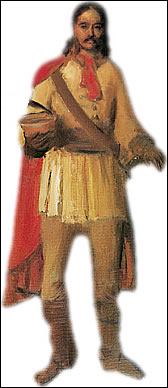
So whence goith this colorful collection of cloth? Men have tied cloth around their necks since 2nd century Roman legionnaires tied bands of cloth about their necks, likely a ward against the weather (1). Maybe even before them were Chinese warriors of Xi’an of 3rd century B.C. where terra-cotta statues showed them wearing neck scarves in the belief that they were protecting the source of their strength, their Adam’s apples. But most experts date the initial appearance of the modern precursor of the tie to 1636. Croatian mercenaries, hired in Paris by King Louis XIV, wore cloth bands around their necks to ward off natural elements, which in their line of work included sword slashes. Parisians translated the Croats scarf to a fashion accessory.
Fast forward to COVID America. Those who actually went to work rarely put on a tie. Haberdashers have reported a small surge of interest in ties as people felt the anticipation of going back to the office (2). Yet, ties still sell. Like them or not, neckties are the Father’s Day gift. Americans spend more than $1 billion each year to buy a staggering 100 million ties. That’s roughly one tie for every male over the age of 20 in the United States. If you’re wondering if that dusty hanger is stylish, here’s where we are in 2021. It’s simple: the width of your tie should be roughly as wide as the lapel on your jacket. Your classic notch lapel is typically around 3 3/8″ wide, and classic ties are in that ballpark. They tend to be anywhere between 3 1/4″ and 3 1/2″.
All this fuss suggests maybe men will be wearing ties after all. Demise of the necktie has been predicted before, in similar circumstances. As America struggled to recover from a global pandemic, a shattered economy, and record unemployment levels, headlines despaired: “neckties doomed.” (3) Men were “slashing their clothing bills” to retailers’ chagrin, the Associated Press reported. Those who continued to wear ties were downgrading from colorful, expensive silk to plain, cheap cotton. The year was 1921, and reports of the tie’s death were premature, to say the least.
As Kimberly Chrisman-Campbell in the Atlantic wrote “throughout its history, the tie has often stood in for its wearer’s personality” (3). As men blend into generic personhood, that urge to burst out with a display of individuality is always going to be there Perhaps that’s why predictions of its death are premature (4,5). While I’ve blended into the generic retiree in sweats, I do not wish to surrender chance to be the peacock again. The ties stay, along with suits, tux and sport coats. Maybe none will be touched till they lay me away. But I want to go out with a nice tie. Kathy wants to make ‘em all into a quilt. Couldn’t strangle me anymore then. Smothered, more likely.
So the latest player on the world coronavirus stage is B.1.1.529 (1). The B.1.1. traces its genetic lineage directly to the original Wuhan strain. The WHO, continuing its practice of assigning a Greek letter to the isolate had to go through some contortions. Delta had been followed by 8 variants, all of which fizzled out. “Nu (n)” was next up, but that suggests something “new”, which is the last thing this COVID weary world needs. A committee has to pass on these things – WHO’s Technical Advisory Group on SARS-CoV-2 Virus Evolution – but next they faced the Red Dragon. Xi (Ξ). I’d like to think that the parents of premier Xi Jinping had embraced the Greek classical tradition, but I think it’s coincidence his name landed at #14 in the WHO naming sweepstakes. I suppose Premier Xi has earned a prize for bringing the world to its knees, but naming a minor coronavirus variant after him seems a bit wimpy. So on to the 15th Greek letter, the very bland omicron (O) (2). I thought they could sex up the intro by bringing in a vixen from Trump’s “The Apprentice”, Omarossa
I’m not sure I want protection from that!
So what about this puppy? As expected for a coronavirus many steps down the line, the virus is heavily mutated from the original. At least 50 mutations in the virus compared to the original Wuhan strain, and 30 mutations in the spike protein alone. Chances that immune systems targeted against Wuhan might whiff are substantial. The monoclonals infused to the infected might whiff too. The doc who first reported this variant in South Africa said the disease was mild, a few aches and pains, some fatigue, maybe some cough, but no loss of smell and taste. On the flip side, it’s much more contagious. Typical progression of coronavirus: less morbidity higher infectiveness. Evolving to a nuisance.
While the establishment stands ready to wield all the heavy handed measures its applied only to fail in the past: travel bans, lockdowns, mandates, passports, masks, all the while ratcheting the fear of yet another assault on our health. The two-faced, flip-flopping, fawning, figurehead of our nation’s effort against fight against COVID – admitting he’s 2 weeks away from understanding this situation – recommends more boosters. More spike protein, more clots, more heart attacks, more autoimmune neurologic syndromes, more deaths (3). And who knows about the long term consequences of harboring spike protein everywhere. I’m disappointed that my hero Francis Collins has joined the ramparts here and is recommending more boosters. He’s a short timer and could speak his mind. I longed for him to join the fray earlier but he kept quiet. We’ll have to wait for the book.
Dr. Houmann Hemmati, a Ph.D immunologist from Cal Tech and USC has pointed out this strain could be our salvation ( 4). By infecting widely, but lightly (nobody gets too sick), we all get natural immunity, that elusive “herd immunity” – never achievable with the mRNA “vaccines”- comes into play. So I say we toss the masks, snuggle up to each other, and get a little sick. The vaxxed can participate, as omicron has mutated beyond any thing their mRNA infused immune system can recognize.
Your desire to participate in this endgame to our pandemic can be an excuse to throw every BS measure you’ve been told to “protect yourself” to the wind, as you’re going to protect yourself by facing up to this wimpy offspring of the generations removed bioweapon that’s changed our lives. But no more as we move ahead into the normal times we all deserve.
But be cautious if omincron tries to take over your body entirely. We know how that worked out last time (5)
I haven’t written about coronavirus for quite a while. The sturm und drang over the vaxx has reached baroque levels. Ample evidence is out there that it’s not providing much protection against whatever strains are floating around now, all multiply mutated beyond the original Wuhan variant. Highest new infection rates are in states and countries with the highest vaccination rates (1). Clinical courses may not run worse in those who have been vaccinated, so say mainstream outlets like Johns Hopkins (2), but ya still get sick!. Even St. Anthony admits that the stab was never meant to protect against actual infection – meaning this vaxx can never be part of a strategy to eradicate this coronavirus – only to make the infection you get a little less worse (3). Yet, the drumbeat to get the stab rolls on. Those who decline, for whatever reason, become pariahs, selfishly and ignorantly refusing to help in the crisis of our time, even contributing to it’s perpetuation. No wonder they should be denied medical care and be driven from their jobs. High level people who opt out are pilloried. Look how they turned college graduate, articulate and universally loved NFL championship quarterback Aaron Rogers into a selfish knuckle-dragger. You’d think he voted for Donald Trump (probably did). Mr. Rogers got to go back to work. Not so for many who decline and work in a business or institution under a mandate. While the 5th circuit court and OSHA might save us, there’s still a lot of businesses, from fire and police departments, hospitals, airlines, plants, and stores operating with severe manpower shortages, deprived of people who don’t see a future filled with spike proteins as a good option. In what might be one of the bigger tragedies in this ongoing drama, little children are being brought into the fold. The parents are the ones giving informed consent here, and anyone who has not read over the stats on consequences of COVID infection in children, and the zero chance the kids have of transmitting to an adult, and thereby refused the stab for their child, is guilty of child abuse (4). Yet playing on a time out in the basketball game last Sunday, then again several times, was a black and white piece featuring smiling little children walking in a field toward the camera, saying how happy and healthy they were, with at least one saying “I’m happy to be vaccinated”, with an adult female voice over reminding us how important it was to get the little darlings stabbed. Pure Soviet propaganda. Chilling.
Could it be worse? In Australia and New Zealand riots are breaking out by those chafing under the tyrannical lockdowns both countries have been under since the get go. New COVID cases from the Northern Territories will go to camps. Demonstrations – many violent – arise across Europe protesting new winter restrictions. In Austria, plans are afoot to confine the unvaxxed to a second class citizen status the likes of which have not been seen since the country called Herr Hitler a proud son. Maybe they’ve still got some of those yellow stars laying around to slap on the unvaxxed. Germany is not far behind, tapping into a spirit in their citizenry always below the surface and ready to institute uber alles. German euthanasia clinics are refusing patients who are not vaccinated.
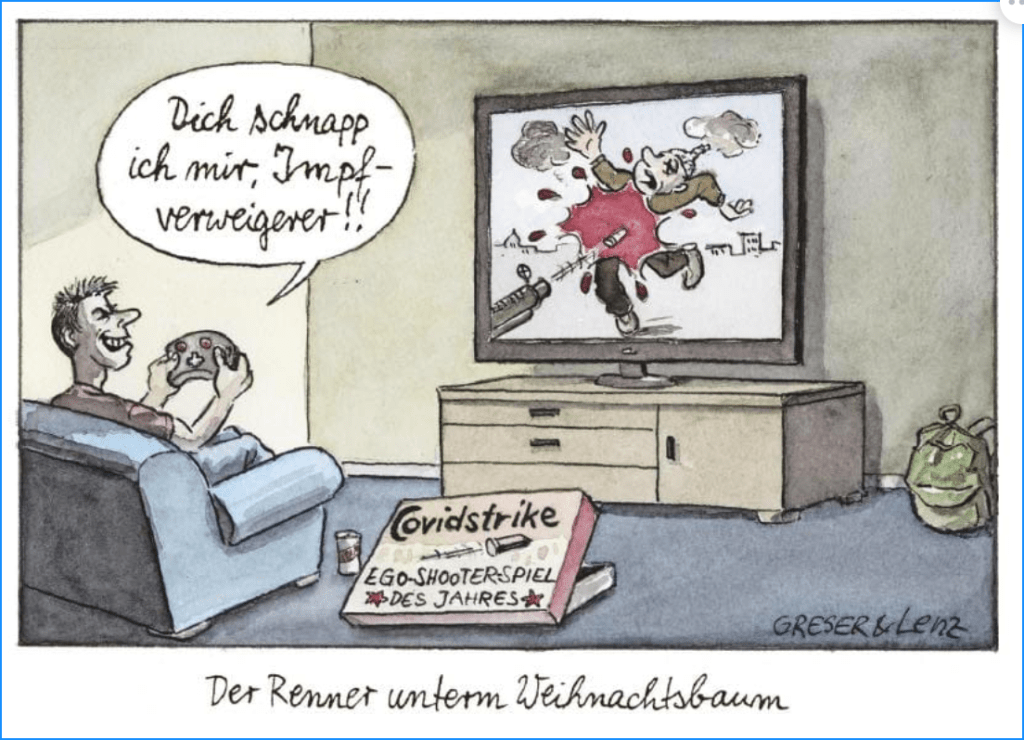
For translations: caption “the racer under the Christmas tree”. The blaster in his chair “I’ll get you, refuse to vaccinate”. On the box, “Covidstrike” is the “first person shoot game of the year”
Surely, there must be some hope on the horizon. Those boys and girls in our labs have to be doing something besides ginning up booster shots. The NIH has received almost $4.9 billion to date to fund important COVID-19 research on diagnostic tests, vaccines, and treatments. DEVEX, an outfit tracking global development trends, found $21.7 trillion committed worldwide as of June 27, 2020. Pfizer developed Paxlovid (PF-07321332 plus ritonavir, a protease inhibitor on its shelf (it’s an old unused AIDS pill) (5) while me-too Merck was more creative, coming up with Lagevrio (molnupiravir); by presenting false building blocks of RNA, it throttles RNA dependent RNA polymerase, the enzyme the virus uses to replicate itself (6) As such, it could be effective against other RNA viruses, including flu! Pfizer released preliminary data showing huge protection against hospitalization and death. Reductions from Lagevrio weren’t quite a substantial. “Emergency authorization” being sought for both. Uncle has already committed $5.9 billion for 10 million doses of Paxlovid. My, that’s an expensive pill! But Pfizer will forego royalties. Under the deal struck with the global Medicines Patent Pool (MPP), Pfizer — which also produces one of the most widely-used Covidvaccines with German lab BioNTech — will not receive royalties from the generic manufacturers, making the treatment cheaper. Pfizer will sub-licence production of its promising Paxlovid pill to generic drug manufacturers for supply in 95 low- and middle-income nations covering around 53 percent of the world’s population.
But in the cheap seats, all is not well. With unseemly glee, a group of bean counters has dissected last summers review of ivermectin for COVID, finding the two larger cited studies flawed by 1st world standards, leaving support for ivermectin much weaker. (7). Reports of grisly side effects from ivermectin have appeared, even though some dosing regimens included things like paste, with few employing a logical mg/kg dosing regime (8). Plaquenil, after emerging from last year looking o.k. got slammed by the WHO in the spring. Someone snuck a little trial into JAMA showing that a single azithromax pill taken once has no effect on evolution of symptoms 2 weeks later compared with placebo (9). Original proponents of such regimens, like the heroic Dr. Zelenko, continue to prescribe such regimens, and his patients stay out of hospitals. My wife and I follow an ivermectin prophylaxis regimen.
Complications of the vaxx continue to roll in. 1,742,488 adverse events, with a small fraction of people actually reporting. Hard to imaging what a lifetime teeming with spike protein might mean (10)
And something fishy is going on with the “variants”. Remember when “delta” emerged last summer, coming out of the subcontinent where it had caused quite a bit of disease, the CDC had it on its radar as a “variant of concern”, all sequenced and characterized. Whether those 13 mutations in its spike protein would make it less recognizable to any immune response primed for the Wuhan strain was never established. But CDC scrutiny for variants seems to have ground to a halt. All the strains isolated now are the delta (11) with 10 “Variants being monitored” as of October 4 (12). Such a sloppily replicating virus (1 error per 10,000 nucleotides, or 3 mutations per replication) should be spewing out variants right and left. There must be some tremendous selective pressures for delta. One advantage of having delta still standing is that it can become the basis for the next round of vaccinations.
Nearly every door slammed by a mandate opens a little window with the chance to prove weekly that one is not harboring COVID. At the University, there are multiple sites where you can sign up for an appointment for a test, walk in and answer some questions, spit into a little funnel, and hear within 24 hours that you’re still clean. Such goes into your phone, and you can print it out if you want “papers” (I do), and you can flash these into the face of anyone at a restaurant or a concert venue seeking proof of your purity. There’s a lot of this about. Per ourworldindata.com 3.37 tests were performed per 1,000 people 11/15/21 nationwide. With the current population of the United States of America is 333,691,290 as of Sunday, November 21, 2021, based on Worldometer elaboration of the latest United Nations data. So that’s 1,124,539 tests in just one day. With a median cost per test of about $150, that’s $16,680,947 per day. While some have to pay for these tests or charge it to their insurance, most tests are “free” covered by some flow of government funds. Into who’s pockets does all this case flow? I’m still working on this, but some people are getting very rich.
Costs for these tests may be going up around here. Campus has been hit by an alarming increase in influenza A cases. Patients, like my wife, hit by a respiratory illness resembling COVID also have that test tube up the nose look for influenza A, which she had, and gave to me. That test is about 3 times as expensive. What pans out here in AA will be interesting. It might be a local flash in the pan, or a harbinger of a larger trend. Remember, last season the flu numbers were way down, something the mask/lockdown crowd ascribed to the success of their maskings, forgetting the experience of the 1918 Spanish Flu epidemic that showed masks were worthless. Ultimately, it was due to the isolation, with no one entering into the social arenas where virus exchange could take place. Students are still out and about on campus, still masked. But most have their immune systems focused on spike proteins. How much can be left to take on another RNA virus? I guess we’ll see.
But my impetus for writing this was to help my endocrinologist friend Dave understand Antibody Dependent Enhancement (ADE), a phenomemon invoked to explain why we’re still in this mess with COVID, 2 years after the boys and girls at the Wuhan Lab sprung it on us. Ya’ think the masks, distancing, lockdowns and vaxx woulda let us move to something else. But here we are. So aren’t vaccines good? Even Sabin’s sugar cubes spread a little polio. In the late 60s, vaccination of neonates and the very young against Respiratory Syncytial Virus, and RNA respiratory virus, produced a vaccinated population that still could catch RSV, and get much sicker for it than those who had been left alone. Thus was born the notion of ADE, whereby antibodies raised that do not neutralize virus facilitate other processes that augment the virulence of any ensuing infection (13). Scientists saw this coming for COVID less than 6 months (14,15) after it sprung, as talk about vaccines was well underway (19,20). Maybe they recalled the work of their Taiwainese colleagues at Kaohsiung who in 2014 looked at the first SARS outbreak and found ADE correlated with antibodies against spike protein (16). Attempts at a vaccine broke when antibody dependent enhancement arose on in a monkey model (17). Everything old is new again.
Our immune system is an elegant, immensely complex tangle of processes that protect us from ourselves and the outside world (18). That we deign to manipulate it to do our bidding is another bit of the hubris of Western medicine. For COVID, we figure if we hijack our own ribosomes to crank out the Wuhan version of spike protein – action arm of the virus that hooks onto the ACE2 receptor – pushing that product in the face of all arms of our immune cells will make them take notice if something similar comes their way. Since not all antibodies raised are neutralizing, chance for ADE mischief come afoot. So what happens? As the virus enters the vaxxed host (or one with natural immunity), non neutralizing antibody facilitates viral uptake , enhances replication, and helps evade intracellular innate immune receptors (the tickled arm of the immune system much more critical to fighting the virus than the antibody response). More virus invades the host. The Chinese (Shenzen, not Wuhan) have it sorted out, with pictures, if you’re interested (19). Curiously, the only article addressing this topic this year is out of Iran (20)). It’s not something you can protective yourself against, except to avoid the vaxx altogether. Maybe that’s something you can throw at your pro-vaxx “friends”. “No ADE for me!”
Just one more thing to bolster the wisdom of the late, great Nancy Reagan
8. Temple C, Hoang R, Hendrickson RG. Toxic Effects from Ivermectin Use Associated with Prevention and Treatment of Covid-19. NEJM. October 20, 2021 DOI: 10.1056/NEJMc2114907. https://www.nejm.org/doi/full/10.1056/NEJMc2114907
13. Arvin AM, Fink K, Schmid MA, Cathcart A, Spreafico R, Havenar-Daughton C, Lanzavecchia A, Corti D, Virgin HW. A perspective on potential antibody-dependent enhancement of SARS-CoV-2. Nature. 2020 Aug;584(7821):353-363. https://doi: 10.1038/s41586-020-2538-8. Epub 2020 Jul 13.
14. Coish JM, MacNeil AJ. Out of the frying pan and into the fire? Due diligence warranted for ADE in COVID-19. Microbes Infect. 2020 Oct;22(9):405-406. https://doi: 10.1016/j.micinf.2020.06.006. Epub 2020 Jun 24.
15. Wen J, Cheng Y, Ling R, Dai Y, Huang B, Huang W, Zhang S, Jiang Y. Antibody-dependent enhancement of coronavirus. Int J Infect Dis. 2020 Nov;100:483-489. https://doi: 10.1016/j.ijid.2020.09.015. Epub 2020 Sep 11.
16. Wang SF, Tseng SP, Yen CH, Yang JY, Tsao CH, Shen CW, Chen KH, Liu FT, Liu WT, Chen YM, Huang JC. Antibody-dependent SARS coronavirus infection is mediated by antibodies against spike proteins. Biochem Biophys Res Commun. 2014 Aug 22;451(2):208-14. https://doi: 10.1016/j.bbrc.2014.07.090. Epub 2014 Jul 26.
17. Luo F, Liao FL, Wang H, Tang HB, Yang ZQ, Hou W. Evaluation of Antibody-Dependent Enhancement of SARS-CoV Infection in Rhesus Macaques Immunized with an Inactivated SARS-CoV Vaccine. Virol Sin. 2018 Apr;33(2):201-204. https://doi: 10.1007/s12250-018-0009-2. Epub 2018 Mar 14..
19. Wen J, Cheng Y, Ling R, Dai Y, Huang B, Huang W, Zhang S, Jiang Y. Antibody-dependent enhancement of coronavirus. Int J Infect Dis. 2020 Nov;100:483-489. https://doi: 10.1016/j.ijid.2020.09.015. Epub 2020 Sep 11.
20. Farshadpour F, Taherkhani R. Antibody-Dependent Enhancement and the Critical Pattern of COVID-19: Possibilities and Considerations. Med Princ Pract. 2021;30(5):422-429. https://doi: 10.1159/000516693. Epub 2021 Apr 21.
The manuscript of this recent musing about perhaps the most important component of my career in rheumatology was just accepted for publication in Clinical Medicine, after being rejected by a surgical journal. Sometimes those blades just can’t take a joke. For you outsiders: blades are surgeons, for obvious reasons, whereas we internists, with our focus on poking patients and drawing all that blood, are the fleas.
Who let this flea in my operating room?
Robert W. Ike
Abstract
Adoption by one specialty of a technique strongly identified with another never proceeds smoothly. A decision in the early 1980s by one of the movers and shakers of American Internal Medicine that rheumatologists should adopt arthroscopy involved this author as the spearhead of that effort. What follows is a recollection of how that went.
That happened at my University of Michigan back in ’87. My chief of medicine, Bill Kelley, was fond of pushing borders to insert internists into niches where they weren’t necessarily welcome, all in the interest of expanding internal medicine into developing areas where they might make a contribution. A rheumatologist, Kelley became president of the American Rheumatism Association (ARA, now American College of Rheumatology) in ’85 and in his ’86 presidential address to the annual meeting, took on the problem we were seeing of flagging interest in our subspecialty by medical students and trainees. Among the remedies he stated was “I believe we need to expand the specialty of rheumatology to cover some of the peripheral areas which now are largely ignored and sometimes poorly handled. This would include …the use of certain technical procedures which are appropriate to our specialty” (my emphasis) (1). At the time, I already had my new job, and the charge that came with it, but it was nice to hear marching orders. I was having a pretty good time as a rheumatology fellow when the call came. The clinical side was a blast, and the lab was where you put in your dues to get a good clinical job. It was my lab mentor who told me they were looking for someone to learn arthroscopy, and I was their top candidate. I thought I’d caught Kelley’s eye with my recent presentation of a patient I’d diagnosed with Brucellosis. Kelley’s protegée, my attending, friend, later best man, and eventual division chief Tommy Palella, had clued him in to the case so he showed up. So Kelley knew I was a sharp dude. Only several years later did I learn what about me actually caught his eye. His son, Mark, an eventual gastroenterologist, was an intern on my service. Mark confided to me that what his dad really liked was my size (I’m 6’8” tall), as one thing orthopods respect is size. Since my height probably got me into medical school (Dean Ceithaml of U of Chicago, who loved jocks, mistook my response about playing basketball at Michigan “I.M.” (for intramurals) as “I am”), what’s one more opened door? Just hope I don’t hit my head on the transom.
That meant a year away from my just purchased house and soon to be married bride as I moved into Lincoln Park to be near Augustana Hospital (reportedly favored by the area mafiosi) to be near where Bill Arnold did his arthroscopies. Bill had been Kelley’s first fellow at Duke, a handsome, charismatic, incredibly bright guy who was going places. He landed back at University of Illinois, where he (and Tommy Palella) had gone to med school. Bill’s lab work on purines was well received, but he chafed at the institution and struck out on his own, looking for new things. A few rheumatologists had been dabbling in arthroscopy in the 70s, but improvements in the procedure were making it more accessible. After talking with some orthopedic bigwigs about getting involved, and being encouraged, he was directed to Dave Stuhlberg at Northwestern, who was interested in all types of surgery for arthritis and with Bill set up a combined rheumatology -orthopedics arthroscopy unit at a small community hospital. There, Bill cut his chops sufficiently to go independent. I don’t know which Bill floated the idea of training someone, but there I was, welcomed with open arms. It had to be a big validation to Bill’s venture that a major academic rheumatology unit was investing a charge in his hands. It was all new to me. I’d hated my surgery rotations in med school – the early rise to hang around in pajamas doing nothing, the washing rituals, all the standing around – but scrubs and scrubbing were part of this deal. There was no standing around with Bill in the O.R. From the start my hands were on the equipment. Since scopes were videotaped, the post-game review was part of the process, although it could be accomplished in my Stressless recliner before the TV holding a suitable beverage.
Re-entry to the U required many a beverage. Bill Kelley was the most powerful man in the medical center, but imposing his will on the Department of Surgery proved more difficult than any of us had suspected. Wind of IM’s venture into arthroscopy wafted into the Orthopedics Division long before I set foot for Chicago. One of their members, my chronological peer Ed Wojtys, took it as his crusade to keep me out. He gathered testimony from across the country on what a hazard it would be to let a flea do ‘scopy. Kelley and allies merely asked for a judgement on the adequacy of my training and the competence of my performance. By the end of the year, a plan was in place. I was to perform arthroscopies in the OR while the chief of Orthopedics or a designee watched me and reported back. This would go on for 6 months before judgment would be rendered. In the 6 months prior, I found a friend and savior in Bruce Stubbs. Bruce practiced at the private hospital in town, St. Joe’s, but did his arthroscopies at an affiliate in Chelsea, 15 miles west of Ann Arbor. As a medical student, Bruce had worked in Giles Bole’s lab. Giles was my chief and the guy who took me on as a fellow when no one else would have me. He inspired incredible loyalty in whomever he touched, so when Giles reached out to Bruce to possibly help me out, he readily agreed. I went out to Chelsea once a week and ‘scoped with Bruce. His cases weren’t all arthritis cases, like Bill’s, but practice is practice. Bruce took enormous crap from his peers for this, but was already pretty numb to their criticisms. As one of the first orthopedists in the area to pick up the ‘scope, when its value was pretty much disdained by mainstream orthopedics, he’d learned to go his own way.
I did my first case in U of M’s O.R. 3 days short of Valentine’s day in ’87, a middle aged woman with OA that seemed like it could be something more. During my 6 months in the O.R., I did more arthroscopy cases (5) than the orthopods did (1), rattling off a case a month that first year. I got to fit in, learning the scrub ritual and respecting sterile technique, getting along with the nurses (tho’ Wojtys was said to have “agents”), and enjoying the protection of the anesthesiologist who ran the O.R. schedule, church friend Dave Learned. Once you get those scrubs on, its hard to tell the fleas from the blades
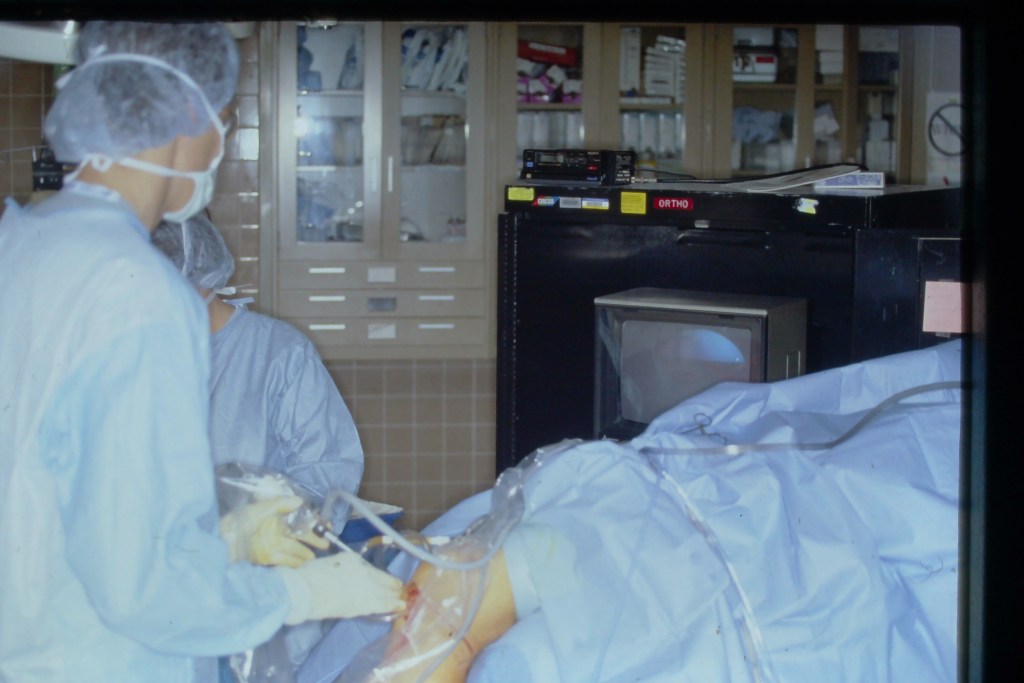
Figure 1. The author arthroscoping a patient in room 16 of U of M’s adult O.R.s
I’d spend a little more than 14 years in the O.R. By ’92, developments in arthroscopy design produced instruments that could be used in a procedure room or clinic setting.
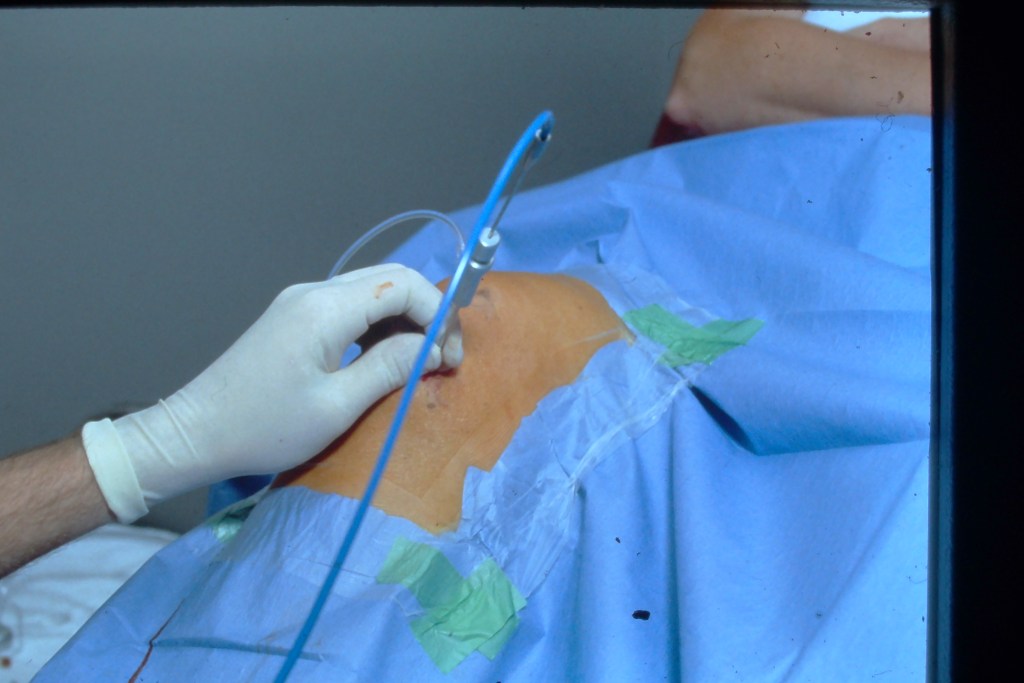
Figure 2. Medical Dynamics fiberoptic needle scope (14 g) inserted into knee at medical procedures unit (not O.R.). Fiberoptics carried light to joint and image back to camera in control box.
. ‘Scopes for inspection, biopsy, and washout no longer required an O.R., so they saw less and less of this flea. The American College of Rheumatology embraced arthroscopy in the early 90s, sponsoring hands on courses for 3 years which I was one of the faculty, holding an arthroscopy study session at each annual meeting, and supporting research in arthroscopy. But interest waned and the “needle ‘scope” was fragile and after 5 years it no longer produced an acceptable image. The powers that be decided not to repair or upgrade, so it was back to the O.R. Most of the 34 cases I did from then till the end involved major resections: synovectomies or debridements. Meanwhile, evidence was assembled that no arthroscopic interventions into osteoarthritis did more than a placebo (2,3) and the biologic drugs emerging to treat rheumatoid arthritis and other inflammatory arthropathies seemed not to let situations emerge where synovectomy might be considered. So on May 25, 2001, I did my last case and shut out the lights on arthroscopy. I managed to hold my unique spot in the division as the procedures guy, picking up ultrasound, doing all the difficult arthrocenteses and running injection clinics, while doing several bedside biopsies, always teaching others (salivary gland, muscle, skin, synovium).
Then in 2016, I caught wind from an old friend in private practice in Maryland, Nathan Wei (4), about his use of a new 14g needle scope in his office, the MyEye. I visited him and got quite excited about this as a way to resurrect rheumatologic arthroscopy. I was overdue for a sabbatical, so I arranged one with my friend Ken Kalunian at UCSD. He was the guy Bill Arnold trained after me, and had a productive academic career with the ‘scope, tho’ he’d put it down in ’09 and focuses on lupus these days. We’d spend those 3 winter months ‘scoping everyone about to undergo a cortisone injection. Long story short, except for looking at a cadaver knee in a meeting room of a local Marriott, we never touched a ‘scope. His IRB never approved our study, and their credentialling committee never granted me more than observer status. Home, we both tried to get something going, but at each place met fierce opposition from the orthopods, even though we’d never be setting foot in their O.R.s.
That defeat made the go gentle of a semi-forced retirement easier to take. I’m sure if I’d gotten ‘scoping again, I wouldn’t have wanted to put it down. Retirement has given me the opportunity to survey the use of arthroscopy by rheumatologists worldwide. It’s a going thing as a research tool at several institutions, with promise of expansion as examination of synovium becomes ever more important (5). Rheumatologists still have reason to pick up the arthroscope (6), but they should never have to set foot in an O.R. again, making friendship with orthopedists much more likely (7).
2. Moseley JB, O’Malley K, Petersen NJ, Menke TJ, Brody BA, Kuykendall DH, Hollingsworth JC, Ashton CM, Wray NP. A controlled trial of arthroscopic surgery for osteoarthritis of the knee. N Engl J Med. 2002 Jul 11;347(2):81-8. https://doi: 10.1056/NEJMoa013259.
3. Brignardello-Petersen R, Guyatt GH, Buchbinder R, et al. Knee arthroscopy versus conservative management in patients with degenerative knee disease: a systematic review. BMJ Open 2017;7:e016114. https://doi:10.1136/bmjopen-2017- 016114.
5. Ike RW, Arnold WJ, Kalunian KC. Arthroscopy in rheumatology. Where have we been? Where might we go? Rheumatol (Oxford) 2021;60:518–528. Epub 2020 Dec 1 https://doi: 10.1093/rheumatology/keaa560.
6. Ike RW, Kalunian KC. Will rheumatologists ever pick up an arthroscope again? Int J Rheum Dis 2021;24:1235–1246. https://doi: 10.1111/1756-185X.14184
7. Ike RW, Kalunian KC. Regarding arthroscopy: can orthopedists and rheumatologists be friends? J Clin Rheumatol 2021;28:177–181. https://doi: 10.1097/RHU.0000000000001802
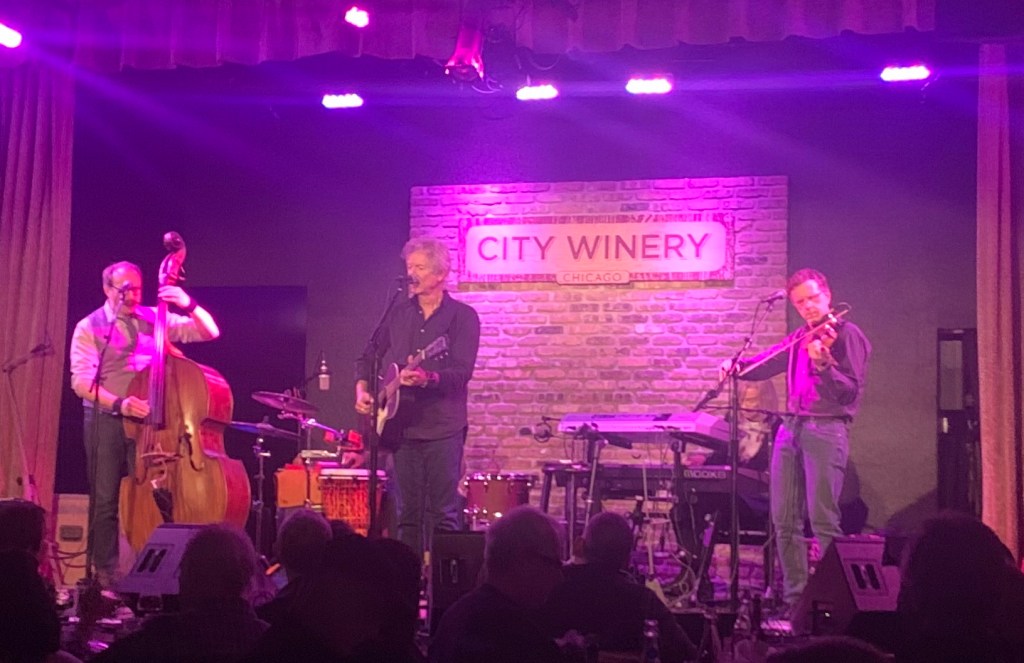
It wasn’t our first, but yesterday’s evening with Rodney Crowell at the City Winery in Chicago was certainly one to relish.
When the evening was over, I had a better understanding of what Rodney sings “Oh, what a beautiful world” https://www.youtube.com/watch?v=RTsYHaOSXeY. I didn’t write down my own setlist as I wanted to devote full attention to his performance. And as Rodney mentions in many of his songs, we felt like we were close to learning to fly. Looking at recent setlists on setlist.fm, it looks like he’s sticking to the same one these days. Here’s the one from the Philadelphia City Winery last month https://www.setlist.fm/setlist/rodney-crowell/2021/city-winery-philadelphia-pa-2b8d58fe.html. I’ll bet someone posts last night’s set list pretty soon. If you don’t know setlist.fm, it’s a great site for many reasons. You can click and play any song on the list.
Just a few comments on his tunes.
Yes, he wrote “Shame on the moon”. He recorded it a year before (’81) Bob Seger did. Don Henley of the Eagles turned Seger on to Crowell. The song spent 23 weeks on Billboard’s charts, peaking at #2 on 2/23/83. Rodney said he got a lot of nice checks out of it. Here he is singing it at another City Winery a few months ago https://www.youtube.com/watch?v=0c8hUqaDjG4
He and the late great Guy Clark were friends and had a working relationship. Not a surprise for those two outlaw Texas country/folk guys. I was warmed to hear how my favorite song of Rodney’s – “It ain’t over yet” https://www.youtube.com/watch?v=EFrpzPR6TLY – grew out of a series of back and forths with the dying Mr. Clark, which makes the lyrics even more poignant. The song wasn’t released till 2017, a year after Guy died.
Rodney knows how to work with the greats. Check out this one where he pays tribute to – and sings with – one of the greatest https://www.youtube.com/watch?v=wdm72rTC9qw. The bass player last night delivered a very passable impression, not that anyone else in the world has a voice like that. The great man lived 5 more years after the song was released as a single in 1998. He was no longer Rodney’s father in-law when they recorded the song.
I don’t want to go Zell Miller on his setlist, but yes I could go on and on.
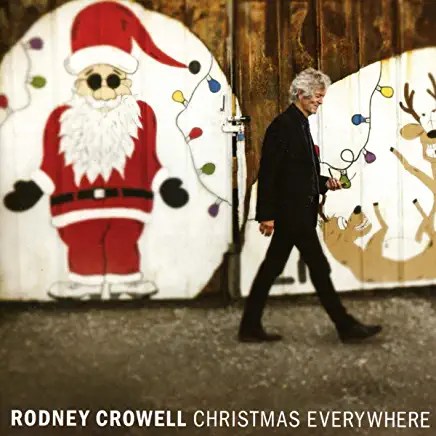
Another joy of these concerts is the artist’ merch table. All of Rodney’s merch was music. So much I’d never seen, even some vinyl, which I love. Realizing I have to carry my haul on a train, I exerted some discipline. I think the most fun one will be his Christmas album
As the lady at the table said “it’s not an ordinary Christmas album”. I haven’t played it yet, but looking at the back I see what she means, with songs like:
“Merry Christmas from an empty bed“
“Let’s skip Christmas this year”
and
“When the fat guy tries the chimney on for size”
I anticipate many more tastes of joy from this wonderful singer-songwriter. He’s only 2 years older than me, so he’ll be around for a while, I hope. So much more to explore.
But last night, wonderful as it was, did leave me with just a tiny taste of disappointment. He didn’t do my favorite love song of his https://www.youtube.com/watch?v=vEXmETu6cDw. I’ll have to play it for Kathy this morning.





 Bob Ike's blog