tallow, ho!

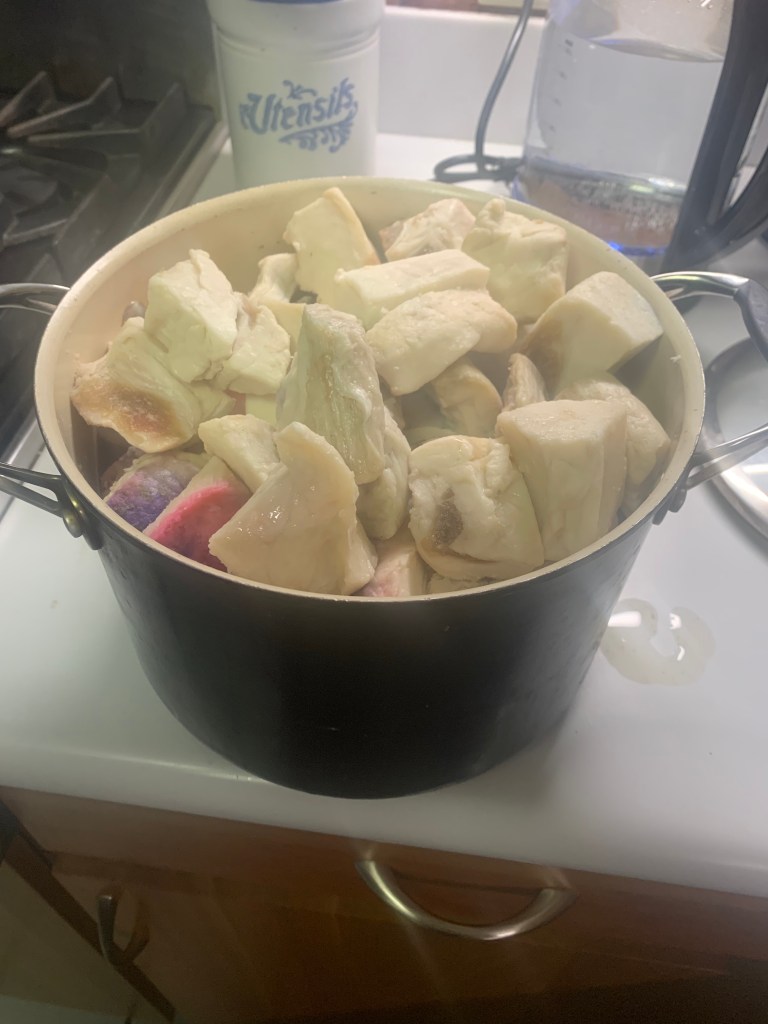
Blame it on the Rockies.  We were at a Colorado Springs bar munching away at some delicious fries, moved to take a second glance at the menu which indicted they’d been fried in beef tallow.  Of course!  I’d realized just recently that frying is better done in animal fat.  Much maligned lard has fewer calories than butter and has a much higher smoke point than any of the common vegetable oils (1).  So I have a nice chunk in my refrigerator that I use liberally.  But that’s a pig product.  Could I produce a bovine equivalent?  It turns out I had 7¼ pounds (3.4 kg) of beef suet in my garage freezer, the one I’ve had since my internship (42 years).  They took up a not insubstantial portion of my freezer capacity (0.3 cubic feet in a 16.5 cubic foot freezer).  I acquired the stuff when I bought a whole sirloin to slice into steaks and discovered a fairly substantial apron of fat, maybe accounting for the bargain price.  Originally, I saved it for the birds, as I’d heard that birds in winter like suet. Years passed without ever the hanging of suet and there it sat.

So home from Colorado I looked up how you might convert suet to tallow. It’s pretty darned easy https://yourfamilyfarmer.com/recipes/how-to-make-beef-tallow-from-beef-suet.  Of course, I ignored the instructions and just kept my 8 quart pot of suet on low for 3 days. There was a slow and steady cook down, filling the house with an aroma of a pot roast in the oven.  Not all bad.  One by-product of rendering (what this process is called) are the “cracklings”, bits of meat and fat from which no more fat can be rendered.  This is where pork rinds come from. Well, beef rinds are no less tasty and I now have 2.3 pounds (1.04 kg) of them.  I’ve been snacking on them but they get their first real tryout as a condiment tonight when a handful go on a salad.

See here the sequence of rendering:

Pot full of suet

Pot after 2 days rendering

After 3 days it was time to separate cracklings from tallow and proceed

But that’s a lot of cracklings!

But just look at that beautiful tallow, filtered through cheesecloth, just hitting the 1.75 L mark

So 3.4 kg of suet yields 1.75 L tallow.  That’s a 51.5% yield.  There a lot of “energy” in that stuff.  At 115 cal/TBSP (same as lard, a little less than olive oil), that big measuring cup contains 15,715 calories.  How fat would you get if you downed it in one big gulp?

I divided my 1.750 L of my very own home-made tallow into 2 quart jars, 3 pint jars, and a 1 ½ C  number.  This stuff isn’t just for eating.  It can be a fuel for candles, and makes excellent skin care products.  We’ll see if my sweetheart, who is very particular about cosmetics, rubs it on her face.  She’ll have to gauge the effect on her husband, who is very fond of items bathed in tallow.  A little wood ash and we could make soap! https://www.motherearthnews.com/homesteading-and-livestock/how-to-make-soap-from-ashes-zmaz72jfzfre

When first poured

Hour later

Rendering used to be a big thing on the farm, as all that fat from the season’s butchering was thrown into the rendering pot, producing tallow and lard that would take them through the winter.  They weren’t watching their waistlines so much back then.  This replica of a “pig pot” I inherited from my late Aunt Dorie is the sort of thing that would have been used for rendering.  However, prior to the rendering, the pot had another function.  Filled with boiling water, into it would go each newly dead pig for scalding, followed by the scraping off of any hair with a sharp scoop.  Young men like my Grandpa Slater assisting in this task, then cutting up the pigs, were rewarded with a few cuts of meat for their own use, never the choice cuts

So we further go into the brave new old world of animal fats.  We’ve already discovered duck fat, leading us to choose supermarket ducks over the free range grass fed numbers of my colleague Michelle, as they are too scrawny.  Can schmaltz (chicken fat) and goose fat be far behind (Ann Arbor parks are overrun with sources)?

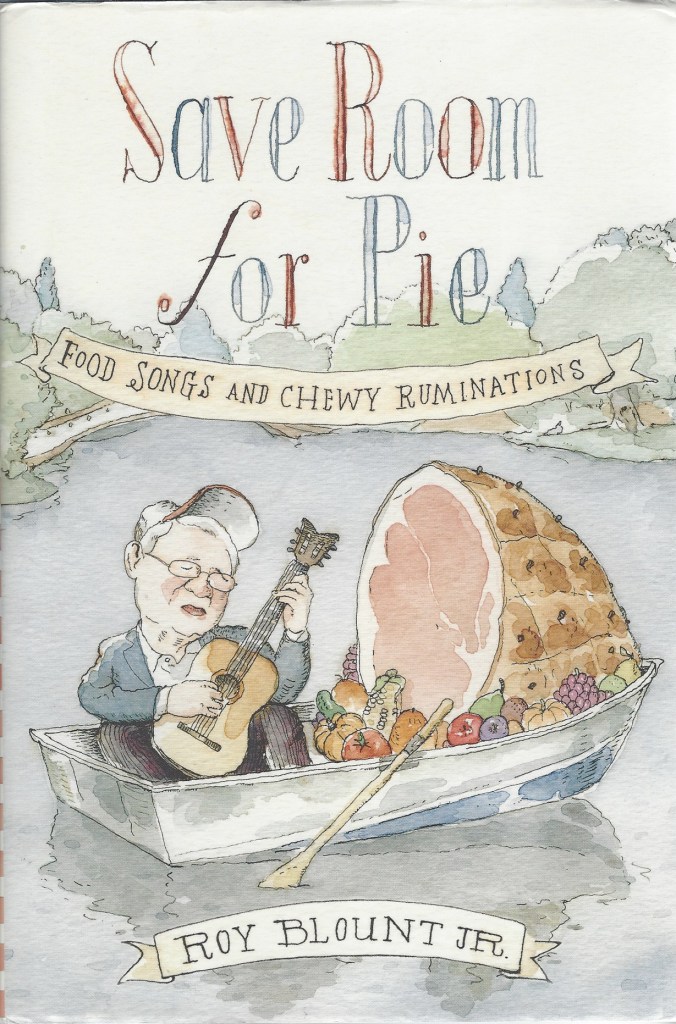
It all brings to mind one of Roy Blount Jr’s old food songs.  Roy, now 80, is a Southern writer and raconteur who was a regular guest on the old Prairie Home Companion.  He also performs with the “Rock Bottom Remainders”, a group composed only of writers, which have included Dave Barry, Stephen King, and Mitch Albom, among others. As I was watching all that wonderful beef fat render, I couldn’t help but think of the one of his food songs that goes:

“I think that I shall never cease

To hold in admiration, grease…”

That’s all I remember.  The Ann Arbor District Library and Amazon are racing to get me a copy of the book (2).  When I get it, I’ll update, so stay tuned.

Update, Tuesday May 18th. It’s a tie. Kathy drove me to the Ann Arbor District library downtown so I could get there by noon. The disembodied figure on the big screen in the caged-off entryway explained my book was on the shelf, bearing my name in alphabetical order, and already checked out. Happily, I headed home with it under my arm to find a pile of packages on the doorstep, one of them from Amazon bearing my book!

So here’s the cover

Overstuffed with paens to food. I anticipate many hours of pleasure, and more than a few pounds of weight gain.

And here’s the song in question. Much more to it than what I remembered

I like the line in the 3rd stanza “Oh when our joints refuse to function”. Wish I’d know that back when I was practicing. I could have just recommend to my patients to get more grease in their diet. They were always asking about diet, anyway. But, grease, that’s the ticket. Tallow if you’re lucky enough to score some.

References

1.         Maynard C and Scheller B.  The Bad for you Cookbook.  New York: Villard Books, 1992. pp 69-70 (on lard)

2.         Blount RJ.  Save Room for pie: Food Songs and Chewy Ruminations.  New York: Sarah Crichton Books/Farrar, Straus and Giroux, 2016

make it add up, doc

Those invites from the “predatories”, journals and conferences alike, just keep on coming.  For those of you not in academia, a “predatory” journal exists mainly to fleece authors of often astronomical article processing fees (APCs).  Journal costs used to be covered by subscriptions and/or support from organizations.  With most journal articles now accessed on-line, and some journals going completely virtual, money to run the printing presses and pay for postage isn’t such a big-ticket item anymore.  But there still are some regulatory costs and making an article look nice from the submitted double-spaced manuscript takes some work.  On-line access to conventional journal articles is “free” only to those with a subscription, which could belong to the institutional library from which the seeker might be working.  Otherwise, you have to pay, and it’s usually not cheap.  This is an impediment to authors who want to get the word out about their work.  Enter the concept of “open access”, in which the author foots the bill for publishing his or her article in exchange for the journal making access to the published article free to all comers.  Started by physicists and computer scientists in the late 80s and 90s, the concept was named and formalized just after the turn of the century (1).  Many legitimate journals offer this as an option.  Lab researchers cover the costs out of their grants.  Published articles are the currency by which success in academics is measured.  Knowing this push, new journals began to spring up 10 or so years ago as entirely open access.  Seeing the desperate academic author as cash cow, these journals actively solicit articles, usually with very flattering e-mails.  If that sounds like a sleazy operation, it is.  These journals have all the trappings of “real” journals, with editorial boards, a stated commitment to peer review, snazzy online graphics, and PDFs of your article looking every bit as pretty as something in the New England Journal.  But they do serve a purpose, sort of like the “easy” girl back in school everybody took out.  It can serve as a start for the young writer.  For this old writer, it served as a restart when someone from the Journal of Surgery and Surgical Technology asked me to write something for their upcoming issue on arthroscopy, the thing that made me unique back in the day.  I invited two friends, my mentor Bill and Bill’s student after me and now good friend Ken.  I asked Ken, a successful professor with a decent slush fund, if he might cover the APCs.  He agreed, and even negotiated them down a bit.  What came out – “Arthroscopy in rheumatology: a reminiscence” – looked pretty nice (2).  So nice, we buffed it up and submitted it to the world’s premier rheumatology journal: Rheumatology (Oxford).  Yes, that Oxford.  Lo and behold, they took it, after a few revisions (3).  Between time of acceptance in late July and e-publication December 1st (the paper journal was mailed out in February), I constructed a rather long spreadsheet of all those people who had been important to the development of rheumatologic arthroscopy, emailing each a brief statement and a link to the paper.  Most were academics who worked through a library and thus could get free access.  One fellow, an orthopedic surgeon, my hero Lanny Johnsn, contacted the editor of Arthroscopy: The Journal of Arthroscopy and Related Surgery about having me and Ken write a letter to their editor informing all those orthopedists of our article, which was appearing in a journal orthopods don’t generally read.  The kicker was we’d have to make the Rheumatology article open access, a service Oxford University Press would happily provide for the mere sum of $4225.  Even Ken’s slush fund isn’t that big.  I went to work on Rheumatology’s editor, pushing the possibility of reaching a much larger audience.  After some promising exchanges, I stopped hearing from him.  I went ahead and wrote the letter, submitting it with the warning the article might not be freely accessible.  I was told the link was working, and they accepted the letter (4).  So that invite from 2 Julys ago netted me 3 new entries on my C.V.  More importantly, it reintroduced me to the joys of writing and publishing, and I have 8 or so manuscripts in various stages of development plus 3 more already submitted with one published (5), one needing revisions (eventually accepted 6), and one seeking another journal (eventually found 7) (as of 4/28/21).  Two of the 8 were prompted by a predatory invite; although I had negotiated the APCs way down, what got written was so nice I pulled it from the predatory and am buffed them up some for a “real” journal. One could go in today (6) and the other still needs a little work, both on the manuscript (8) and on the YouTube video Sara and I published to illustrate one of the procedures in the manuscript (9)

Then last Thursday, I got the craziest predatory invite I’d received yet: from a business journal!  Ms Wright, from the offices of Crimson Publishers in NYC, said she had a shortfall of one article for her upcoming issue of Strategies in Accounting and Management and might I help support them with my article by the next Thursday?  It need only be brief, a 2-page opinion/mini review/case report.  I wrote back I could write something about the memorable accounting class I had in high school, but only if they waived their APCs.  Ms Wright did not seem deterred by my meager business credentials and said I only need pay the “web hosting fee”, which was trivial.

I found 778 words and two online references, submitted it yesterday and received Ms Wright’s thanks and a bill for the web hosting fee, which I’ve paid.  It has to go through “peer review”, of course, but I’m pretty sure Ms Wright is one of those ”easy girls”, so I’ve gone ahead and put it on my CV (10)

I don’t think I’m violating any copyright laws here:

Make it add up, doc

Did you hear the one about the rheumatologist who was asked to write something for an accounting journal?  Yep, that really happened, and here’s the result.

Accounting was one of the easier classes I took in high school.  I’m not even sure why I signed up for it in the first place.  I had zero desire to go into business of any sort, let alone become an accountant.  I was good at math, but that was going to take me into something scientific.  A lot of my buddies were taking accounting, so I did too.  I ended up liking the class.  Everything was very logical, with satisfaction to be had in getting the right number in the right column and seeing everything balance up.  I think running numbers makes my brain put out endorphins.  I got that from my dad, a time-study guy at G.M. (they eventually called him an “industrial engineer”); we’d have a contest at grocery checkout, seeing who can add up the bill faster, and always beating the cashier.  That machine got a lot of fun work in accounting class.  The class was taught by workbook and we were allowed to go at our own pace.  When it began to look like I could actually do it, I set out to finish the two-semester course in one term, and did.  My three friends who took accounting most seriously didn’t do that, although they got As too.  Each went to Western and focused on business, Rod and Eric in accounting and Steve in marketing.  All saw success, Rod and Steve in aerospace and Eric in banking.

At our high school, only grades from the first seven semesters counted toward class ranking.  Greedy for As and grabbing for that top prize, I asked that both my accounting As count toward my final GPA.  Johnny Mac, our vice-principal, granted me that.  I wonder now if he knew what the consequences would be.  He was always one to teach you a lesson one way or another.  It’s been more than 50 years, but I can still give the details verbatim.  My friends still ask me about it on occasion, just to bait me.  At dear old Vicksburg High, class grades were weighted, with an extra point added to honors or advanced placement classes.  After 6 semesters, my GPA was well north of 4.0.  I think I may have gotten a B in Phys Ed, which mercifully was required only freshman year.  Now you think Mr. number crunching genius could have added this one up.  Accounting was neither an honors nor an A.P. course.  4 points was 4 points.  And what did those 2 accounting As do to my GPA?  Yep, they brought it down!  That very smart girl Kay beat me for valedictorian by 7 ten-thousandths of a point!  No, I’ll never get over it.  And yes, Mr. McDonald, I’ve learned to scrutinize more carefully the potential consequences of my greedy actions.  Goes to show you can learn from a class long after the final exam.

Being salutatorian wasn’t half bad.  The salutatorian greets the assembled as the ceremonies begin, so no one has fallen asleep yet, then gets to sit down – job done – and take in the rest of the evening.  There were no real consequences of my fall from the top spot.  I got into the honors college at Michigan, graduated with high distinction in Zoology, then got a masters in Micro as I waited to get into a very good med school (University of Chicago), had the computer stick me at Barnes in St. Louis, was welcomed back to Ann Arbor for my rheumatology fellowship then taken on as faculty for what was an immensely satisfying career that is still giving me things to write about even though I haven’t seen a patient this decade.

And the role of that accounting class?  Maybe more important than I think.  Many folks my age say the most useful course they took in high school was typing.  I didn’t take typing (would have brought down my GPA).  While I disdained the business side of medicine, I understood what was being discussed when the numbers flashed up on the screen, and kept careful track of my own clinical activities and occasional grant-getting to make sure I was getting proper credit.  There may be a little more in my 401K as a result.  Accounting is important in medicine.  A PubMed search of those two terms nets 144,454 references (1).  Rheumatology as the crossed search term gets 2,799 (2).  So, yes, I would recommend that every high schooler take accounting.  Life is better when you can make things add up.

References

1.         https://pubmed.ncbi.nlm.nih.gov/?term=accounting+AND+medicine

2.         https://pubmed.ncbi.nlm.nih.gov/?term=accounting+AND+rheumatology

REFERENCES

  1. https://en.wikipedia.org/wiki/History_of_open_access#:~:text=The%20first%20online-only%2C%20free-access%20journals%20%28eventually%20to%20be,were%20developed%20without%20any%20intent%20to%20generate%20profit.
  2. Ike RW, Arnold WJ, Kalunian KC.  Arthroscopy in rheumatology: a reminiscence.  J Surg Surg Technol 2020;2(1):27-35.  https://www.jsurgery.com/articles/arthroscopy-in-rheumatology-a-reminiscence.pdf
  3. Ike RW, Arnold WJ, Kalunian KC.  Arthroscopy in rheumatology.  Where have we been?  Where might we go?  Rheumatol (Oxford) 2021;60:518–528.  Epub 2020 Dec 1 https://doi: 10.1093/rheumatology/keaa560. https://authors.elsevier.com/a/1cyGg2gV7ZQUK1
  4. Ike RW, Kalunian KC.  Arthroscopy in rheumatology. Arthroscopy: The Journal of Arthroscopic and Related Surgery (in press). 2021;37(5):1364-1365. https://doi.org/10.1016/j.arthro.2021.02.024
  5. Ike RW, Kalunian KC, Arnold WJ.  Why not wash out the OA knee?  J Clin Rheumatol 2021;27(2)43-45.  https://doi: 10.1097/RHU.0000000000001672
  6. Ike RW, Kalunian KC.  Regarding arthroscopy: can orthopedists and rheumatologists be friends?  J Clin Rheumatol 2021;28:177–181.  https://doi: 10.1097/RHU.0000000000001802
  7. Ike RW, Kalunian KC.  Will rheumatologists ever pick up an arthroscope again?  Int J Rheum Dis2021;24:1235–1246.  Epub 2021 July 29.  https://doi: 10.1111/1756-185X.14184
  8. Ike RW, McCoy SS, Kalunian KC.  What bedside skills should the modern rheumatologist possess?  (submitted to J Clin Rheum)
  9. McCoy SS, Ike RW.  Labial salivary gland biopsy by Dr. Sara McCoy (silent).  Posted to YouTube by RW Ike 7/17/21.  Available at: https://youtu.be/O7hxT6OLfH0
  10. Ike RW.  Make it add up, doc.  Strategies in Accounting and Management (SIAM) 2021;2(4) SIAM.000542.2021 https://crimsonpublishers.com/siam/pdf/SIAM.000542.pdf.

Saint Anthony … fired?

Oh, would that it were.  But he’s essentially unfireable and the man who might have done it left the oval office last January, and he couldn’t have directly fired any career civil servant, an act that would have had to be accomplished through intermediaries.  But the diminutive octogenarian from Brooklyn was once my hero, as he was to most rheumatologists.  His training is in immunology, not microbiology or infectious disease, and he spent the early part of his career examining ways to dampen the overactive immune response behind many of the more severe diseases faced by rheumatologists.  His success at using an old chemotherapy compound derived from mustard gas – cyclophosphamide (Cytoxan) – to treat polyarteritis nodosa (PAN) won him great acclaim.  PAN is characterized by immune-mediated inflammation of blood vessels with a muscular layer – medium sized blood vessels (the aorta and its branches are large blood vessels).  Patients can be very sick with just the systemic inflammation, and organs those blood vessels feed can be compromised, with everything from severe hypertension, kidney failure, heart attacks, strokes, gangrene, and gut perforation ensuing.  Prior to Fauci’s demonstration that Cytoxan pushed to the limits of the PAN patient’s bone marrow can halt the blood vessel inflammation (vasculitis), most patients died, either of the acute disease, consequences of compromised organ function, or complications of the corticosteroid treatment, which was the only thing going before Cytoxan.  Others had used Cytoxan for PAN before, but Fauci had the manpower and organizational resources of the NIH behind him to conduct a proper trial.  But it wasn’t really a trial, just the report of 17 PAN cases treated with Cytoxan at the NIH over the previous 11 years.  I presented his report of that “trial”, which had just appeared in the New England Journal of Medicine (1), at intern’s report at Barnes Hospital, and with some excitement.  It may have been the thing that tipped me into rheumatology.  PAN cases were pretty uncommon, but getting one was one of the most exciting things that happened to this medical resident back then.  Making the diagnosis was always a coup, and the steroids did make things back off, although long term was always touch-and-go, until Cytoxan, which added the great satisfaction of what was basically a cure, although Cytoxan has long term side effects like bone marrow suppression, infections, bladder irritation and bleeding, and emerging malignancies.  Fauci turned to another vasculitic disorder – Wegener’s granulomatosis – and basically cured that too.  He wrote a slim book with older colleague Tom Cupps which became the bible for those treating vasculitis (2).  To this day the combination and timing of medications he used are still employed and referred to as the “Fauci regimen”.  Newer specifically targeted biologic compounds like infliximab (Remicade) and tocilizumab (Actemra) have become more popular for PAN and Wegener’s, but a lot of us old timers still prefer the Fauci regimen.  Just 5 years after publication of his seminal NEJM paper, Fauci bolted rheumatology to climb onto the AIDS bandwagon, like so many others around that time.  Research money spigots were wide open.  Our chief, Bill Kelley, sat down the whole department for a special meeting at which he encouraged everyone to find some way possible to tie their research to AIDS.  Sure, those afflicted needed help, but the motivation wasn’t altruistic.  Fauci probably figured that having spent his career to that point suppressing the immune response, he could deal with a disease in which mother nature was doing it.  His leap also got him the leadership post at the National Institute of Allergy and Infectious Diseases (NIAID), a post he holds to this day.  He did continue to publish on vasculitis into the early 90s – 105 of the 1,040(!) citations on PubMed that bear his name concern vasculitis – but the bulk of his output has been on HIV, although it took him a while to get much out, with only 8 publications his first year and 12 the next.  He’d eventually amassed 244, and ventured into the broader area of emerging infections.  Then December before last, the Wunan Lab provided him with a new focus.  He’s been the face of the American response to COVID ever since, for better or worse.  A Rasmussen poll in early March found 52% approving of Dr. Fauci’s performance, down from peaks as high as 80% in an April ’20 Fox news poll and 73% per Zogby same month.  People in crisis will gravitate to a seemingly kindly authority figure, and Dr. Fauci certainly has burnished that image.  But if you’ve been paying attention to what he’s been saying, you might wonder how much of that adulation is really deserved.

The National Review’s Kyle Smith assembled some of Fauci’s statements about the pandemic for a recent article (3).  My wife Kathy subscribes to National Review, and began reading a few of them to me this morning.  Once again the girl is my muse.  I’m not sure the link below will work for non subscribers, so please allow me to repeat those statements here, in chronological order.

1/21/20 [asked about the coronavirus by Greg Kelly on Newsmax TV“This is not a major threat to the people of the United States and this is not something that the citizens of the United States right now should be worried about.”

1/26/20 [interviewed by John Catsimatidis, a radio host in New York, who asked whether “the American people . . . should be scared”]: “I don’t think so. The American people should not be worried or frightened by this. It’s a very, very low risk to the United States, but it’s something we, as public-health officials, need to take very seriously.”

2/17/20 [to USA Today]: “If you look at the masks that you buy in a drug store, the leakage around that doesn’t really do much to protect you. People start saying, ‘Should I start wearing a mask?’ Now, in the United States, there is absolutely no reason whatsoever to wear a mask.” [The danger of COVID is] “just minuscule” [but consider instead the] “influenza outbreak, which is having its second wave. We have more kids dying of flu this year at this time than in the last decade or more. At the same time people are worrying about going to a Chinese restaurant. The threat is a pretty bad influenza season, particularly dangerous for our children.” (Influenza levels hit a record low around the world; the number of pediatric flu deaths in the U.S. fell from 195 in the 2019–2020 season to one in the 2020–2021 season.)

2/29/20 (asked on NBC whether Americans should go to “malls, and movies, maybe the gym”): “At this moment, there is no need to change anything that you’re doing on a day-by-day basis. Right now the risk is still low, but this could change. I’ve said that many times, even on this program . . . although the risk is low now, you don’t need to change anything you’re doing. When you start to see community spread, this could change.”

3/3/20 [to a Senate committee]: “It will take at least a year to a year in a half to have a vaccine we can use.”

3/9/20 [at a White House briefing]: “If you are a healthy young person, there is no reason if you want to go on a cruise ship, go on a cruise ship. But the fact is that if you have . . . an individual who has an underlying condition, particularly an elderly person who has an underlying condition, I would recommend strongly that they do not go on a cruise ship.” (The U.S. State Department advisory issued the previous day reads: “U.S. citizens, particularly travelers with underlying health conditions, should not travel by cruise ship.”)

3/29/20 [on CNN]: Predicts death toll of “100,000 to 200,000.”

4/9/20 [on NBC]: “looks more like 60,000.”

7/17/20 [on PBS]: “We’ve got to do the things that are very clear that we need to do to turn this around. Remember, we can do it. We know that when you do it properly, you bring down those cases. We’ve done it. We’ve done it in New York. New York got hit worse than any place in the world. And they did it correctly by doing the things that you’re talking about.” (The death toll in New York State on July 17, 2020 was under 28,000. The death toll in New York State on April 19, 2021: 51,122. A new study points out that New York had the “worst overall outcome” of any state in the pandemic.)

8/13/20 [on PBS, asked whether schools should remain online instead of in-person for “many months”]: “In some places, Judy, that may be the case.”

10/6/20 [at American University]: “I’d like to say spring, but . . . I think it’s much more likely in the late summer early fall.” (The Pfizer vaccine was approved on December 11, 2020.)

11/28/20 [on ABC]: “Close the bars, keep the schools open.” (Politico, November 18, reported that: “Data from 191 countries shows no consistent link between reopening schools and increased rates of coronavirus infection, UNICEF reported.”)

2/22/21 [at a press briefing]: “There are things, even if you’re vaccinated, that you’re not going to be able to do in society. For example, indoor dining, theaters, places where people congregate. . . . That’s because of the safety of society.”

(The Atlantic: “Advising people that they must do nothing differently after vaccination — not even in the privacy of their homes — creates the misimpression that vaccines offer little benefit at all,” writes epidemiologist and Harvard Medical School professor Julia Marcus. “Vaccines provide a true reduction of risk, not a false sense of security. And trying to eliminate even the lowest-risk changes in behavior both underestimates people’s need to be close to one another and discourages the very thing that will get everyone out of this mess: vaccine uptake.”)

3/2/21 [on CNN after Mississippi and Texas lift mask mandates and some other restrictions]: “From a public-health standpoint it’s certainly ill-advised. Just pulling back on all of the public-health guidelines that we know work — and if you take a look at the curve, we know it works — it’s just inexplicable why you would want to pull back now. . . . What we don’t need right now is another surge. . . . I understand the need to want to get back to normality, but you’re only going to set yourself back if you just push aside the public-health guidelines.”

3/14/21, Yahoo headline notes: “Fauci just warned of a fourth wave.”

4/2/21, NPR headline notes: “Fauci Expects Surge In Vaccinations To Keep A 4th Coronavirus Wave At Bay.”

4/7/21, CNN headline notes: “Fauci says new Covid-19 cases are at a disturbing level as the US is primed for a surge.” (The April 19 New York Times reads: “Case numbers nationwide have been largely stagnant for the last month.”)

(Mississippi on March 2 had a seven-day average of 582 new cases, per the New York Times tracker. On April 19, their seven-day average was 243. In Texas on March 2, the seven-day average of new cases was 7,259. On April 19, it was 3,237.)

4/6/21: [on MSNBC, asked why Texas cases continued to decline]: “I’m not really quite sure.”

I think these fuzzy, slippery and inconsistent statements can be laid directly to his training as an immunologist rather than some character flaw.  Immunology, particularly on the 70s when Dr. F got his start, was incredibly vague.  Only now are researchers beginning to get their molecular arms around this vast, vague, and complex system.  Back then, they had to make the best of some pretty slippery data.  Our U of M president, Dr. Schlissel, was an immunologist.  He’s 15 years younger than Dr. F, but some of his pronouncements bespeak someone who once had to wrestle with slippery data.  My own meager bench research background was in virology, unlike Dr. F, a field that even in the 70s was grounded in Collins’ The Language of God, not the babble of immunology.  My career in rheumatology, though, was spent wrestling with those diseases in which the immune system has gone awry, food for much babbling of my own.

If you’re a fan of Fauci’s, you’ve no doubt been triggered by now, if you’ve bothered to read this far.  Maybe you’re one of the “5-Fs” as I call them (https://wordpress.com/post/theviewfromharbal.com/1134).  If so, I feel sorry for you, to have your life controlled by a man who can’t seem to make up his mind.

Whatever side of the fence you’re on, if you want to let Dr. Fauci know how you think he’s doing, here’s how:
anthony.fauci@nih.gov

I only have one verse so far, but I thought I’d share a little tune that goes to one made famous by Mr. Deutschendorf https://wordpress.com/post/theviewfromharbal.com/825

“Fauci, on my shoulder, makes me nervous

As he tells me that I must comply

If I don’t put my mask in service

Then no doubt that I shall surely die.”

References

1.         Fauci AS, Katz P, Haynes BF, Wolff SM. Cyclophosphamide therapy of severe systemic necrotizing vasculitis. N Engl J Med. 1979 Aug 2;301(5):235-8. doi: 10.1056/NEJM197908023010503

2.         Cupps TR, Fauci AS.  Vasculitides.  Philadelphia, W. B. Saunders Company, 1981

3.         Smith K.  Anthony Fauci’s Misadventures in Fortune Telling. National Review Plus. April 20,2021. https://www.nationalreview.com/2021/04/anthony-faucis-misadventures-in-fortune-telling/?utm_source=Sailthru&utm_medium=email&utm_campaign=NR%20Daily%20Monday%20through%20Friday%202021-04-20&utm_term=NRDaily-Smart

Two triple cheese…

I awoke this morning knowing I was facing a very special day.  Another one of those golden anniversaries.  They come around pretty frequently at this age.  One of the first things I did once I got settled into my blue La-Z-Boy was to fire off e-mails to George Frayne of Gansevoort NY and Bill Kirchen of Austin TX, two men who helped make it all possible.  Here’s what I wrote to Bill (I personalized it a little for George):

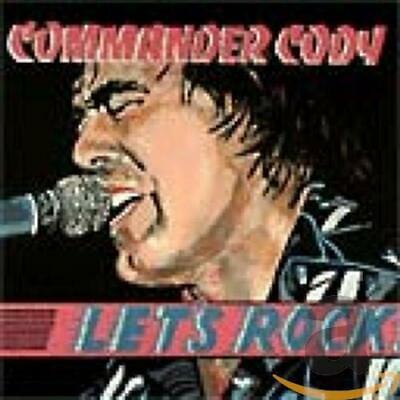
“On this day 50 years ago during an all-campus end of classes blowout, I snuck into Hill Auditorium and saw Commander Cody and his Lost Planet Airmen for the very first time, beginning a lifetime love affair with the band and all the crazy hippies in it.  To celebrate, I’m playing all my Cody records (yes records; we didn’t have CDs or MP3s in those days.  I may make an exception for Let’s Rock, your all time best IMHO).  For dinner, Kathy’s excusing me from my usual Saturday cookout so we can go to Krazy Jim’s and get Two Triple Cheese Side Order of Fries! 

So thanks for all that joy, the memories, and, yes, fun!  Haven’t had too much yet, but I get close sometimes*. I hadn’t gotten deep into my concert poster snitching hobby then, but I exercised my modern snitching skills picking out the poster for this memorable concert right from the Commander’s web site. It now hangs in my entry way.

The celebration began in earnest around 3, when WCBN’s Down Home Show concluded.  See the records we’ll be playing.  If you get one, get one of the first 2, both from ’71.  After that they started practicing and lost something in the process, although they remained the greatest live act going.

You may have figured by now that Mr. Frayne (U of M B.S. ’66, M.F.A. ’68) is Commander Cody and Bill (Ann Arbor High ’66, classmate of James Osterberg (Iggy Pop), with who he was in a band – the Ann Arbor High symphony band, Bill on trombone, don’t know what Iggy played) was lead guitarist.  The original band broke up in’ 76 having never struck it rich, and members have carried on in various different guises.  My love and interest in their long intertwining careers is a matter for another post.  Today is a celebration of the beginning, and all that it opened up. I’m typing this early in the celebration, as the Commander’s music does not necessarily promote the most responsible behavior.  At least I won’t be able to do any damage in the kitchen, as we’re going out!

And if you need a reminder of the significance of that menu order, here ya go: (1).  That video won an Emmy and is in the collection of the Museum of Modern Art in NYC, ya know.

So there’s a long afternoon and evening ahead of us.  We may have to break down and spin CDs or even click Spotify.  Somewhere downstairs is a reel-to-reel tape I made of the broadcast of the John Sinclair Freedom Rally at Crisler Arena in December ‘71, which includes CC&HLPAs show-stealing set, on a bill that included John Lennon, Bob Seger, Stevie Wonder, and Phil Ochs.  Three of their songs made it on the John and Yoko produced documentary of the event “Ten for Two”.  I ripped them off and uploaded them to YouTube. Here they are (2).

The prospect exists of having Too Much Fun*. Won’t know what to do if that happens! We, being elderly, plan to split the two triple cheese order.

Coda: should you wish to visit Krazy Jim’s to have your own triple cheese, there’s a few things you need to know. It’s not as easy as stepping up and ordering the song, as you can do at another campus haunt Angelo’s (3).

First you have to find it. For decades it was on a corner right by South Quad. This is the place Guy Fieri visited in 2009 (4). Several years back the U decided it wanted that patch of land to build its new grad students’ dorm. Fans of great greasy burgers breathed a sigh of relief when Krazy Jim’s emerged at a spot just off Main Street, right next door to another hippie icon, the Fleetwood. The two don’t really compete as the Fleetwood offers a broader menu with longer hours. The management has planted an appendage in East Landfill, and now claim cool diners in 2 midwestern towns (5). Low bar in EL. Do those Spartoons even know what “hippie hash” is? Regardless, the gleaming Ann Arbor spot is perfect for that last stop after a night in the bars.

No outdoor dining at Krazy Jim’s. And they are serious about that COVID thing.

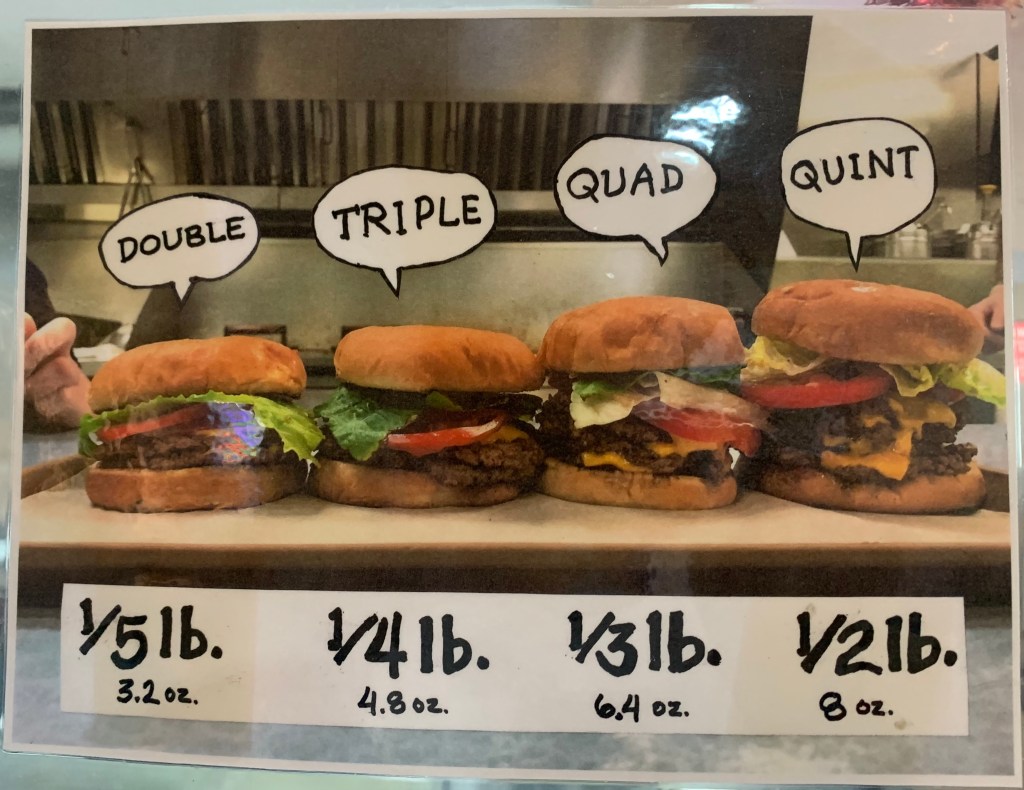
You just walk in and give your order to the guy at the grill who’s going to cook it for you. If you have the temerity to ask for “Two triple cheese side order of fries”, you’ll be met with a stern rebuke to observe the ordering directions so clearly posted on the way in.

This attitude is hardly new. I recall being met with the same impatience for my sloppy ordering when I came in as a student. I lived at West Quad, just north of South, and they didn’t feed you on Sunday nights. Had to eat somewhere.

Before you get a chance to start with your burger instructions, you’ll be asked for your fry order. Their fries are great – thick, light, and crisp – but should you be in the mood for something healthier, they’ll be happy to throw some breaded vegetables into the deep fat.

Now the sequence, first the number of patties. They’re small, so a triple is just a quarter pound. Patties are made 10 to a pound, so calculate away. You can’t get a single. My dainty-eating wifey ruined our song by ordering herself a double.

Then the fried toppings. Then the cheese (no Velveeta). Then the condiments (no secret sauce, alas). We were in and out pretty quick. Not McDonalds, but oh is this a world apart. Everything was plenty hot after the 5 minute drive home.

We had “Let’s Rock” on the car CD player to and from, first CD of the day, IMHO the best Commander Cody album ever. CC&LPA’s breakup was 11 years in the rearview mirror, but Bill Kirchen and bassist Buffalo Bruce Barlow were on board, and Kirchen brought in his buddy from the Moonlighters, his post Airmen gig, Austin DeLone. Great songs, great performances, great production.

As we got home and sat on the deck with beers each, just as the sun was setting, and dived into our burgers, we understood what the ol’ Commander was singing about: “You wanna know where paradise lies?”

References

  1. Two Triple Cheese Side Order of Fries – Commander Cody. YouTube 5/2/13. https://www.youtube.com/watch?v=x1Cvg5VCpT4
  2. CC&LPA@JohnSinclair121071.  YouTube 3/3/21.  https://www.youtube.com/watch?v=DZ21BHiSlJ4
  3. Angelo’s by Dick Siegel. YouTube 8/23/15. https://www.youtube.com/watch?v=HgzZXtrNreA
  4. Krazy Jim’s Blimpy Burger | Food Network. YouTube 5/27/09. https://www.youtube.com/watch?v=TCr8WX61FAc
  5. FLEETWOOD DINER. The hippest little diners in the hippest Midwest towns… http://thefleetwooddiner.com/

meat!

I love shopping at Meijer’s.  None of the three stores in our area is very close, maybe 5 miles or so, but the trip down Platt passes by Bombay Grocers (source of peeled garlic for paste), the dump, and the cheapest gas station in town.  Added on todays trip was Gordon Food Services, right across from Meijer’s, for those 5 gallon jugs of red wine vinegar and soy sauce.  Feeding our ‘shrooms habit https://wordpress.com/post/theviewfromharbal.com/1238

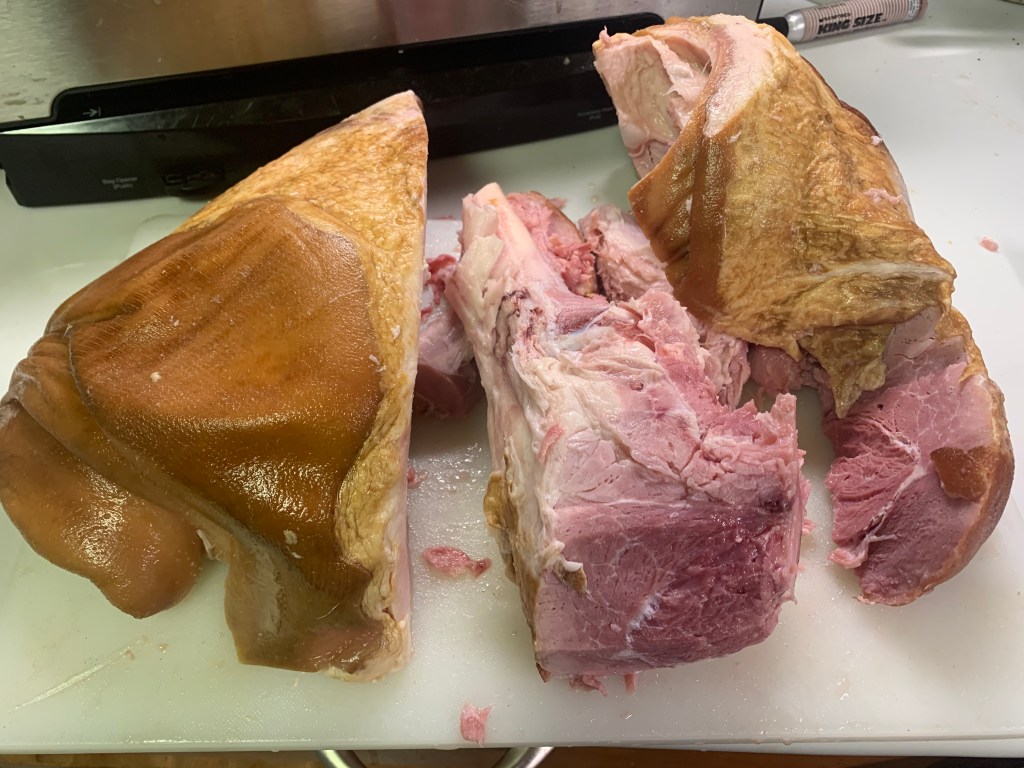
But Meijer’s always abounds with bargains, and today they were in the meat department.  Now I have a freezer stuffed with meat all catalogued in my 3 ring binders, each species in its own special bag in the freezer.  Unless our electric goes out and all melts, we can eat (well) for years.  But boy, look at that pack of ham hocks!  Not even on sale, but you can always use a ham hock, and here were 4 of ‘em in a pack!  Then, wow, lookit the size of that pork butt shoulder! Beats some of the customers.  And the designation makes me worry about the effects of industrial agriculture (how did butt and shoulder get so close?). But it’s more than 50% off, so 7 ½ pounds of it goes into my basket.  Not to be outdone is the ham display with slabs of no unquestionable origin close to 10 pounds beckon. They’re already cooked you see, so easy to manipulate once home.  I learned at Easter this year, thawing out a ham from ’99, you could do things with these huge chunks of meat besides thaw ‘em and then serve them with pineapple.  So at these prices, I had to have one.  Your receipt at Meijer’s includes a tally of your savings, and mine were enormous, plus I got a $3 off coupon for hair products.

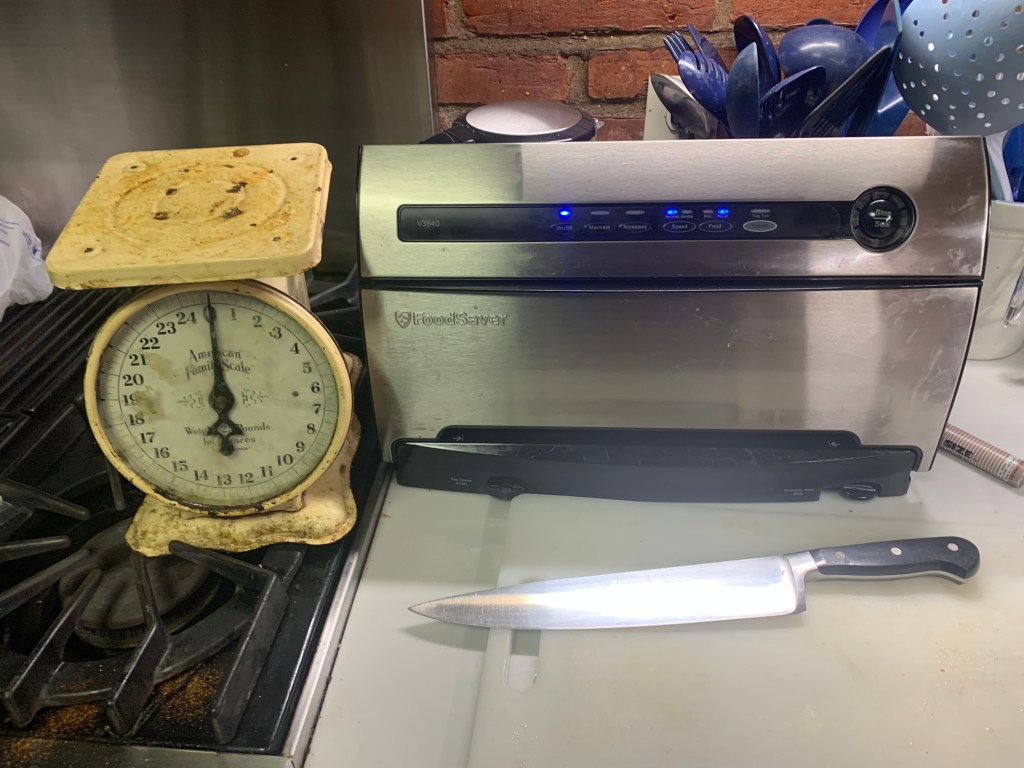
Home, I was exhausted after this Herculean effort at food gathering.  Meat wasn’t all I got.  So several hours passed before I started organizing things.  I also had a 4 ½ pound pack of boneless thighs from Busch’s the day before to deal with.  See here my gleaming instruments of destruction. 

The vacu-sealer is key to the whole process, generating shrink sealed packages of labeled wonderfulness.  The scale, which I was weighed on as an infant, assures precision.  And you wouldn’t want to argue with that knife.

The thighs were easy, two per pack.  Ham hocks went one per pack..  Neither Kathy nor I could see us consuming 7 ½ pounds of pork shoulder butt, so cloven in twain it was.  Our first butt to hang in the smoker will be a mere 4 pound number.  The hard part of dividing the ham was getting the bone out.  I have a “boning knife’ but its slender blade is effete against this task, which requires brute manual force.  The meaty femur will make a wonderful addition to some Dutch split pea soup recipe. The rest is all sandwiches and chunks.  Sure good eatin’. Thank you, Fred Meijer

A man should know his meat.  While I’ve yet to stand witness in the slaughter house, at least I have the satisfaction of taking the output to comestable portions, as the vacu-sealer hums its song of approval.

those vaccines again

This is going to be some hard stuff about the COVID vaccines.  It grew from an exchange on a U of M Alumni Society forum.  So first I must tell you something about the Alumni Society.  Kathy and I became life members of the U of M Alumni Association last June.  I believe she and I both qualify: Kathy with her 3 post graduate degrees, 2 post-doctoral fellowships, and 20 years of employment then me with a bachelor’s, master’s, post-doctoral fellowship, and 34 years on faculty.  Plus we both started attending U of M football games with our families in the early 60s, me in ’64 and Kathy even before that.  True Blue.  So we never felt the need to join some sort of organization to prove to the world we’re proud to be part of 634,888 worldwide U of M alumni, largest alumni group in the world.  Go Blue!.  But we’ve done some things through the Alumni Society, taking a nice cruise from Scotland to Norway 3 years ago, and always consulting the site when we were travelling over the time of a football or basketball game.  Expat alumni in cities all over the world congregate in certain bars to watch the game and it was always fun to be in a crowd like that.  Last year they floated a special offer for lifetime membership and we decided to go for it.  There are many benefits (see table below) and we immediately enjoyed out blue fleece jackets.  There are online forums for many different interests.  I mainly looked at the travel forum, where member shared tips and questions.

Yesterday was posted the following question in the form of a survey:

“Will you travel abroad once vaccinated?”

Answers as of noon today

Yes! (26)

90%

No! (3)

10%

I did not answer the poll as I don’t wish to qualify.  Instead, I posted the following brief comment:

“won’t get vaccinated unless forced. I like the nucleic acids God gave me.”

Which got one snide reply lamenting ignorance about vaccines, likely steeped in religious fundamentalism and dark age attitudes.

But another guy posed an intelligent question. He’d even taken the trouble to look me up.  I looked him up.  A chemical engineering grad, so he must have some smarts:

How does the vaccine alter said nucleic acids? According to my research, you are Dr. Ike, distinguished emeritus faculty at the medical school. You have a responsibility to explain what you mean by this comment. Otherwise, it may appear that you are spreading misinformation.

To which I replied:

The vaccine is a nucleic acid, a strand of messenger RNA with the same information COVID uses to make the infected cell manufacture spike protein, which is what the virus uses to latch onto and penetrate lung cells. The lab-made mRNA is packaged in a nanoparticle made of polyethylene glycol (same stuff as anti-freeze). The injected particles penetrate human cells, where the freed strands of mRNA latch on to ribosomes, the protein complexes where information on the RNA brings in amino acids, building blocks of proteins, each one having a unique 3 nucleotide code expressed in the RNA, and the assembled amino acids forming a protein, to act either as a structural component of the cell or as an enzyme, catalyzing complex chemical reactions. It’s an elegant and surprisingly simple system. Read The Language of God by U of M’s own Francis Collins*, now head of the NIH, and certain future Nobel Prize winner. By having the spike protein made by the host we’re trying to protect, rather than just injecting spike protein like older vaccines worked, makes all arms of the immune system recognize this foreign protein and gear up to be able to attack it should something similar reappear. It’s a molecular biology tour de force and the groups that developed it are in for their own Nobel someday. The injected RNA is eventually degraded. However, every cell has a small amount of the enzyme reverse transcriptase, which can take a strand of RNA and manufacture a strand of DNA with the same information. DNA is very stable and can integrate into DNA that’s already there, i.e. our chromosomes.  Only transformed cells – cancer cells – make much reverse transcriptase. The late Michael Crichton, an M.D., knew of this phenomenon and used it in the plot to Jurassic Park, explaining how the supposedly safe all-female dinosaur clones became able to breed. Having a new gene that made us able to make coronavirus spike protein wouldn’t be all bad.  It would be like getting a constant immune booster against COVID. But that would work only if the spike protein of the constantly mutating coronavirus didn’t change much. But that’s a whole ‘nother story.  Having foreign DNA nestle someplace in your chromosomes could alter expression of the gene it sits next to, possibly even transforming the cell.  These are not the vaccines of our youth, which were just ground up, killed or otherwise altered fragments of the organisms we wanted to be protected against: smallpox, polio, measles, mumps, rubella, hepatitis B, etc.  In my own humble opinion, this new technology is too big a risk, however miniscule, for what could be a marginal, short lived benefit.  Hence my earlier comment.  Hope this all helps.

I’ve been delinquent in my pledge made months ago to dive deep into these vaccines and really learn what they are all about https://wordpress.com/post/theviewfromharbal.com/1029.  I have learned a little more, hence my answer above.  After posting that reply, I decided to do a formal search to see if there really might be a problem with reverse transcriptase and RNA vaccines, or if it was just something from an old science fiction novel and movie.  I employed my three favorite engines – Medline, PubMed, and Scopus – looking for publications that reference these two search terms together.  Surprisingly few things popped up.  Scanning titles, I saw nothing addressing the problem directly.  Of the 16 references Medline produced, one – a January review of COVID treatment and prevention, looked like it might at least address the problem, but was in a journal the library didn’t get and couldn’t be accessed online.  So I have interlibrary loan pulling it for me.  I’ll see what it says.  Meanwhile, I’ll remain a member of the COVID vaccine resistance.  Another set of unread articles on my computer concern vaccination and travel.  With Kathy retiring in June, travel is something we want to do much more of.  We may end up having to submit just for that.  Well, at least the vaccine doesn’t come with a tattoo, yet.

So if any of you readers are U of M alums, here’s why to sign up for a life membership.  No letters of recommendations required, but we’d be happy to supply you one if asked.

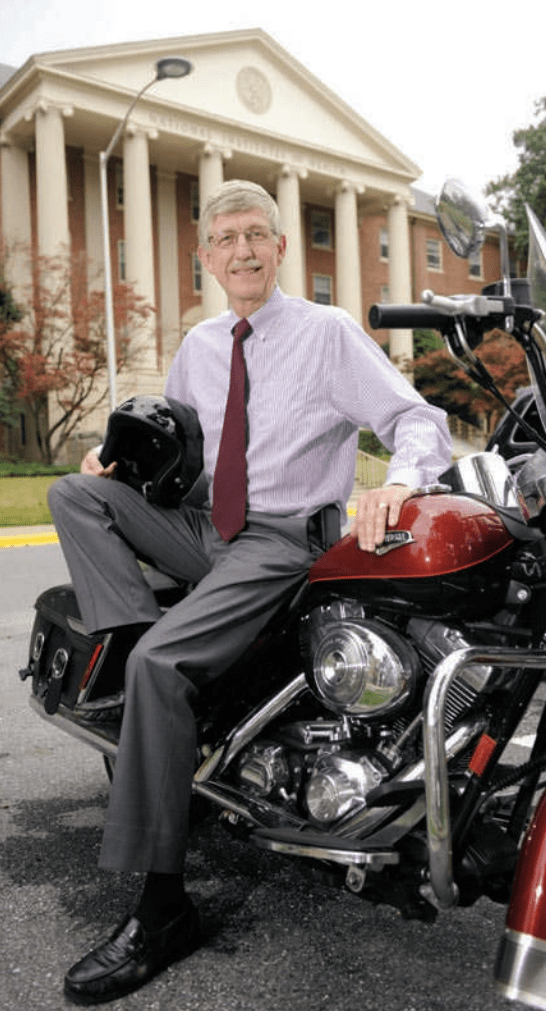
* see Francis Collins, still technically a Professor of Medicine at U of M, where he discovered the genes for cystic fibrosis, neurofibromatosis, and Huntington’s chorea (which claimed Woody Guthrie), before leaving to head the Human Genome Project then be appointed by Obama to head the National Institutes of Health, as he mounts his red Harley to take him on the 15 minute commute from Chevy Chase to his office at the NIH in Bethesda.  Oh, and he plays the guitar, sometimes in a rock band, and sings with opera singers.  He is a devout Christian.

a simple dinner

When I awoke around 3 yesterday, the weather report forecast another perfect spring day in AA, 75 degrees and sunny with enough wind later in the day to keep things interesting.  Dinner on the deck was a must, so I kicked things off by pulling out of the freezer a couple chunks that arrived from Kansas City Steak a few days ago.  My American Express had a deal with them so why not?  I picked a cut I wasn’t going to find in any local store, a big slab of “picanha”, popular in Brazil, derived from the biceps femoris of the cow (big muscle back of the thigh). 

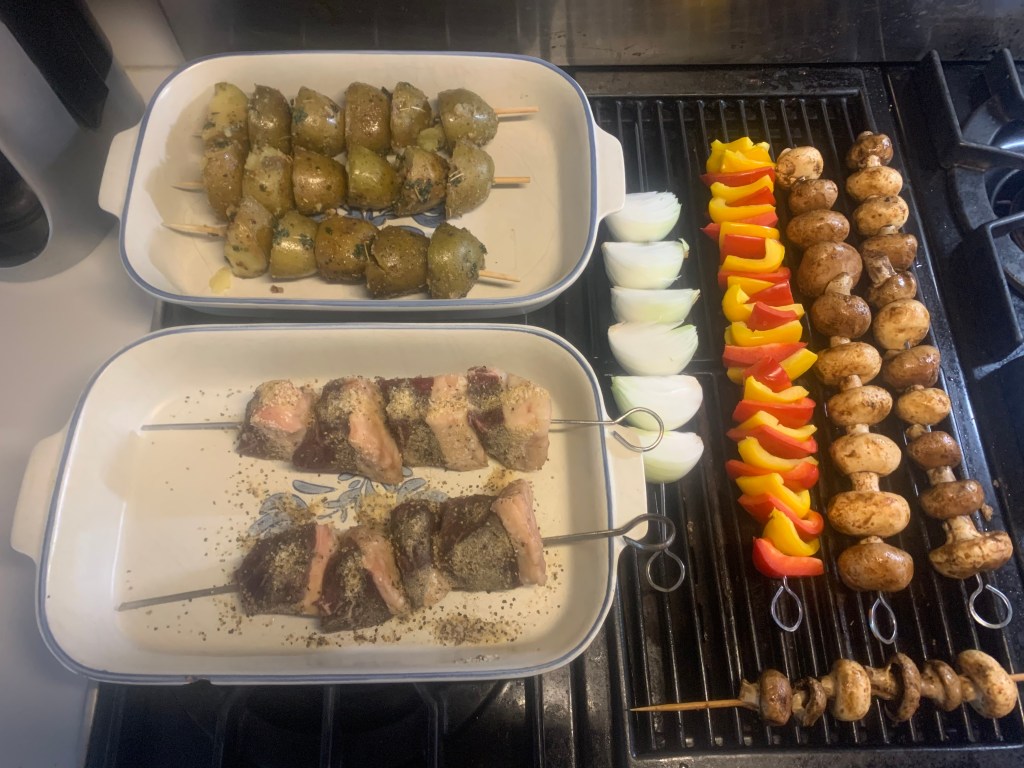
Nice apron of fat, which is of course where the flavor comes from.  I got a about 4 meals worth.  This would be the debut.  The order came with two packets of their steak seasoning, one of which which I decided to deploy.  Cut into ~2” chunks, they skewered nicely.  Since the Brazilians like their steak on a sword, I figure it was appropriate.

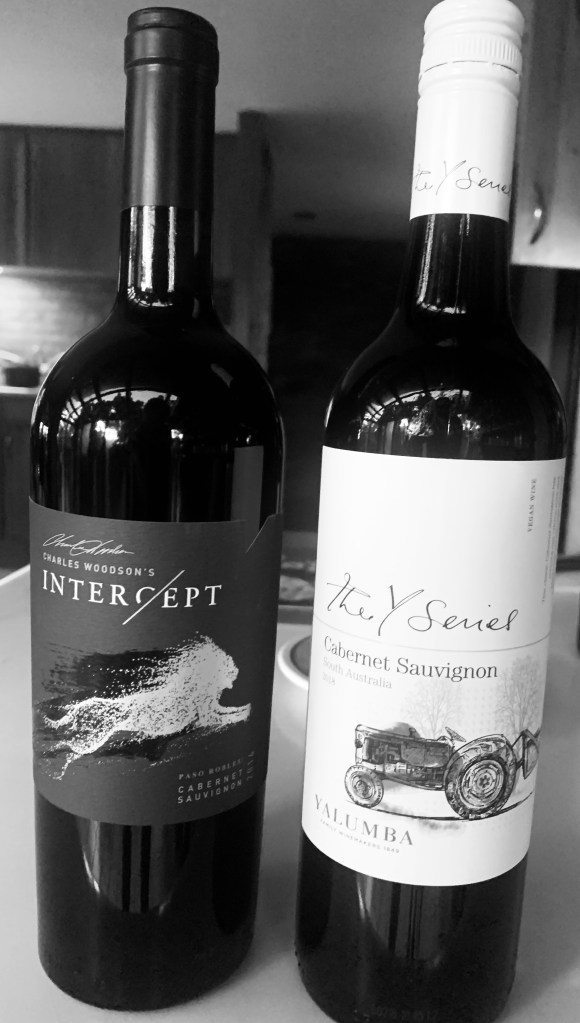
While Kathy corrected papers all morning – she’d gotten down to less than 100 for the rest of the term – I got busy prepping dinner.  I’d managed to throw together everything by 1:30 when I took off for my haircut.  It was pretty easy peasy.  The potatoes were the most fuss.  I parboiled then cooled them.  I warmed ¼ C duck fat and 2 T olive oil in the same pot, threw in 2 T garlic paste and 1 t rosemary, emulsified everything, then added ½ C parsley.  I threw the potatoes back in the mess and made sure everything got coated.  They’ll sit in the pot till I skewered them and threw them on the grill.  The recipe’s at the end.  The rest were just skewered vegetables: a sweet onion and 2 peppers.  Not quite ready by then were the ‘shrooms – Kathy’s favorite – which had to marinate a while before being skewered https://wordpress.com/post/theviewfromharbal.com/1238.  I brought a couple nice cabs up from the cellar to wash this all down.  Intercept is from Charles Woodson’s vineyard.  Yes, that Charles Woodson.  Both his cab and red blend are highly rated and good values.  We stock upon them whenever we go to Meijer’s.  The Yalumba was inexpensive and bought on a whim, curious about South Australia and liking the tractor on the label.  If we do get to a second cab, we tend not to be so picky.  Plus it has a screw top cap.  Easier to close for later.

Here was the spread, all skewered up and ready for the flames.

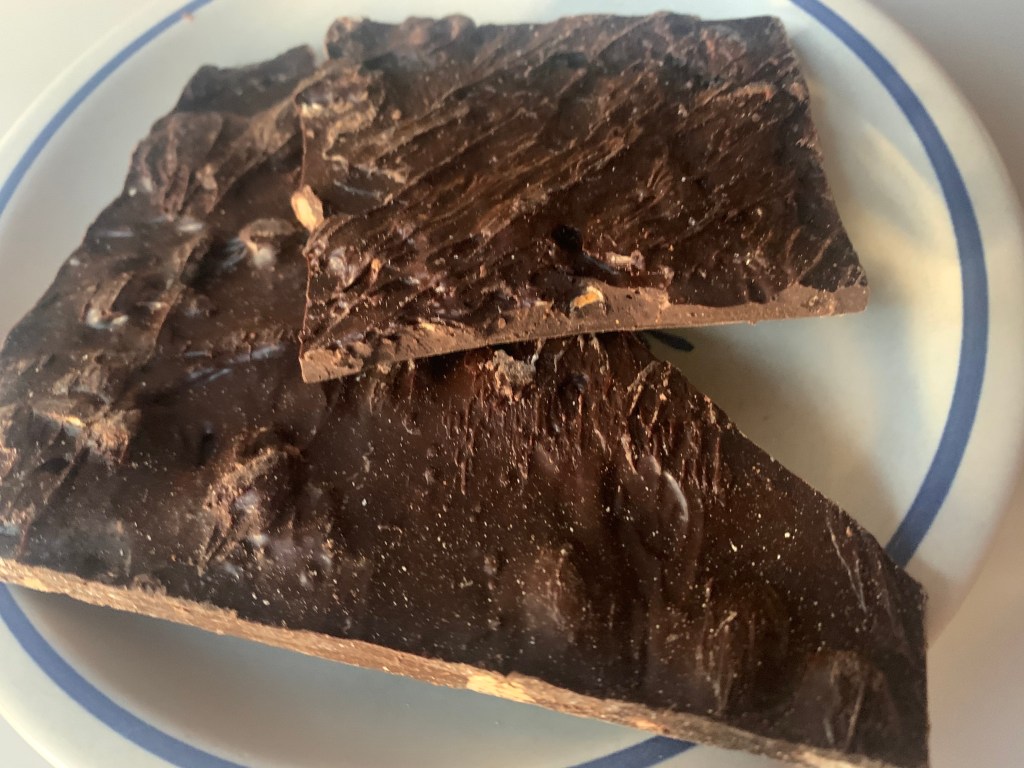
I have 2 Weber grills and a Pit Barrel smoker.  I do most of my grilling on the little Go Anywhere number, with its 10X16 grate.  It sits on top of my 23” kettle.  But this spread would require more grill space.  Fat on the steak sure makes it tasty, but oh does it feed the flames.  The internal temp shot past 1350 quickly, already at well (1650) when I first measured.  Had to take it off and let sit while the vegetables got done.  Kathy had set the table as if normal people would be eating there, complete with place mats, steak knives, and forks.  But it was all finger food to me, so we sat in our rockers and watched the sun set, surveying northwest Ann Arbor for any signs of trouble.  All was quiet.  Came time for dessert which usually features 2 kinds of dark chocolate: Nibbles from San Diego https://nibblechocolate.com/ and a Señor Murphy’s chocolate chili bar from Santa Fe https://www.senormurphy.com/store/detail/chocolate_bars/organic_chocolate_chile_bars_3_pack.  But we’d nibbled away all the Nibbles , and our next order had yet to arrive.  We still had a nice plate.

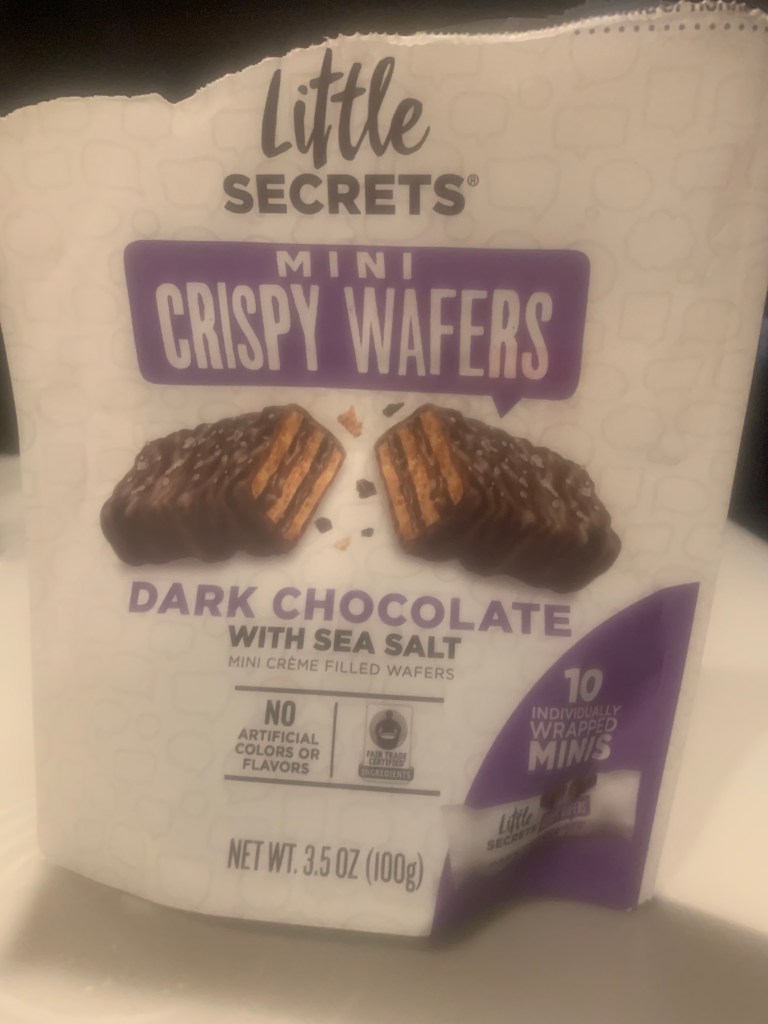
And we debuted a little something I’d found on sale at Plum’s.

Both went very well with a red.

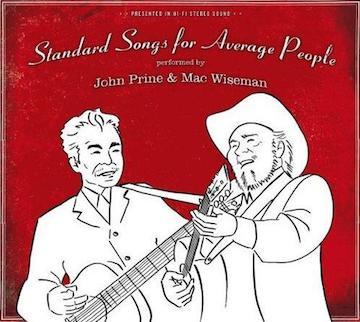
The Mel Torme Spotify channel provided our soundtrack.  But we could just as well have put on John Prine and Mac Wiseman

Woulda suited us just fine.

Oh yeah, here’s that potato recipe:

Nayef

Nayef Kazzaz was a fellow with us ‘14-‘16.  He came to us from King Saud University in Riyadh courtesy of King Muhammad bin Nayef.  I don’t know if they were related.  My Division welcomed such types, as they came totally paid for, thanks to King Nayef.  Nayef had been smoothed by a 3 year internal medicine residency in Cleveland at University Hospitals of Cleveland, and spoke smooth vernacular and medical English.  He still couldn’t present a patient’s case to save his soul, but possessed a bouncing enthusiasm that carried him through the rough spots, and he was a pretty good doctor overall.  He even dove into the lab with my young friend Jason, and excelled.  His last year, he spent time with me learning procedures.   Friday afternoons, we were in my “injection clinic”, poking every manner of moving joint, sometimes with the benefit of ultrasound guidance.  Now and then was thrown in a labial salivary gland biopsy (“lip biopsy”), which he relished.  He also joined me on Tuesday mornings in the Medical Procedures Unit for percutaneous muscle biopsies, gruesome penetrations made tolerable by the miracle of conscious sedation.  Nayef was joined on these outings by Vellore (India)’s son, Viju, who matched his enthusiasm.  Such occasions were heady experiences for this old man.  Nothing like youngsters hanging on your every word thinking what you’re doing is great.  Such is the life blood of academic medicine, and why we stay with it so long.  I called them my “little brown boys”, but not to their faces, of course.

When Nayef landed a new position at the University of Kentucky in Lexington, the good news appeared to me on Linked in, with a chance to respond, which I did with brief congratulations.  Nayef quickly came back to me with thanks and a query into my current situation.  I sent him a few sentences, but afterwords realized the people of whom I spoke to him about as my role models might be unknown to him.  I felt compelled to look up his email and elaborate.  Here is what I said.

I realized after that Linked in exchange you may not have a clue who those “role models” of mine were.  Both are scopy buddies of mine.  Roy Altman was the first rheumatologist in the USA to perform arthroscopy.  He flew from Miami to Colorado in the late 70s to hook up with Toronto’s Bob Jackson at a ski resort for a weekend.  Bob had learned from Makei Watanabe while team Canada’s physician for the ’64 Olympics.  He traded arthroscopy lessons for English lessons and came back to North America to transform arthroscopic surgery.  He, unlike his peers, had no problems with rheumatologists.  He even gave me encouraging words when I met him at a meeting once.  Roy went back to Miami and was the only arthroscopist in those parts for quite a few years, helping to teach a bunch of the local orthopods .  He’s been a prolific writer and active editor, still at it at age 83 at UCLA. We’re working on a paper on hyaluronic acid right now.  Lanny Johnson did almost as much as Bob Jackson to propel arthroscopic surgery forward, and from the perch of a little office in East Lansing, where he’d gone to school and was an athlete (swimmer).  The big academic centers didn’t know what to do with him so he had to do it himself. He invented the motorized shaver, which transformed arthroscopic surgery.  He wrote a huge two volume textbook, which is still a definitive reference.  He ran little courses out of his office that I took with my first (and only ) scopy protegée Ken O’Rourke in the early 90s.  We still stay in touch.  He was instrumental in me getting another chit on my CV.  I sent him my article in Rheumatology (Oxford)* and he thought orthopods should see it.  Orthopods don’t read Rheumatology (Oxford) but they do read Arthroscopy, so Lanny convinced their editor to accept a letter from me describing the Rheumatology paper so orthopods could link to it.  I got the editor of Rheumatology to quietly make my article open access (normally costs $4225.00) so outsiders could see it without a charge.  Whew!  Nothing like that ever happened when I was working.

I can’t talk about role models without mentioning my mentor, Chicago’s Bill Arnold, who taught me ‘scopy ’85-6, at the behest of his former mentor at Duke and my then current boss, Bill Kelley.  I brought Bill out of retirement to be co-author on several articles, but he’s asked to opt out of anything more so he can just enjoy being retired.  And maybe that’s a role model thing too, showing there can be life without medicine, completely without medicine.  Somedays, I feel like that, but then a contact comes like your Linked in announcement, and I’m back in the game.

It was a real shame I couldn’t get ‘scopy back up ’17-’18.  The orthopods were in huge opposition and no one on our side seemed to want to lend any kind of support.  I think the potential is tremendous.  You definitely have the right stuff to have been good at it. Viju too.  What a wrinkle that would have put into your final year!   If you do read over my article, do more than just look at the pictures and feel wistful for what might have been, realize this is all still possible and would be a unique and huge addition to your skill set.  You were never shy about taking on new things and mastering them. Even in the lab, per Jason!  Parking that enthusiasm and adventurousness in service to the needs of your new rheumatology clinic would be like using your Ferrari only for trips to the grocery store.  I hope they will give you a chance to do a little of your own thing so you can make like one of the renegade groups of my youth – the MC (Motor City) 5 – and “kick out the jams! https://www.youtube.com/watch?v=9fpgQGmHFWE”  You have the potential for great things, young man, and I hope you go for it.  I stand ready to provide whatever support possible.  Go blue!

*Ike RW, Arnold WJ, Kalunian KC.  Arthroscopy in rheumatology.  Where have we been?  Where might we go?  Rheumatol (Oxford) 2021;60:518–528.  Epub 2020 Dec 1 https://doi: 10.1093/rheumatology/keaa560.   

Leon

Leon Russell pervades through all my preferred Spotify channels, and none are the ”Leon Russell” channel, which surely exists.  You can never go too far without hearing a Leon Russell tune, which is o.k. because all Leon Russell tunes are cool.  He brought his considerable talents to LA from Oklahoma City in the 60s, became a valued member of the famed “wrecking crew”, a group of musicians that provided backup to acts ranging from the Beach Boys to Frank Sinatra.  His role in putting together Joe Cocker’s “Mad Dogs and Englishmen” got him international attention and he branched out on a solo career, with two lovely albums from which came several hits.  Here’s one of my favorites “Hummingbird”.

He continued to perform and record.  I regret I did not follow, or go see him when he came to nearby venues.  My loss.  He died  November 13, 2016 in  of “natural causes”.  I was in Washington D.C. at a meeting when I got the news.  I set the Spotify channel to Leon Russell as I ate my dinner I my room.  RIP Leon.  He continues to come at me from all directions on my Spotify channels, so I don’t imagine I’ll ever say goodbye to Leon, as his talent shall always be with us.

batch

The Vicksburg High School class of 1970 was to have held its 50th reunion July 17 at Indian Run Golf Course.  Mr. Corona said no.  My own sweetheart had been having a rollicking good time with her Western Reserve Academy class of  ’76 on Zoom, so I sought to attain the same with us.  Taking Forrest’s and Marcia’s list for the reunion and doing my own digging I had a pretty good list.  We launched in late July and have had a bunch of repeat performances, all quite successful.  A Brady Bunch screen of vaguely familiar, if quite aged, faces appears, which we then all address.  We go about once a month, scheduled next for tax day, which it would be till Uncle Joe hadn’t kicked it into next month.  The process has been smoothly sailing along, reaching  92 with a single e-mail address  and 56 more with multiple e-mails, and only 3 with no email at all.  For a class of 165 with 28 dead, that wasn’t bad at all.  But how I was reaching them wasn’t kopacetic.  Apparently, this is now a thing https://www.udemy.com/course/business-emails/?matchtype=e&msclkid=49c76a4c383b1531c1bd0a2a45c1a84a&utm_campaign=BG-LongTail_la.EN_cc.BE&utm_content=deal4584&utm_medium=udemyads&utm_source=bing&utm_term=_._ag_1207264180441488_._ad__._kw_Email+Etiquette+Guide_._de_c_._dm__._pl__._ti_kwd-75454349336648%3Aloc-190_._li_52609_._pd__._

Berated for my sins, I strove to address them.  Here is how.

Hello friends

When this weekend a third very good friend told me how my handling of batch e-mails was violating standards of digital etiquette, I realized it was time to change my ways, and tell you about it.

For all the Zoom e-mail traffic since last July, I’ve sent stuff out to you all by just copying the email column in my databases and pasting in the “To” box.  Hit send and presto, you’re all informed.  None of you have complained yet, but here’s what my friends say.  One gets so annoyed by being on the receiving end of a batch e-mail, he has a program on his computer that subsequently blocks any further traffic from the sender of any batch e-mails.  I’ve been caught several times.  The first consequence of batch emails is that incoming feels like junk mail, and it often is.  Secondly, placement of your email on a batch list means all recipients can see it, and you might not be in to that much sharing.  Finally, all those open emails provide routes for viruses and malware to enter.  Who would want that?   Eeeweue.  Talk about cooties!  There’s probably more, but that’s what my friends told me about.

Fortunately, there’s a solution that will allow us to continue our relationships in complete safety.  When I send out the next batch email (this one), if I park all your addresses in BCC, you’ll receive your notice individually, and won’t be able to see who else got it.  Now that’s privacy.  I hope that all you nervous nellies out there find that comforting.  Big brother has taken one step back from controlling your life.

Not problems we had to deal with back in the day.  I mainly worried about in which ditch Maneikis had deposited the case.  Joe Walsh feels our pain https://www.youtube.com/watch?v=RLaQUU_VLMk.

Enjoy spring.  See youse in a couple weeks.

Bob